A tiny current, 8 electrodes at your hands and feet, and your arms, trunk and legs read one by one. Here’s what happens in the seconds you stand on it, and what it can’t do.
Muscle holds a lot of water, so a tiny current passes through it easily. Fat holds little, so it resists. Dial measures that resistance, called impedance, and works out how much of each you carry.
Three frequencies on Dial H30 and H40: around your cells, and through them.
02 · Frequencies
Low and high, around cells and through them.
Low frequencies flow around your cells. High ones pass through them too. Reading the same body at more than one frequency gives a fuller read.
Dial H30 and H40 use three frequencies: 5, 50 and 200 kHz. Dial H20 uses two: 20 and 100 kHz.
03 · Five segments
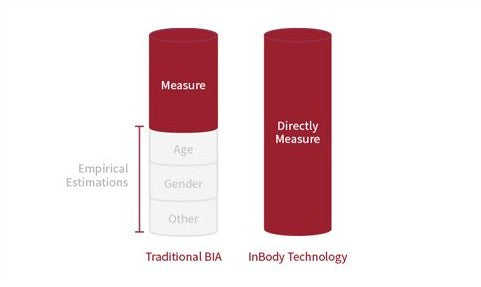
Your body isn’t one cylinder.
Your arms are thin and your trunk is thick, so the current behaves differently in each. Dial reads them one by one: right arm, left arm, trunk, right leg, left leg. InBody calls this DSM-BIA, direct segmental multi-frequency bioelectrical impedance analysis.
Every frequency, in every segment: 15 measurements per test on Dial H30 and H40, 10 on Dial H20. So your upper body is measured, not guessed from your legs.
Dial combines the five segments into whole-body results and, on H30 and H40, balance ratings. It doesn’t show kilos for each arm or leg.
Shown on Dial H20.
04 · Eight electrodes
Thumbs, palms, heels, toes.
Two electrodes under each foot and two in each hand, one of them under your thumb. Firm, repeatable contact makes this week’s test comparable with last week’s.
Each thumb gets its own plate. InBody says this makes repeat tests more consistent, so the change you see is you, not noise.
05 · No age or sex correction
Your birthday won’t move the number.
Some scales lean on the age and sex you type in. Dial H40 makes no statistical correction for age, sex or body type. It works from your impedance, height and weight, so a new age doesn’t change your result.
Test the same way. Trust the trend.
Meals, drinks, workouts and showers shift the water in your body, and the reading moves with it. Keep the routine fixed, so the change you see is you.
Same time each day, ideally the morning: after the toilet, before breakfast.
Before exercise, and before a shower, bath or sauna.
Stand for about 5 minutes first.
Barefoot, no socks. Heels on the rear electrodes, fingers and thumbs on the handle, arms and thighs away from your body.
Hold the handle at about pelvis height.
Dry skin? Wipe your palms and soles with a wet tissue or an InBody Tissue first.
Keep Dial on a hard, flat floor in a dry room, away from other electronics. Not on a carpet or mat, and not in the bathroom.
The clinic machine’s maker. Since 1996.
countries InBody exports to
120+
InBody analysers in India’s hospitals, clinics and gyms
3,000+
Independent researchers have tested InBody’s professional analysers in more than 50 published international papers1. Those studies are of professional analysers, not Dial. InBody says it builds Dial to the same standard, with the same direct segmental method.
No home scale is a DEXA. A DEXA scan is a snapshot; Dial is built for the weeks between. Results are estimates, so test the same way each time and follow your own trend.
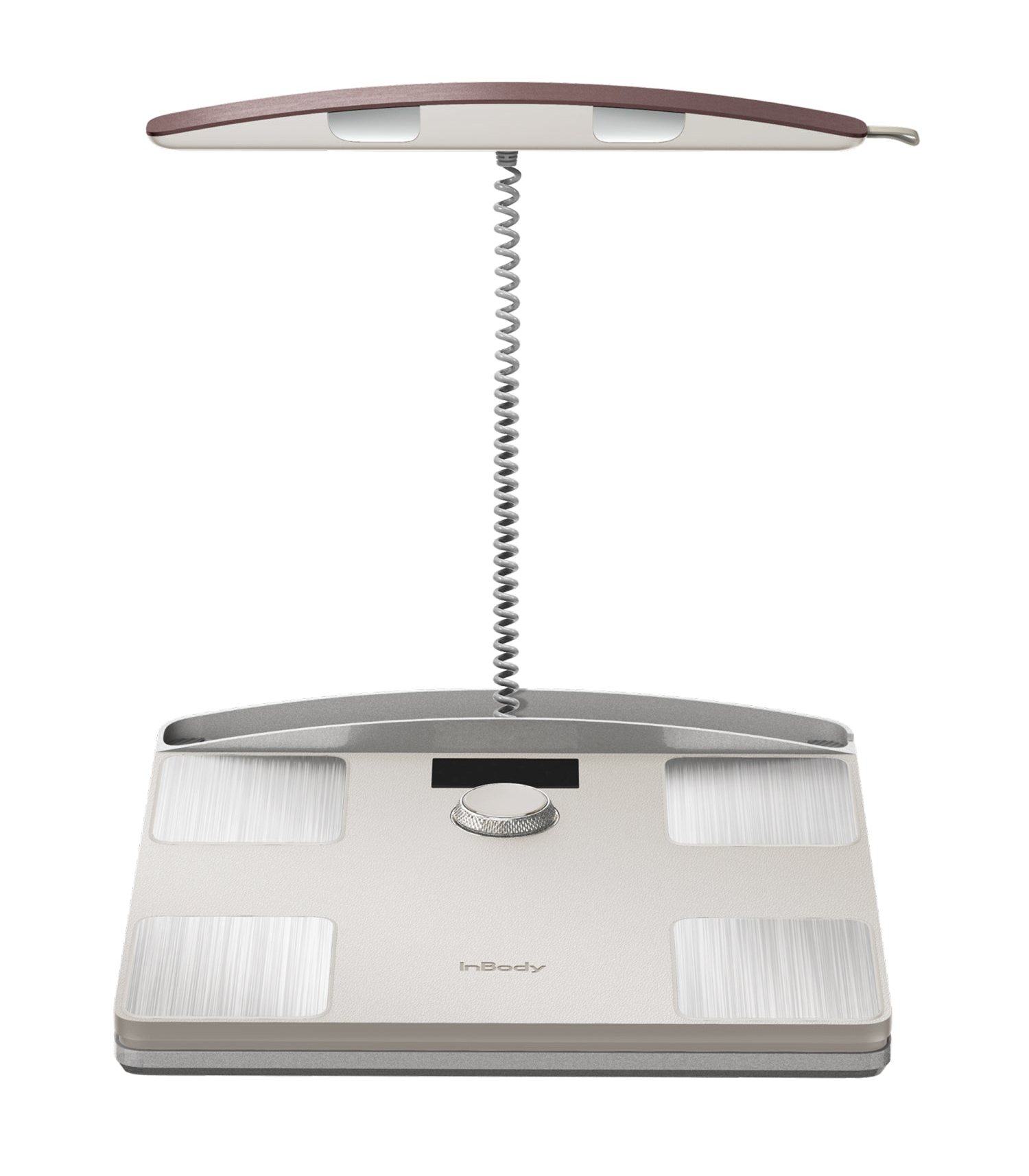
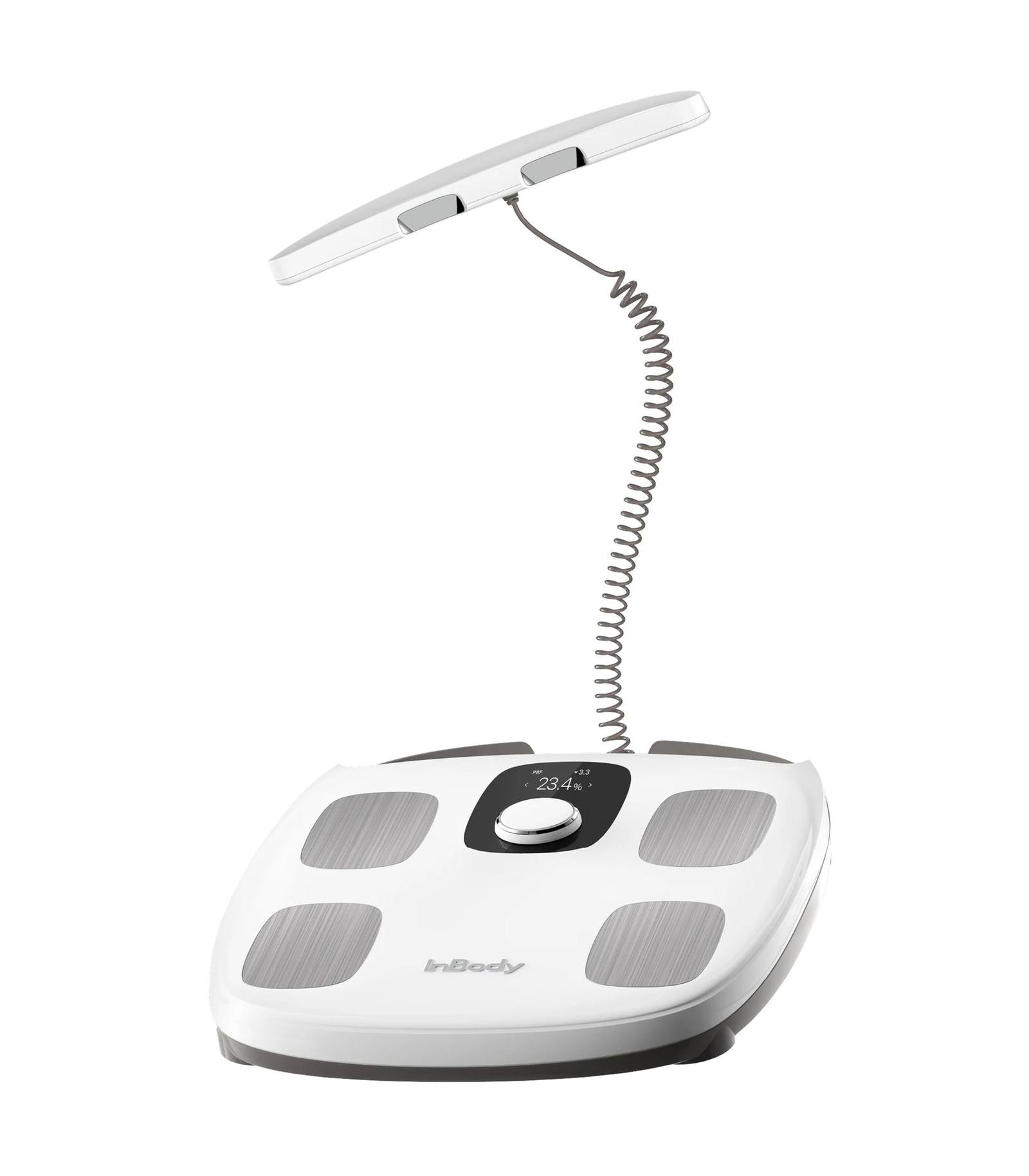
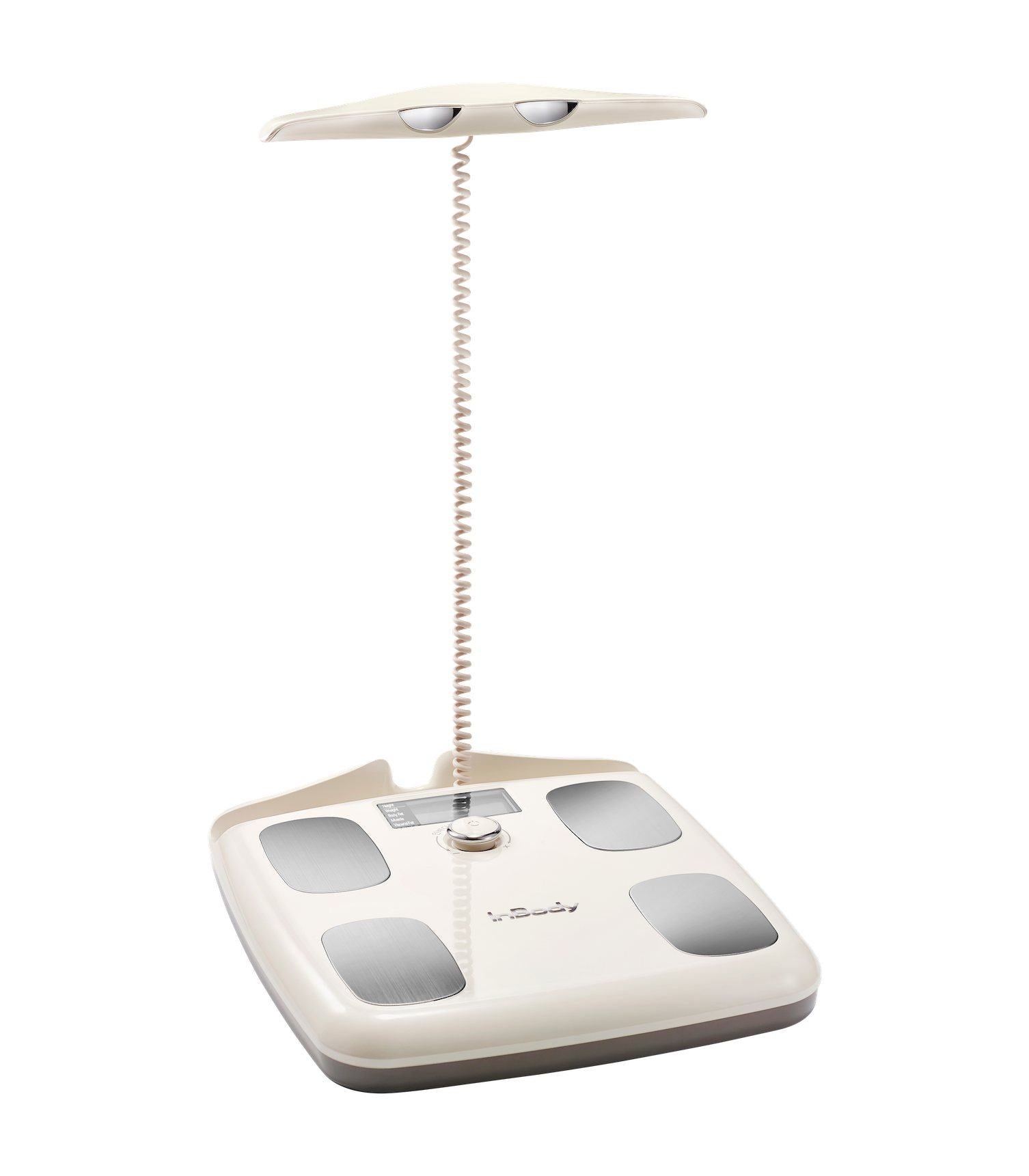
An 8-electrode body composition scale measures through both hands and both feet. On InBody Dial you stand on the footplate and hold the handle, so a tiny current reads your arms, trunk and legs one by one instead of estimating your upper body from your legs. All three InBody Dials, H20, H30 and H40, are 8-electrode scales.
Is Dial as accurate as a DEXA scan?
No. No home scale is a DEXA scan. DEXA is a snapshot; Dial is built for the weeks between. It reads your arms, trunk and legs one by one at 2 or 3 frequencies, and the thumb electrodes help repeat tests line up. Test the same way each time and follow your own trend.
Why do my readings change during the day?
The current travels through the water in your body, and that water moves with meals, drinks, exercise and showers. So test at the same time, in the same conditions. Judge change over weeks, not one test.
What does a third frequency add?
Low frequencies flow around your cells; high ones pass through them too. Dial H20 reads at 20 and 100 kHz. Dial H30 and H40 read at 5, 50 and 200 kHz, which InBody says improves accuracy. That’s 10 measurements per test on Dial H20 and 15 on Dial H30 and H40.
Does Dial show body water?
No. The current travels through your body’s water, which is how Dial works out muscle and fat. But it doesn’t show body water as a result, so it isn’t a hydration test.
Does Dial show results for each arm and leg?
No. Dial measures your arms, trunk and legs separately, then combines them into whole-body results. It rates your balance; it doesn’t show kilos for each limb. Dial H30 rates upper–lower balance. Dial H40 rates upper-body, lower-body and upper–lower balance, and adds a leg muscle level.
Who shouldn’t use Dial?
Don’t use Dial if you have a pacemaker or any other implanted medical device, or wear a patient-monitoring device. Metal implants such as pins or joint replacements can affect readings. If you’re pregnant, speak to your doctor first. Children need an adult to help them hold the right posture.
Find your Dial.
Three Dials. One method. Pick your level of detail.