Are body fat scales accurate? What a BIA scale can and can’t tell you
Body fat scales use bioelectrical impedance. What moves the number, what the research says, and why a consistent trend beats any single reading.
Some are, some are not, and even a good one can be thrown off by a glass of water. A body fat scale does not see fat. It measures how a tiny current moves through the water in your body and works out the rest, so its accuracy depends on how it is built and how you use it.
The honest answer has two parts. As a single, exact number for one person, a home BIA scale is an estimate with a margin of error. As a way to see whether your own body fat and muscle are moving over weeks, a well-made scale used the same way every time can be very useful. This guide explains why, and what to look for.
The short version
- Every BIA or BCA scale estimates fat from how a current moves through your body’s water. Anything that shifts that water shifts the number.
- Accuracy varies widely between devices. Look for a published study on the exact model, not on the brand in general.
- The most valuable thing a scale gives you is a consistent trend. Test the same way at the same time and judge the line over weeks.
What a BIA scale is actually measuring
BIA stands for bioelectrical impedance analysis. You may also see “BCA scale”, short for body composition analyser; it is the same idea. When you stand on the scale, a small current that you cannot feel passes between its electrodes and through you.
Lean tissue such as muscle is mostly water, so it conducts the current easily. Fat holds little water, so it resists. The scale measures that resistance, called impedance, then uses equations to turn impedance, height and weight into body water, lean mass and fat. Some scales also lean on the age and sex you type in to fill gaps.

Two things follow. First, the scale is only as good as its raw measurement and its equations. Second, because the current rides on water, the reading depends on where your water is at the moment you step on.
Five things that move the number
None of these mean the scale is broken. They mean the body you are measuring has changed for an hour or two.
1. Hydration
Water is the medium the current travels through, so changes in body water change the estimate. A hot day, a long commute without a drink, a night of poor sleep or a bout of illness can all shift it. For some women, fluid retention in the days before a period does the same.
2. Food and drink
A meal adds weight and fluid that has not settled yet. That is why the guidance is to test before breakfast, or at least two hours after eating. A heavy festival dinner the night before can still show up in the morning, which is one more reason to trust the weekly line over any one day.
3. Exercise, heat and showers
A workout sends blood to your muscles and makes you sweat. A sauna or a hot shower warms the skin and moves fluid toward it. Both change how the current travels for a while afterwards. Test before exercise and before you bathe.
4. Posture and contact
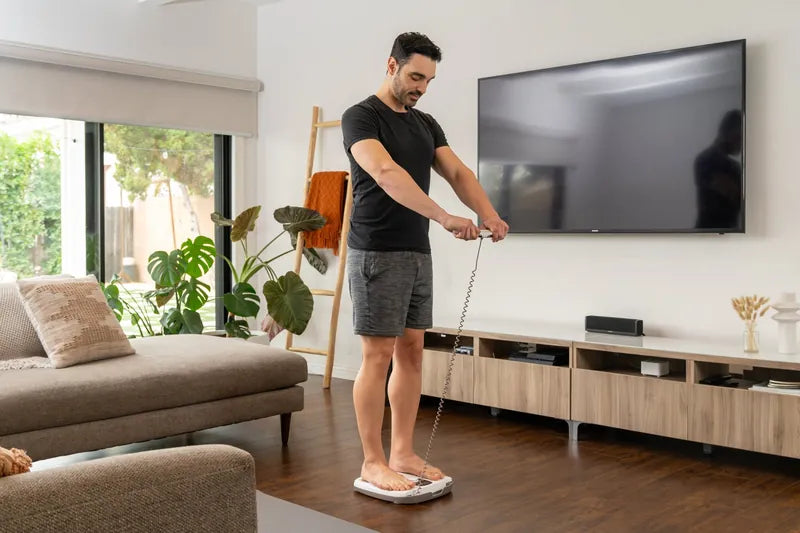
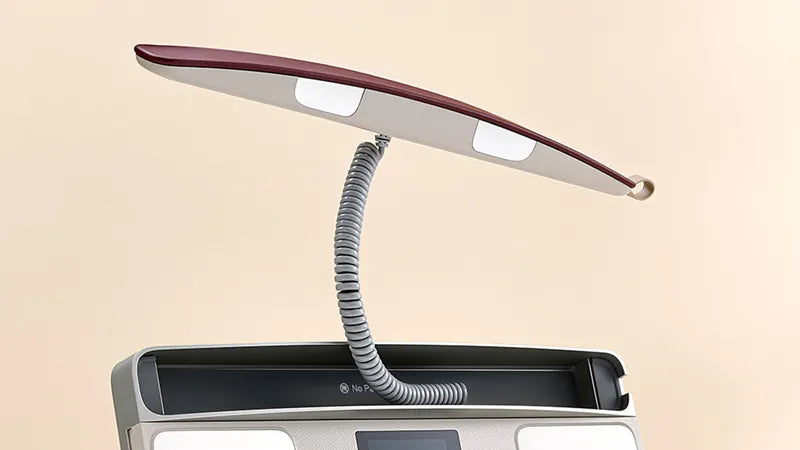
Socks, very dry or calloused skin, and feet that are not fully on the plates all change the contact. On a scale with a handle, arms pressed against your sides or thighs touching each other can create shortcuts for the current. Stand still, arms straight and slightly away from your body, until the test ends.
5. The path itself
This one is built into the scale. A foot-only scale measures the path between your feet, so your arms and trunk are estimated from equations rather than measured. A scale with hand and foot electrodes reads each arm, each leg and the trunk separately. The difference is explained in smart scale vs InBody Dial.
What the studies say
Reviews of the method agree on the basics. BIA works best in people with normal hydration, measured under standard conditions, with equations that suit the population being measured. It is well suited to tracking groups and trends; for one person on one day, the margin of error is wider. That is the consensus in both the 2004 European review of BIA principles in Clinical Nutrition and a 2008 review in Nutrition Journal.
Devices also differ from each other. A 2023 study in the British Journal of Nutrition measured 73 adults on 15 consumer BIA devices and compared them with a four-compartment model, a laboratory reference. Results varied between devices. The InBody H20N, the model sold in India as Dial H20, was rated “very good” and tracked change over 12 to 16 weeks.
A 2026 study in the Journal of Primary Care & Community Health compared the H20N with DXA in 55 adults with obesity. Agreement was excellent for body fat percentage (an ICC of 0.93) and good for skeletal muscle (0.78).


Two caveats. These studies are of the H20 only and say nothing either way about other models, Dial H30 and H40 included. And no home scale is a DXA scan; reference methods exist because every field estimate has error. For how the two compare, see DEXA scan vs a home body composition scale.
Accuracy versus consistency
Accuracy is how close a reading is to the truth. Consistency, or precision, is how close two readings are to each other when nothing has changed. For tracking your own body, consistency is what you lean on day to day. If a scale reads you the same way every time, a real change in fat or muscle shows up as a change in the line.
One reading is a weather report. Twelve readings taken the same way are a climate.
This is also why two different devices rarely agree. Your gym’s analyser and your home scale use different electrodes, frequencies and equations, often at different times of day. Pick one device for each series of readings and follow its trend. The same logic applies when you combine a clinic test with a home scale: each keeps its own series.
How to get a reading you can trust

- Same time, same state. Morning is easiest: after the toilet, before breakfast, before exercise.
- Wait after meals and workouts. If morning is impossible, test at least two hours after eating, and never straight after exercise, a sauna or a hot shower.
- Bare feet, dry skin. No socks. If your palms or soles are very dry, wipe them with a damp cloth first.
- Hold the posture. Heels on the rear plates, thumbs on the thumb electrodes, arms straight and away from your sides, thighs apart.
- Judge the trend. Look at four to eight weeks of readings before deciding anything has changed.
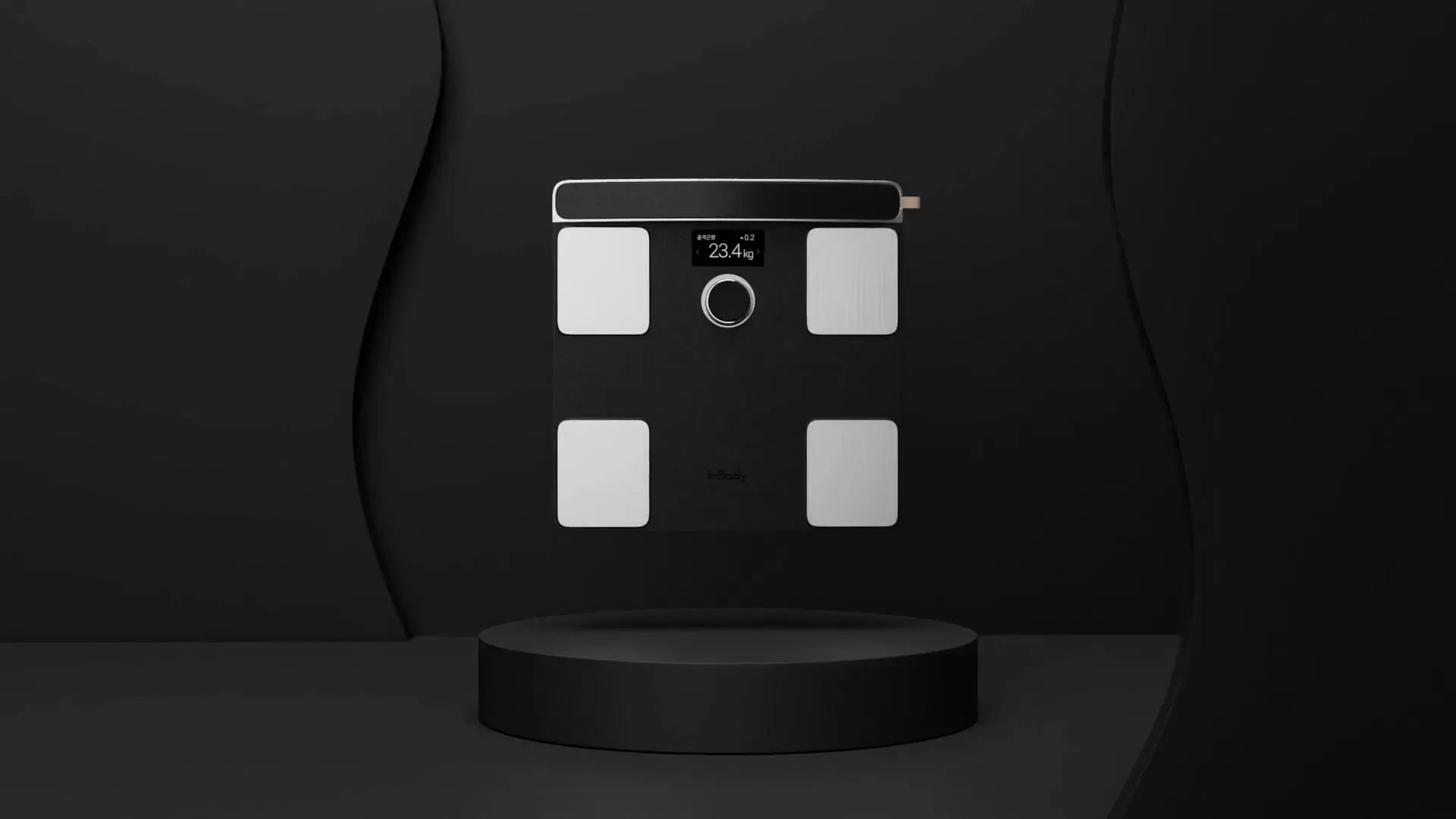
If you want the model with the published data behind it, Dial H20 is built for one person and syncs over Bluetooth. For a household, Dial H30 measures at three frequencies and recognises up to 20 people; Dial H40 adds leg muscle level and balance ratings for people who train.
 Dial H20For just you. Eight readings, about 10 seconds a test, rated “very good” in a 15-device study.See Dial H20 →
Questions people ask
Are smart scales accurate for body fat?
They vary. A well-made scale used under the same conditions each time can track change in your body fat closely, and some models have been tested against lab methods. As a single exact number for one person on one day, every home scale has a margin of error.
What is a BIA scale, and what does BCA mean?
BIA is bioelectrical impedance analysis: the scale passes a tiny current through your body and estimates muscle and fat from how easily it travels. BCA, body composition analyser, is another name for a device that does this.
Why does my body fat percentage change every day?
Mostly because your body water changes. Food, drink, exercise, heat and sleep all move water around, and the reading follows. Test at the same time in the same state and look at the weekly trend instead.
Why does my gym machine show a different number from my home scale?
Different devices use different electrodes, frequencies and equations, and you are usually tested at a different time of day. Neither number is wrong for its own series. Compare each device only with itself.
Is a BIA scale as accurate as a DEXA scan?
No home scale is a DEXA scan. DEXA is a reference method used in research and clinics. A good home scale is useful for the weeks between scans, because you can test often and in the same way.
Can a body fat scale measure visceral fat?
Scales like Dial estimate a visceral fat level, the fat stored around your organs. It is an estimate, best followed as a trend. More in how to check visceral fat at home, and talk to your doctor about what your level means for you.
Sources
- Kyle UG, Bosaeus I, De Lorenzo AD, et al. Bioelectrical impedance analysis—part I: review of principles and methods. Clinical Nutrition 2004;23(5):1226–1243.
- Dehghan M, Merchant AT. Is bioelectrical impedance accurate for use in large epidemiological studies? Nutrition Journal 2008;7:26.
- Siedler MR et al. Assessing the reliability and cross-sectional and longitudinal validity of fifteen bioelectrical impedance analysis devices. British Journal of Nutrition 2023;130:827–840.
- Ellison et al. Assessing body composition for resource-limited settings: agreement of a scalable BIA device compared to DXA and clinical BIA in adults with obesity. Journal of Primary Care & Community Health 2026;17.
- InBody Dial H20, H30 and H40 specifications and measurement guidance, InBody India.
 Dial H40
 Dial H30
 Dial H20