DEXA scan vs a home body composition scale: what each one is for
A DEXA scan is the reference for bone density and body composition. What it measures, how a home BIA scale differs, and when each one makes sense.
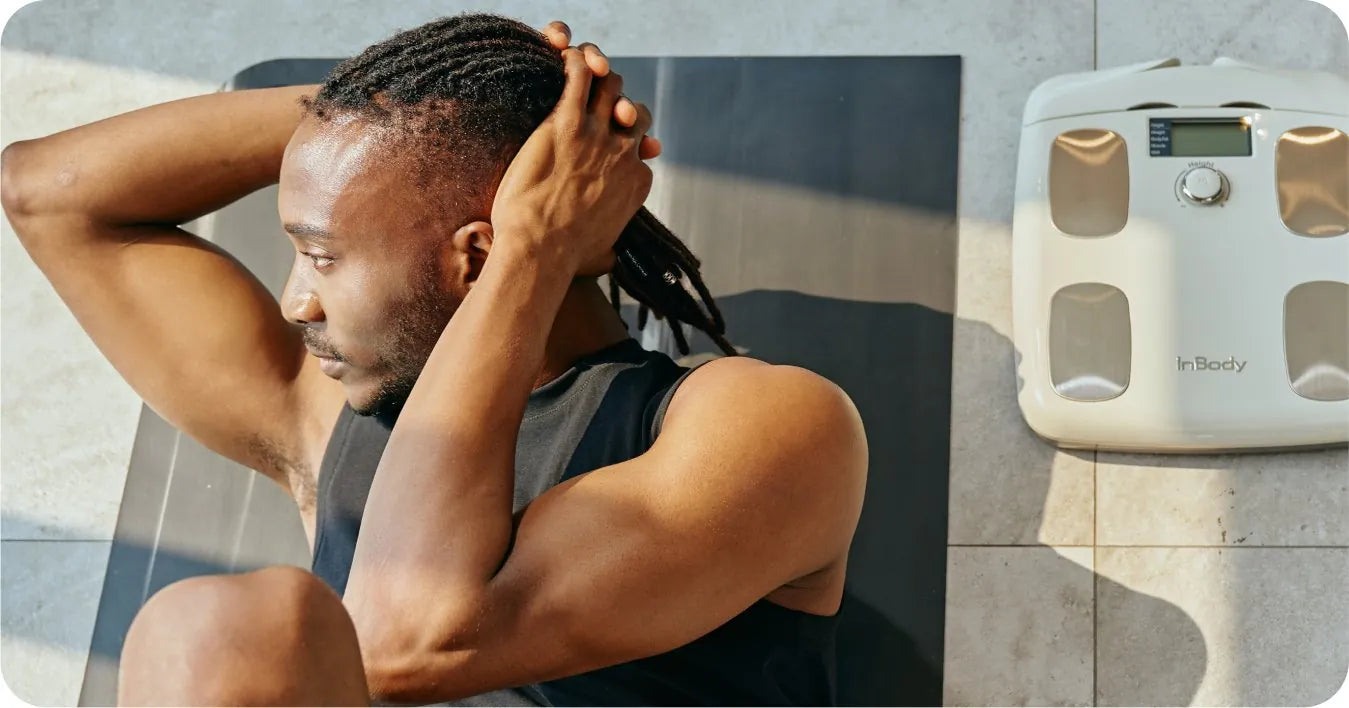
A DEXA scan is the closest most people get to a lab-grade look at their body. You lie still for a few minutes, a scanner arm passes over you, and you get bone, fat and lean tissue for every part of your body. It is also a hospital appointment, it uses X-rays, and nobody does it every week.
So which should you use: a DEXA scan or a home body composition scale? The honest answer is that they do different jobs. DXA is the reference snapshot. A good home scale is how you see the weeks between. This guide explains what each measures, what each is best at, and how they fit together.
The short version
- DXA uses very low-dose X-rays at two energies to separate bone, fat and lean tissue. It is the standard test for bone density and a reference method for body composition.
- A home BIA scale passes a tiny current through you, measures body water and works out lean tissue and fat. No radiation, no appointment, and you can test every week.
- Use DXA when you need a precise baseline or a bone density result. Use a consistent home scale to follow the trend between scans.
What a DEXA scan is
DXA stands for dual-energy X-ray absorptiometry, and you will see it written as DEXA too. The scanner sends X-rays at two different energy levels through your body. Bone, fat and lean soft tissue absorb those two energies differently, so the machine can sort every point of the image into one of three groups.
The result is a three-part breakdown: bone mineral, fat mass and lean mass, reported for the whole body and for each arm, each leg and the trunk. Many scanners also estimate fat around the waist and hips, and some software estimates visceral fat.
A body composition scan is usually a whole-body scan. A routine bone density test often covers only the hip and lower spine, so if body composition is what you want, ask for a whole-body composition scan when you book.
What DXA does best
DXA earns its reputation in three places.
- Bone density. It is the standard test doctors use to measure bone mineral density, for example when assessing osteoporosis risk. A home scale does not measure bone at all.
- A reference for research. Studies that check other methods, home scales included, often use DXA as the yardstick.
- Regional detail in one sitting. Arms, legs and trunk, fat and lean, with an image you can see.
It is not perfect. DXA assumes lean tissue holds a fairly constant amount of water, so dehydration or fluid shifts can nudge results. Different scanner makes and software versions report somewhat different numbers, so comparing scans from two centres is tricky. Very large bodies may not fit the scan area. In research, the most complete reference is a four-compartment model, which combines DXA with separate measures of body water and body volume.
Radiation, cost and access
Radiation
DXA uses X-rays, but at a very low dose. A whole-body scan typically delivers a few microsieverts, depending on the scanner. That is a small fraction of a chest X-ray and in the range of what you receive from natural background radiation in a day or less. It is still radiation, which is one reason DXA is generally avoided during pregnancy and not repeated casually.
Cost and access
In India, DXA is usually booked through a hospital or an imaging centre, sometimes on a doctor’s advice, and availability is far better in large cities than in smaller towns. Each scan is a paid appointment, priced as a specialist test. That is fine once or twice a year. It does not work as a weekly habit.
Practical details matter too. Centres often ask you to avoid calcium supplements on the day and to wait after a recent barium test or nuclear medicine scan, because both can interfere. You lie flat for several minutes in light clothing with no metal.

Where a home BIA scale fits
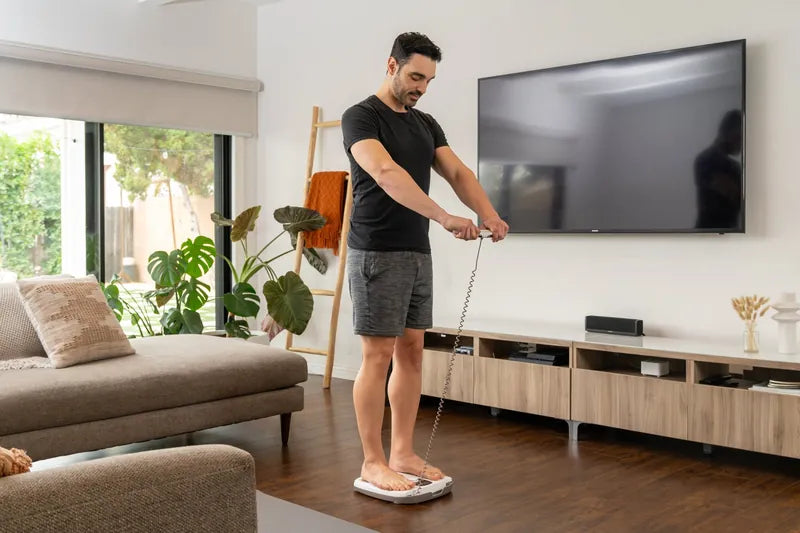
Bioelectrical impedance analysis, or BIA, works differently. A tiny current that you cannot feel passes through your body. Water-rich lean tissue conducts it easily, fat resists it. From that resistance, the device estimates body water, lean tissue and fat. There is no radiation and no appointment, which is the whole point: you can test every morning if you like.
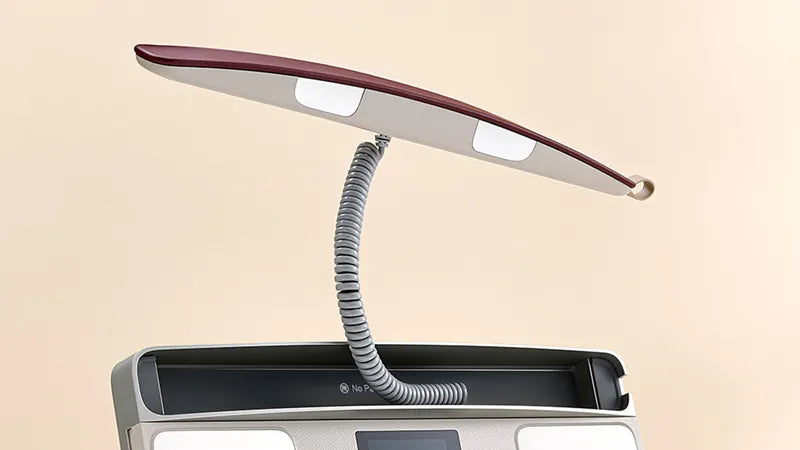
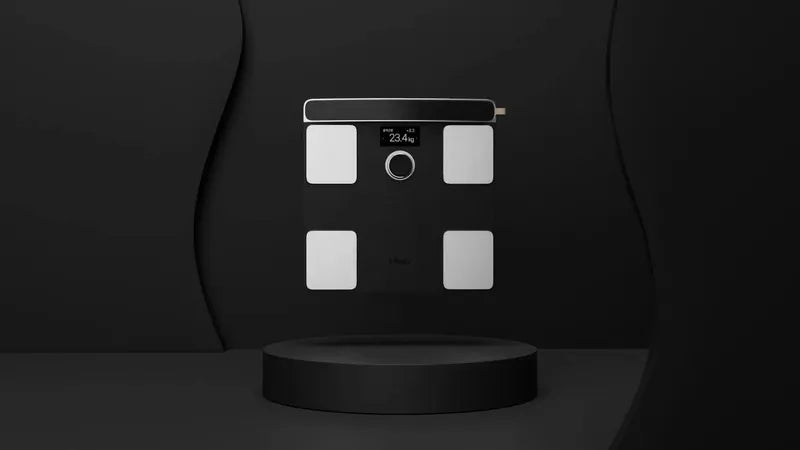
Home scales vary a lot. Most read only a foot-to-foot path and estimate the upper body. InBody Dial uses 8 electrodes at the hands and feet and measures each arm, each leg and the trunk separately. Dial H30 and H40 use three frequencies (5, 50 and 200 kHz), and Dial H20 uses two (20 and 100 kHz). If you want the detail, read are body fat scales accurate?
BIA has its own limits. Because it reads water, a big meal, a workout, a sauna or a dehydrated morning can shift the result. That is why the test conditions matter so much more than the brand: same time, same state, same posture, every time.
What the research says about Dial H20 and DXA
Dial H20 is sold elsewhere as the InBody H20N, and it has been compared with DXA directly. In a 2026 study in the Journal of Primary Care & Community Health, Ellison and colleagues measured 55 adults with obesity on the H20N, a DXA scanner and a clinical BIA device.
Those numbers are intraclass correlation coefficients, an agreement score where 1.0 would be a perfect match. A separate 2023 study in the British Journal of Nutrition compared 15 consumer BIA devices with a four-compartment model in 73 adults; the H20N was rated “very good” and tracked change over 12 to 16 weeks. These results apply to the H20N, the model sold in India as Dial H20, and should not be read as results for any other model.


A home scale still is not a DXA scan. Agreement across a group does not mean every individual reading matches. What it does mean is that a well-built home scale, used the same way each time, can follow your direction of travel with useful confidence.
Using both, sensibly
The two work best as a pair. A DXA scan gives you a careful starting point and, if you need one, a bone density result. A home scale fills in the weeks and months between, so you can see the effect of training, diet or a change in routine while there is still time to adjust.
Expect the two to disagree on the exact number. They measure different things with different assumptions, so a gap of a kilo or two in fat mass between a DXA report and a home scale is common. Do not try to make one match the other. Track change on each device against itself. For more on clinic machines versus home ones, see body fat machine for home vs clinic.

 Dial H20For just you. 8-point measurement, compared with DXA in published research. 8 readings over Bluetooth.See Dial H20 →
Questions people ask
Is a DEXA scan more accurate than a body fat scale?
For a single reading, yes. DXA is a reference method, and no home scale replaces it. A home scale’s strength is frequency: tested the same way each week, it shows the direction your body is moving, which a scan once a year cannot.
Is the radiation from a DEXA scan safe?
The dose from a whole-body DXA scan is very low, typically a few microsieverts, which is a small fraction of a chest X-ray. It is generally avoided in pregnancy. Ask the centre or your doctor if you have specific concerns.
Where can I get a DEXA scan in India?
Many hospitals and imaging centres in larger cities offer DXA. Ask specifically for a whole-body composition scan, since a standard bone density test may cover only the hip and spine.
How often should I get a DEXA scan?
Most people only need one occasionally, for example as a baseline. Changes over a few weeks are usually smaller than a scan can reliably show, so ask your doctor what interval makes sense for you.
Why does my DEXA result differ from my home scale?
DXA and BIA measure different things and use different assumptions, and readings also move with hydration. A gap of a kilo or two of fat is normal. Compare each device only with itself over time.
Sources
- Ellison et al. Assessing body composition for resource-limited settings: agreement of a scalable BIA device compared to DXA and clinical BIA in adults with obesity. Journal of Primary Care & Community Health 2026;17.
- Siedler MR et al. Assessing the reliability and cross-sectional and longitudinal validity of fifteen bioelectrical impedance analysis devices. British Journal of Nutrition 2023;130:827–840.
- Damilakis J, Adams JE, Guglielmi G, Link TM. Radiation exposure in X-ray-based imaging techniques used in osteoporosis. European Radiology 2010;20(11):2707–2714.
- Shepherd JA et al. Executive summary of the 2013 International Society for Clinical Densitometry Position Development Conference on Body Composition. Journal of Clinical Densitometry 2013;16(4):489–495.
- InBody Dial H20, H30 and H40 specifications, InBody India.
 Dial H40
 Dial H30
 Dial H20