Body fat machine for home vs a clinic test: which do you need?
A professional InBody test gives you a detailed baseline. A home analyser gives you the weeks in between. What each is for, and how to use both together.
If you have ever had an InBody test at a gym, clinic or hospital, you have seen what a professional body composition analyser can do. The question is whether you need one at home, and if you buy one, whether you still need the clinic.
Short answer: they do different jobs. A professional test, run by trained staff on a clinic-grade analyser, gives you a detailed snapshot. A body fat analyser for home gives you something a clinic cannot: a reading every week, under the same conditions, for everyone in the house. Used together, the clinic sets your baseline and the home scale shows the path between visits.
The short version
- A clinic or gym InBody test is the detailed checkpoint: more readings, a printed result sheet, and someone to explain it.
- A home analyser is the trend: frequent tests in the same conditions, so you see whether fat or muscle is moving between visits.
- The two will not match number for number. Compare each device with itself, and use the InBody app to keep both on one timeline.
Two tools, two jobs
Think of it like a blood pressure reading at the doctor’s and the monitor many families keep at home. The clinic visit is thorough but occasional. The home routine is simpler but constant. Neither replaces the other.
A clinic or gym test is for…
- A detailed starting point before a new plan.
- Readings a home scale does not show.
- A trained person to walk you through the result.
- Checkpoints every few months.
A home analyser is for…
- Testing every week, or every morning.
- The same time, the same state, every time.
- Parents, partners and children on one scale.
- Seeing early whether a plan is working.
What a professional InBody test gives you
Professional InBody analysers, such as the InBody 270, 570 and 770, are standing machines with hand and foot electrodes, used in hospitals, clinics and gyms. There are more than 3,000 InBody installations across India. A trained operator enters your details, you hold the handles and stand still, and a few moments later you get a printed result sheet.

Depending on the model, that sheet can include readings no home scale shows, such as body water figures and lean mass for each arm and leg, alongside the familiar weight, muscle and fat. It is the right tool when you want a full picture before starting a weight-loss programme, a new training block or a conversation with your doctor.
Its limits are practical. A test means a visit, so most people get one every few months at best. And you are tested whenever the appointment falls: after the drive, after lunch, after a coffee. Those conditions change from visit to visit, which makes small changes hard to read.


What a home analyser gives you
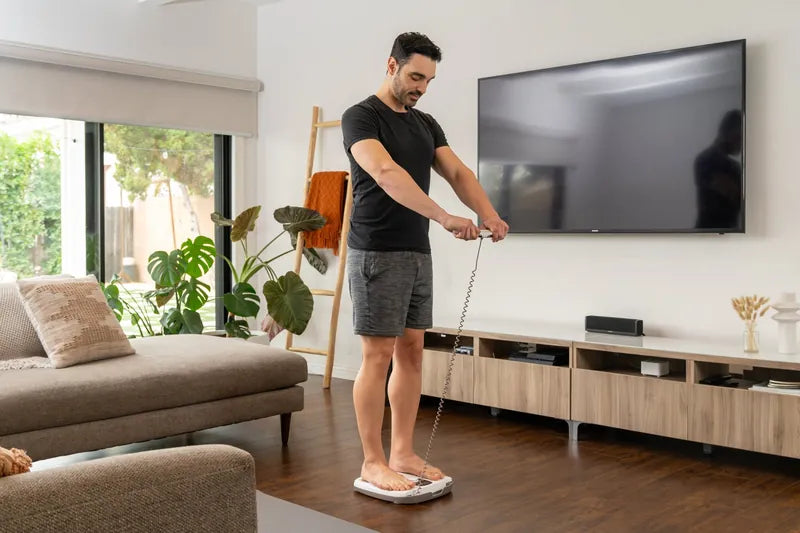
A home body fat analyser trades some detail for frequency. You can test every morning before breakfast, in the same state every time, which is exactly what makes small changes visible. Over eight or twelve weeks, you see whether the kilos you lost were fat or muscle, whether visceral fat level is drifting down, and whether a plateau on the weighing scale is hiding progress underneath.
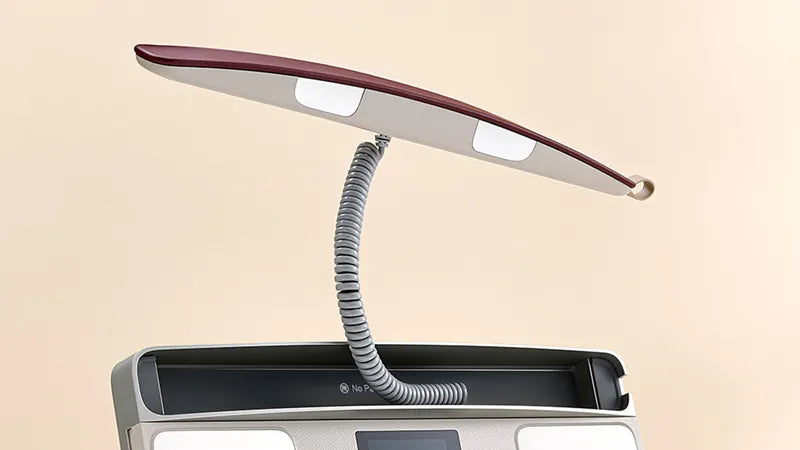
Every InBody Dial uses the same principle as the clinic machines: 8 electrodes at the hands and feet, and each arm, each leg and the trunk measured separately. Dial H30 and H40 measure at three frequencies (5, 50 and 200 kHz); Dial H20 at two (20 and 100 kHz). Results go to the InBody app, where they build into a trend.

A home scale also covers the whole family without a booking. Dial H30 and H40 recognise up to 20 people as they step on and sync over home Wi-Fi, which suits parents who would rather not open an app. If you are watching a parent’s strength, muscle loss after 40 explains what to look for.
Why the two numbers won’t match
Expect your home scale and the clinic machine to disagree, sometimes by a few points of body fat. That does not mean one is broken. Different analysers use different electrodes, frequencies and equations, and you are usually tested at a different time of day, after different meals. When researchers measured the same 73 adults on 15 consumer BIA devices, results varied from device to device.
So the rule is simple: compare the clinic machine with its own earlier results, and the home scale with its own. What should agree is the direction. If both show body fat falling and muscle holding, you can trust the story. For more on why readings vary, see are body fat scales accurate.
Use both: clinic baseline, home trend
- Start with a professional test. Book one at a hospital, clinic or gym near you; you can find an InBody test centre on the InBody India site.
- Bring the result into the app. Scan the QR code on an InBody result sheet with the InBody app and it joins your home timeline. Some results may not show, depending on the InBody model and the facility.
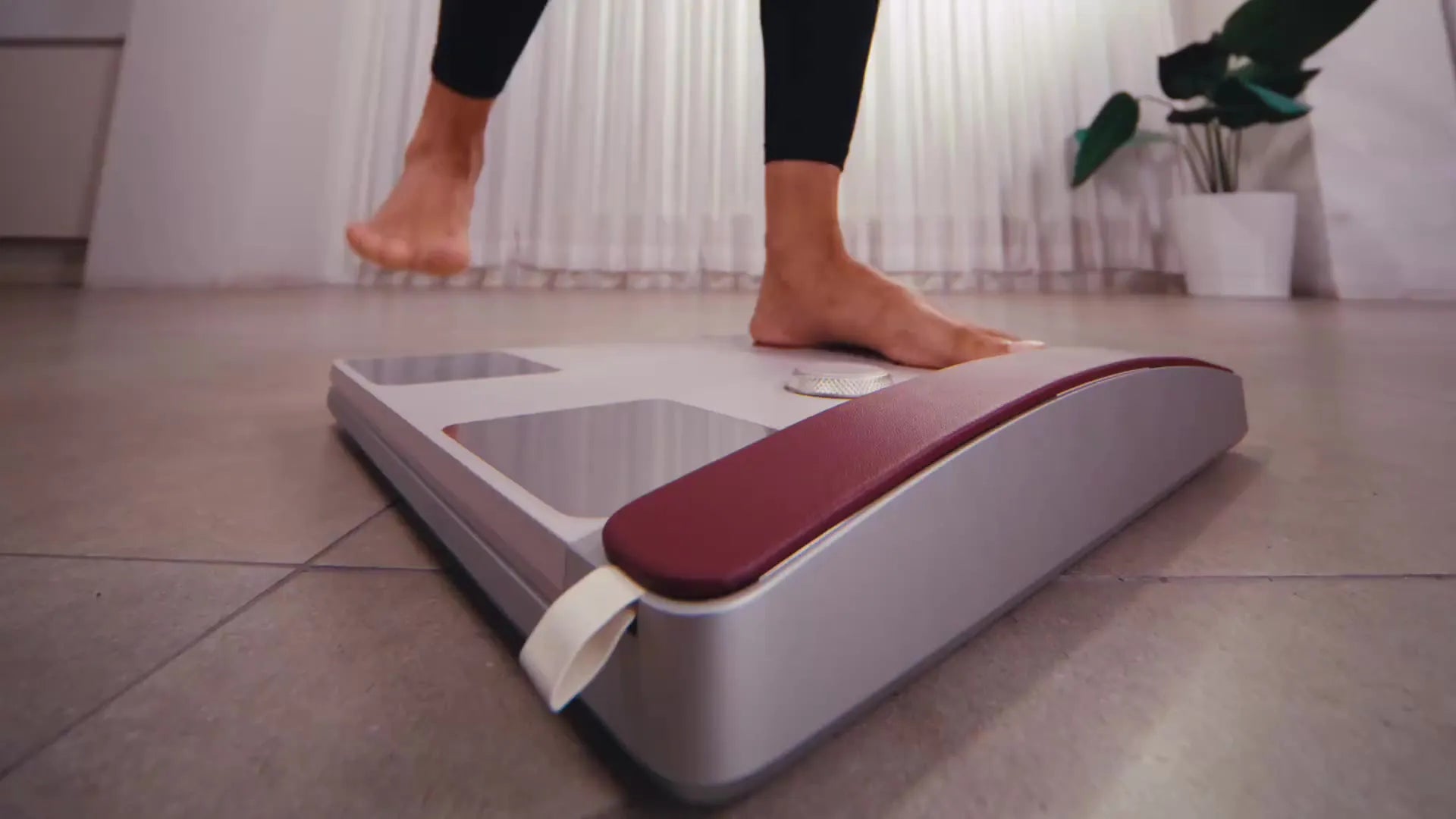
- Start the home routine the same week. Morning, after the toilet, before breakfast and exercise. Bare feet, arms straight and away from your body.
- Go back every few months. A fresh professional test is a useful checkpoint, especially before changing your plan.
- Take the trend to your appointments. Show your doctor or coach the home line on your phone, and ask what it means for you.
Choosing the home half
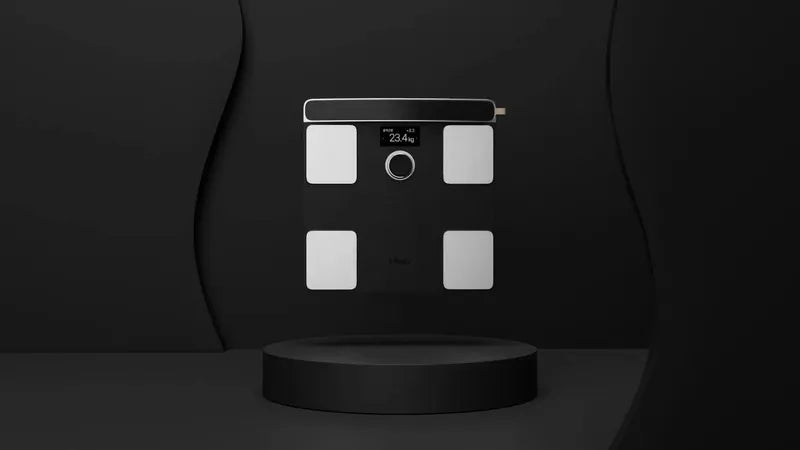
Pick the Dial by who will use it. Dial H20 is for one person and syncs over Bluetooth. Dial H30 recognises up to 20 people and syncs over Wi-Fi, which makes it the easy choice for a family. Dial H40 is the most detailed: everything H30 shows, plus leg muscle level and three balance ratings, which is closest in spirit to the extra detail you are used to on a clinic sheet.
 Dial H40For people who train. 14 readings, leg muscle level, three balance ratings, Wi-Fi sync.See Dial H40 →
The full model-by-model breakdown is in Dial H20 vs H30 vs H40.
Questions people ask
Is a home body fat analyser as accurate as the machine at a clinic?
A professional analyser, run by trained staff, gives a more detailed result. A good home analyser is built for a different job: frequent tests in the same conditions, so you can see change. Use the clinic for checkpoints and the home scale for the trend.
Why does my clinic InBody result differ from my home scale?
Different devices use different electrodes, frequencies and equations, and the tests usually happen at different times of day. Compare each device only with its own earlier results; what should agree is the direction of change.
Can I add my gym’s InBody result to the app?
Yes, in most cases. Scan the QR code on the result sheet with the InBody app and it joins your home results, so that printout becomes your first data point. Some results may not show, depending on the model and the facility.
How often should I get a professional body composition test?
There is no fixed rule. Many people find one every few months is enough when they also test at home weekly. If you are on a medical programme, follow your doctor’s advice.
What is the price of a body fat analyser for home?
Each Dial’s current price is shown on its product page, with free tracked delivery across India and a 1-year warranty. Clinic and gym test fees are set by each facility.
Sources
- InBody India. InBody installations and test locations across India.
- InBody Dial H20, H30 and H40 specifications, InBody India.
- Siedler MR et al. Assessing the reliability and cross-sectional and longitudinal validity of fifteen bioelectrical impedance analysis devices. British Journal of Nutrition 2023;130:827–840.
 Dial H40
 Dial H30
 Dial H20