Best body composition scale in India: what to look for before you buy
Contact points, frequencies, the muscle number, the app and who will use it: what separates a useful body composition scale from a scale with extras.
The best body composition scale for your home is not the one with the longest list of readings. It is the one that measures the parts of you that matter, gives the same answer under the same conditions, and actually gets used every week by the people it was bought for.
Shopping apps in India are full of smart scales promising a dozen numbers. Almost all of them weigh you accurately and estimate the rest. This guide walks through what is worth checking, roughly in order of how much it changes what you learn, and ends with a plain recommendation for each kind of household.
The short version
- Check the contact points first. A scale that holds you at the hands and the feet measures your arms, trunk and legs; a foot-only scale estimates everything above your hips.
- Look for skeletal muscle mass, a trend view in the app, and published research on the exact model you are buying.
- Buy for the household: one person, a whole family, or someone who trains. That decides the right model more than any single spec.
First, what every body composition scale does
Weight is the only number a body composition scale truly weighs. Everything else comes from bioelectrical impedance analysis, or BIA. A tiny, safe current that you cannot feel travels through your body. Water-rich lean tissue lets it pass easily; fat resists it. The scale measures that resistance, called impedance, and feeds it into equations along with your height and weight.
So every body composition monitor is making an estimate. The useful question is how good the raw measurement is before the equations take over, and how much the scale leans on assumptions about people like you. That is what the next few checks are really about.
Contact points: where the current can go
The current can only travel between the electrodes you touch. That one fact sorts the market into three groups.
Feet only
Most smart scales have two or four steel pads under your feet. The current runs up one leg and down the other, so the reading is really a reading of your legs and lower body. Your arms, chest, back and belly are filled in from population equations. A full breakdown of what that misses is in smart scale vs InBody Dial.
Hands and feet
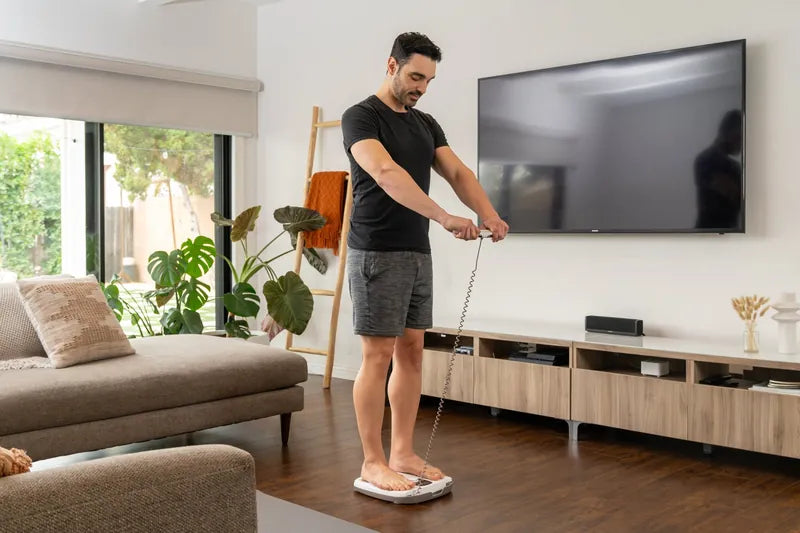
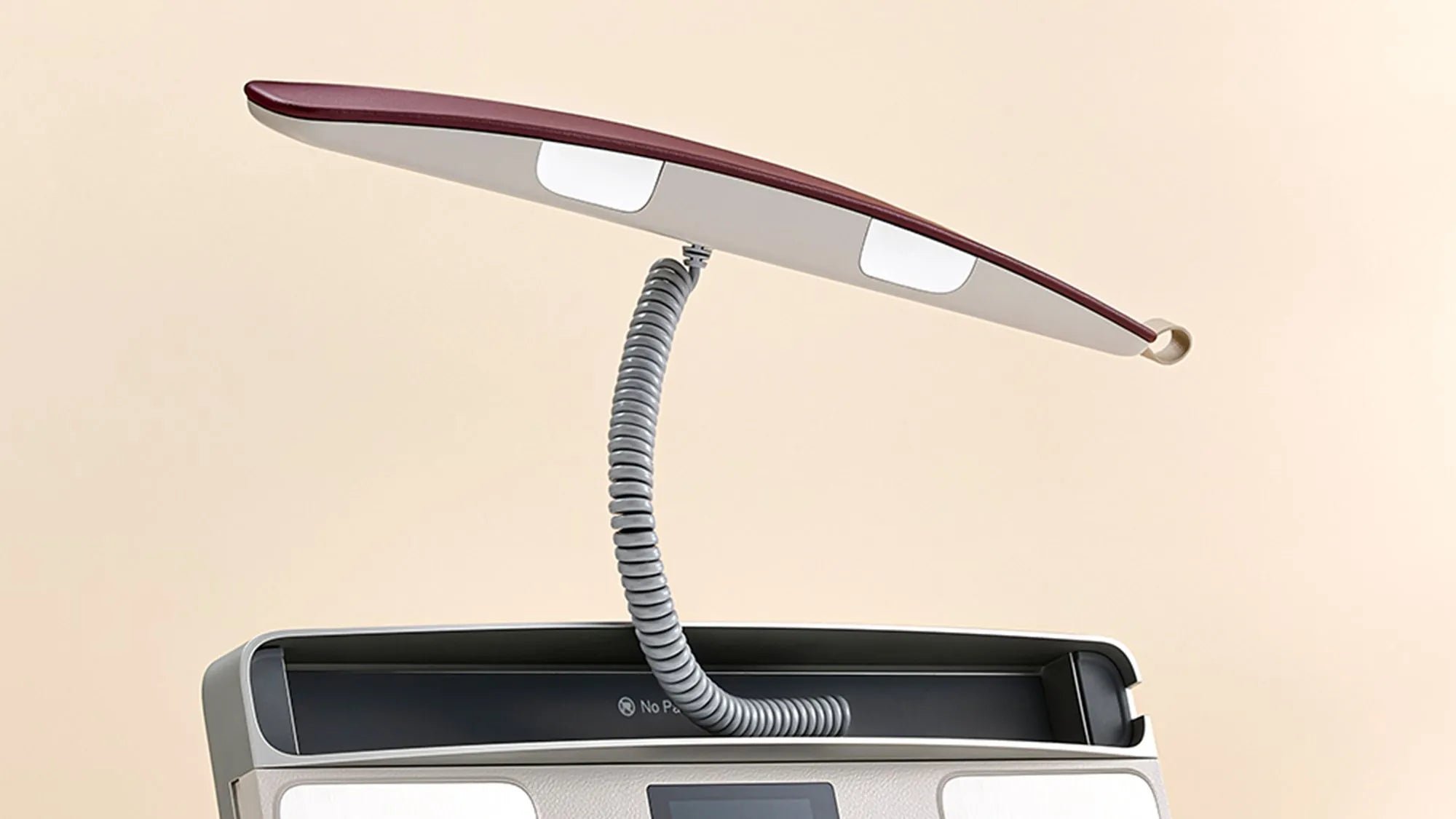
An 8-point scale adds a handle with electrodes for your palms and thumbs. Now the current can enter and leave at four places, so the scale can measure each arm, each leg and the trunk separately. InBody calls this direct segmental measurement. The trunk matters more than it sounds: many Indians carry fat around the middle at a normal weight, and the trunk is exactly what a foot-only path cannot see.

Frequencies and the muscle number
One frequency or several
Basic scales usually send a single frequency. Multi-frequency scales send several. Low frequencies tend to travel around your cells, through the water outside them; higher frequencies pass through cell membranes too. Reading the same body at more than one frequency gives the equations more to work with.
For reference, Dial H20 measures at two frequencies (20 and 100 kHz), which makes 10 measurements per test across the five segments. Dial H30 and H40 measure at three (5, 50 and 200 kHz), which makes 15.
Skeletal muscle, not just “muscle mass”
This is the spec most people miss. Many scales report “muscle mass”, which is often a broad lean figure that includes water and the lean tissue of your organs. Skeletal muscle mass is narrower: the muscle attached to your bones, the muscle you build with training and slowly lose with age if you do nothing about it.
If you are tracking strength training, a weight-loss programme, or a parent who is getting less active, skeletal muscle is the number to follow. Every Dial reports skeletal muscle mass, on its own screen and in the app. For more on why this matters with age, see muscle loss after 40.
Living with it: the app, the household, the floor
A trend, not a number
A single reading tells you very little. Eight weeks of readings taken the same way tell you a lot. Look for an app that plots weight, muscle and fat on one timeline so you can see which one is moving. Dial uses the InBody app on iOS 15 or later and Android 8 or later, and every result becomes part of a trend.

One person or the whole house
Be honest about who will step on it. A shared scale that cannot tell people apart ends in one question: whose reading was that? Dial H30 and H40 recognise up to 20 people as they step on and have a guest mode for visitors. They sync over home Wi-Fi, so nobody needs a phone beside the scale, and they store 15 results per person if the Wi-Fi drops. Dial H20 is built for one person at a time: you set your height on the dial before each test and sync over Bluetooth.
If children will use it, check the age range. Dial H30 is suitable from 3 years with an adult’s help; Dial H40 from 6 years.
Where it can live
Not the bathroom. Steam and splashes are bad for any electronic scale, and Dial H30 and H40 are rated IP21, which covers drips only. A body composition scale wants a hard, level floor in a dry room, away from the fridge, TV and power outlets, and off carpet. A bedroom corner or a dressing area works well, because the best time to test is in the morning, after the toilet and before breakfast.

Has this exact model been tested?
Every brand says its scale is accurate. Fewer can point to a published study on the specific model. Ask for one, and check what it was compared against: DXA scans and four-compartment models are the reference methods researchers use.
In the 2023 study in the British Journal of Nutrition, 73 adults were measured on 15 consumer devices. The InBody H20N, sold in India as Dial H20, was rated “very good” and tracked change over 12 to 16 weeks. The 2026 study measured 55 adults with obesity and found excellent agreement with DXA for body fat percentage and good agreement for skeletal muscle. Both studies are of the H20 only; they say nothing either way about H30 or H40, and no study makes a home scale a lab.
The recommendation, person by person
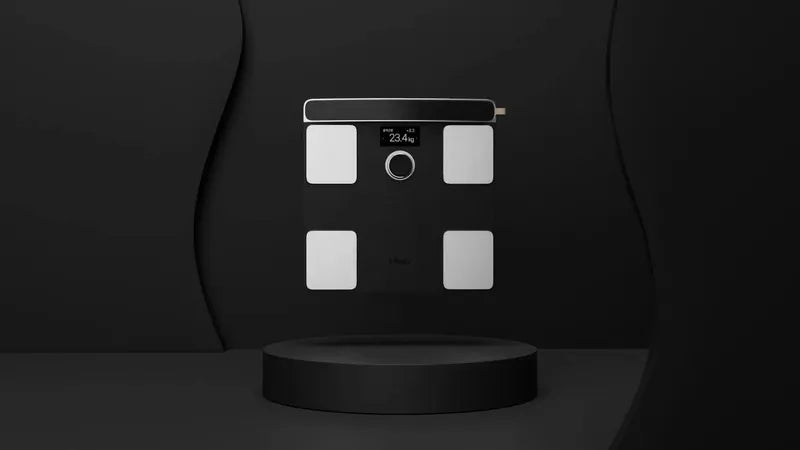
Every Dial measures the same way: 8 electrodes, five segments, skeletal muscle, body fat and visceral fat level. What changes is who it is built for.
- Just you, phone usually nearby: Dial H20. Eight readings, about 10 seconds per test, Bluetooth sync. The model with the published validation data.
- A family, including parents or children: Dial H30. Twelve readings, recognises up to 20 people, Wi-Fi sync, suitable from 3 years with help.
- Someone who trains: Dial H40. Fourteen readings, including leg muscle level and three balance ratings, in Beige or Black.
For most Indian homes, where a scale gets shared between a couple, their parents and sometimes the children, Dial H30 is the safest choice. It knows who stepped on, and nobody has to remember to open an app.
 Dial H30For the whole house. Recognises up to 20 people, syncs over Wi-Fi, 12 readings.See Dial H30 →
Still deciding between models? The full side-by-side is in Dial H20 vs H30 vs H40.
Questions people ask
Which is the best body composition scale in India for home use?
The best one is the one that suits your household and measures your whole body. Look for 8 electrodes at the hands and feet, skeletal muscle mass, a trend view in the app and published research on the model. For one person, Dial H20; for a family, Dial H30; for someone who trains, Dial H40.
Is an 8-electrode scale better than a 4-electrode scale?
A 4-electrode smart scale usually has all four pads under your feet, so it still reads only the path through your legs. An 8-electrode scale adds hand electrodes, so it can measure your arms and trunk directly instead of estimating them.
What is the difference between a body composition monitor and a smart scale?
The terms overlap. “Smart scale” usually means a scale that syncs to an app; it may or may not estimate body composition. A body composition monitor focuses on what your weight is made of: muscle, fat and, on better devices, how that is spread across your body.
Does a body composition scale need Wi-Fi?
Not always. Dial H20 syncs over Bluetooth, so you keep your phone nearby. Dial H30 and H40 use home Wi-Fi as well as Bluetooth, so results reach the app even when your phone is in another room.
Is a body composition scale safe for everyone?
The current is tiny and you will not feel it. InBody advises that people with a pacemaker or another implanted electronic medical device should not use it, and that pregnant women check with their doctor first. It is a fitness and wellness tracking device, not a medical device.
Sources
- Siedler MR et al. Assessing the reliability and cross-sectional and longitudinal validity of fifteen bioelectrical impedance analysis devices. British Journal of Nutrition 2023;130:827–840.
- Ellison et al. Assessing body composition for resource-limited settings: agreement of a scalable BIA device compared to DXA and clinical BIA in adults with obesity. Journal of Primary Care & Community Health 2026;17.
- Kyle UG, Bosaeus I, De Lorenzo AD, et al. Bioelectrical impedance analysis—part I: review of principles and methods. Clinical Nutrition 2004;23(5):1226–1243.
- Misra A, Khurana L. The metabolic syndrome in South Asians: epidemiology, determinants, and prevention. Metabolic Syndrome and Related Disorders 2009;7(6):497–514.
- InBody Dial H20, H30 and H40 specifications, InBody India.
 Dial H40
 Dial H30
 Dial H20