How to check visceral fat at home, and what your level means
Visceral fat sits deep around your organs, and a normal weight can hide it. How to check it at home, what the level means and how to bring it down.

Visceral fat is the fat you cannot pinch. It sits deep inside your belly, packed around the liver, the gut and other organs, and a normal weight or a normal BMI can hide it. You will not see it in the mirror, but you can estimate it at home and, more usefully, watch which way it moves.
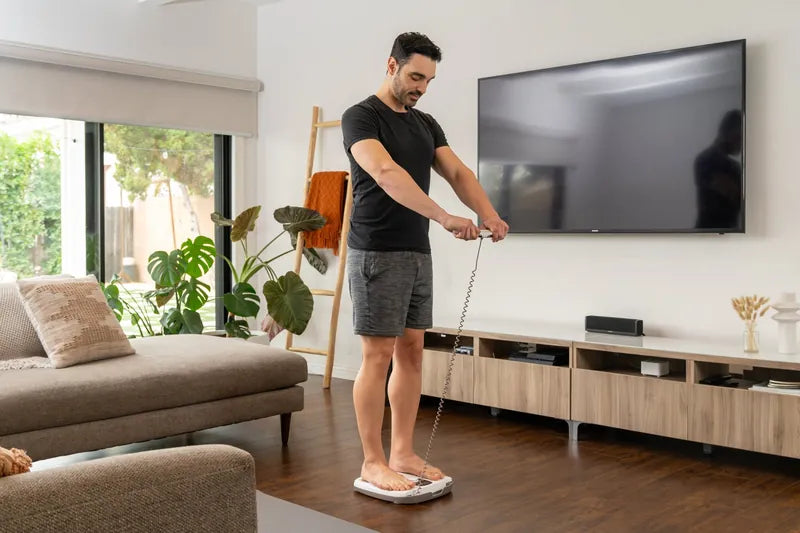
The simplest home check is a tape measure for your waist and hips. The more informative one is a body composition scale that holds you at the hands and feet, such as InBody Dial, which shows a visceral fat level from 1 to 20 at every test. Under 10 is InBody’s standard range for adults. Here is what that number means, why it deserves extra attention if you are South Asian, and what brings it down.
The short version
- Visceral fat is stored around your organs, beneath the muscle wall, not under the skin. It is harder to see and is often the fat that matters more for long-term health.
- Every Dial shows a visceral fat level from 1 to 20 on its own screen; under 10 is the standard range for adults. Dial H30 and H40 also estimate your waist-hip ratio in the app.
- Judge it month by month. Daily movement, strength training, sleep and better food choices all tend to move it.
What visceral fat is, and why it is different
Your belly holds two kinds of fat. Subcutaneous fat sits just under the skin: the soft layer you can pinch between your fingers. Visceral fat sits deeper, behind the abdominal muscles, wrapped around the organs.
The two behave differently. Visceral fat is more metabolically active, and researchers have linked higher amounts of it with insulin resistance, type 2 diabetes and heart disease, often more strongly than fat stored elsewhere. That does not make every belly a problem. It does make visceral fat worth knowing about, because weight alone says nothing about where your fat is stored.
Why it matters more for South Asians
Researchers led by Anoop Misra have described what they call the Asian Indian phenotype. Compared with white Europeans of the same BMI, Asian Indians tend to carry more total body fat, more of it around and inside the abdomen, and less muscle. A study in the Journal of Clinical Endocrinology & Metabolism found healthy Asian Indian men had more abdominal fat and more insulin resistance than white men of similar BMI.
This is why the World Health Organization suggested lower BMI action points for Asian populations, and why a normal reading on a weighing machine does not settle the question. Being slim on the outside and carrying more fat inside is common enough to have its own name. If that sounds familiar, read our guide to skinny fat and normal weight obesity.
None of this means you have a problem. It means your weight alone cannot tell you. If you have a family history of diabetes or heart disease, talk to your doctor about what to check and how often.

How to check visceral fat at home
With a tape measure
Measure your waist midway between your lowest rib and the top of your hip bone, breathing out gently. Measure your hips at the widest point. Divide waist by hips to get your waist-hip ratio. A WHO expert consultation used 0.90 for men and 0.85 for women as points above which risk is substantially increased. It is free and useful, but a tape counts the fat outside the muscle wall and the fat inside it as one number.
With a body composition scale
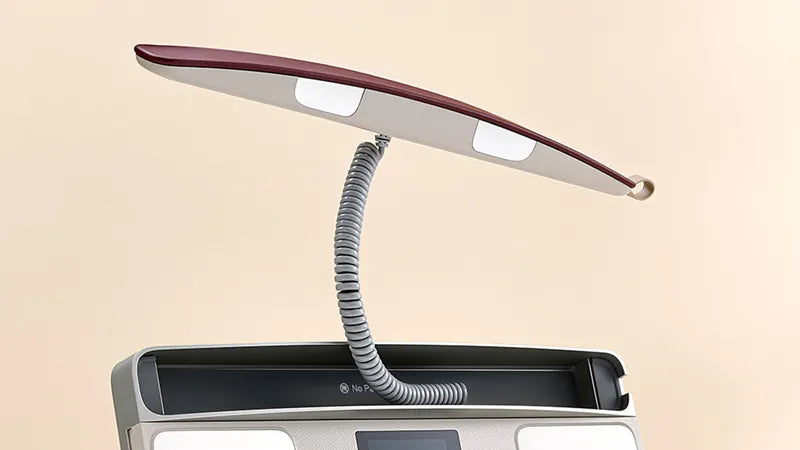
A body composition scale sends a tiny current you cannot feel through your body and works out how much is lean tissue and how much is fat. Most smart scales only touch your feet, so the current never passes through your trunk, and the belly is estimated from a formula. InBody Dial uses 8 electrodes at the hands and feet and measures each arm, each leg and the trunk as separate segments. From that, it reports a visceral fat level at every test.
With a scan
CT and MRI can see visceral fat directly, and DXA can estimate it. These are tools for research and clinics, not for checking every month. Our guide to DEXA scans and home scales explains when each one makes sense.
What your visceral fat level means on a Dial
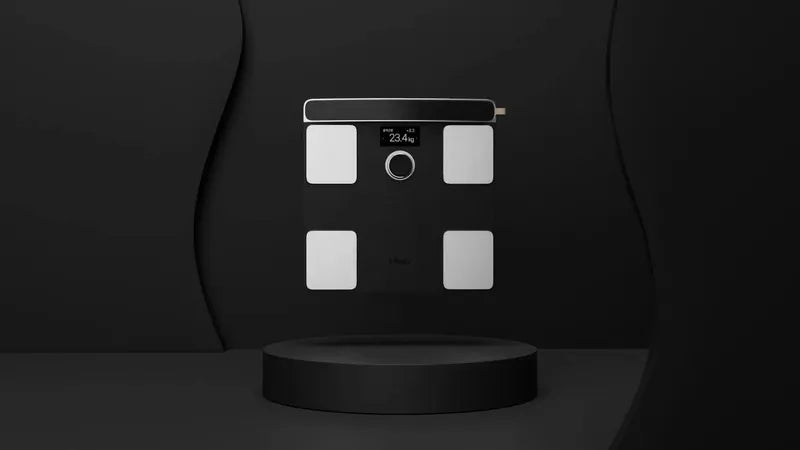
Every Dial, from Dial H20 to Dial H40, shows a visceral fat level on the scale’s own screen, next to your weight, muscle and body fat. It is rated from 1 to 20. Under 10 is InBody’s standard range for adults.
It is a level, not kilos and not a share of your weight. Think of it as a position on a scale that is most useful when you compare it with your own earlier readings. A move from 12 to 11 over a couple of months says more than any single reading.

Waist-hip ratio on Dial H30 and H40
Dial H30 and H40 add an estimated waist-hip ratio in the InBody app. It is calculated from your measurement, not taped, so treat it the same way as the visceral fat level: as a trend to follow rather than a figure to compare with a tape reading.

How to bring visceral fat down
There is no exercise that burns belly fat on the spot. What tends to work is the same set of habits that improves health in general, applied steadily for months.
- Move every day. A review of exercise trials in overweight adults found that aerobic exercise reduced visceral fat. Brisk walks after meals, cycling and swimming all count. WHO suggests 150 to 300 minutes of moderate activity a week.
- Lift something, twice a week or more. Strength training helps you keep muscle while you lose fat, so the change on the scale is the right kind. Squats, push-ups and resistance bands at home are enough to start.
- Protect your sleep. A large meta-analysis linked short sleep with a higher risk of obesity in both children and adults. Late nights also make every other habit harder.
- Rethink the plate, not just the portion. Fewer sugary drinks, sweets and refined snacks; more dal, vegetables, whole grains and fibre. ICMR-NIN’s dietary guidelines also advise keeping alcohol low.
- Give it months. Visceral fat often responds to these changes, but not on a weekly timetable. Measure, wait, measure again.
 Dial H30For the whole house. Visceral fat level on the screen, estimated waist-hip ratio in the app, and it recognises up to 20 people.See Dial H30 →
How to track it: monthly, not daily
Visceral fat changes slowly, and any reading moves a little with water, food and timing. So the routine matters more than the device. Test at the same time of day, ideally in the morning after the toilet and before food or exercise, barefoot, with your arms straight and away from your body.
Test once or twice a week if you like, but judge the trend once a month. One level up or down on a single morning is not news. Three months of readings that keep stepping down are. Our guide to how accurate body fat scales are explains why consistency beats any single number.
If you live alone, Dial H20 shows visceral fat level on its screen and syncs to your phone over Bluetooth. For a family, Dial H30 recognises up to 20 people and adds waist-hip ratio. And if a reading worries you, take your trend to your doctor rather than a single screenshot.
Questions people ask
What is a normal visceral fat level?
On InBody Dial, visceral fat level is rated from 1 to 20, and under 10 is InBody’s standard range for adults. Other brands use their own scales, so a level from one device cannot be compared with another. Ask your doctor what your level means for you.
Can a thin person have high visceral fat?
Yes. A normal weight or BMI can sit alongside a high share of body fat and more fat around the organs, a pattern researchers see often in South Asians. That is the reason to look beyond weight.
Can a smart scale measure visceral fat?
Many smart scales show a visceral fat number, but if they only touch your feet, the current does not pass through your trunk and the figure leans heavily on a formula. A Dial measures the trunk as its own segment through hand and foot electrodes.
How fast does visceral fat go down?
There is no fixed timeline. It often responds to regular activity, strength training and better food, but expect to see it over months, not days. Compare monthly readings taken under the same conditions.
Does a visceral fat reading replace blood tests?
No. InBody Dial is a fitness and wellness tracking device, not a medical device. Blood sugar, cholesterol and blood pressure checks come from your doctor; your Dial trend is useful context to bring along.
Sources
- Misra A, Khurana L. The metabolic syndrome in South Asians: epidemiology, determinants, and prevention. Metabolic Syndrome and Related Disorders 2009;7(6):497–514.
- Raji A, Seely EW, Arky RA, Simonson DC. Body fat distribution and insulin resistance in healthy Asian Indians and Caucasians. Journal of Clinical Endocrinology & Metabolism 2001;86(11):5366–5371.
- WHO Expert Consultation. Appropriate body-mass index for Asian populations and its implications for policy and intervention strategies. The Lancet 2004;363:157–163.
- World Health Organization. Waist circumference and waist–hip ratio: report of a WHO expert consultation, Geneva, 8–11 December 2008. Geneva: WHO; 2011.
- Vissers D et al. The effect of exercise on visceral adipose tissue in overweight adults: a systematic review and meta-analysis. PLoS One 2013;8(2):e56415.
- World Health Organization. WHO guidelines on physical activity and sedentary behaviour. Geneva: WHO; 2020.
- Cappuccio FP et al. Meta-analysis of short sleep duration and obesity in children and adults. Sleep 2008;31(5):619–626.
- ICMR-NIN, Dietary Guidelines for Indians, 2024.
- InBody Dial H20, H30 and H40 specifications and InBody app, InBody India.
 Dial H40
 Dial H30
 Dial H20