Skinny fat: when a normal weight hides high body fat
Thin outside, more fat inside. Why normal weight obesity is common in Indians, why BMI misses it, and how strength training and protein fix it.

Skinny fat is the everyday name for a body that looks slim and weighs a normal amount, but carries a high share of fat and relatively little muscle. Researchers call it normal weight obesity. Your BMI says you are fine. Your body fat percentage says otherwise.
It is common in South Asians, and an ordinary weighing machine will never show it, because it only sees the total. This guide explains why it happens, how to check for it at home, and what actually fixes it: building muscle, eating enough protein and tracking fat and muscle rather than weight.
The short version
- Normal weight obesity means a normal BMI with a high body fat percentage. Researchers have linked it with more cardiometabolic risk factors than a leaner body of the same weight.
- Asian Indians tend to carry more fat, more of it around the belly, and less muscle at the same BMI. Researchers call this the Asian Indian phenotype.
- The fix is rarely eating less. It is strength training, protein at every meal and a scale that shows fat and muscle separately.
What skinny fat actually means
Two people can share the same height and weight and have very different bodies. One carries more muscle and less fat. The other carries less muscle and more fat, often around the middle. On a weighing machine and a BMI chart, they look identical.
There is no single cut-off for normal weight obesity. Studies use different body fat thresholds for men and women. The pattern is what matters: a normal weight that is carried with too little muscle. In a large study of American adults published in the European Heart Journal, people with a normal BMI but high body fat had more cardiometabolic risk factors than those with normal weight and lower body fat.


The Asian Indian phenotype
Researchers led by Anoop Misra have described a pattern often seen in Asian Indians: compared with white Europeans of the same BMI, more total body fat, more abdominal and visceral fat, less muscle and more insulin resistance. A study of healthy Asian Indian and white men of similar BMI found the Asian Indian men had more abdominal fat and were more insulin resistant.
That is why a WHO expert consultation in 2004 suggested extra BMI action points for Asian populations, at 23 and 27.5, below the usual 25 and 30. Risk starts rising at a lower weight.
None of this means a slim person should worry. It means weight and BMI are not enough on their own. If diabetes or heart disease runs in your family, ask your doctor what to check. Visceral fat is part of the same story; our guide to checking visceral fat at home explains it.
Why BMI and the weighing machine miss it
BMI is weight divided by height squared. It is quick and useful across populations, but it cannot tell fat from muscle. A weighing machine has the same blind spot. Our guide to BMI machines and body composition scales goes deeper.
The bigger trap is what people do next. Someone who suspects they are skinny fat often diets harder. Eat too little, skip strength work, and you lose muscle along with fat. You end up lighter and, proportionally, no less fat. The mirror barely changes and the cycle repeats.

How to fix it
Lift first
Strength training is the core of the fix, because the problem is too little muscle as much as too much fat. WHO recommends muscle-strengthening activity working all major muscle groups on two or more days a week. Start with squats, lunges, push-ups, rows with a band, then add load as you get stronger.
Eat enough protein
ICMR-NIN puts the protein requirement for healthy Indian adults at 0.83 grams per kilo of body weight per day; for a 55 kg adult that is about 46 grams. Spread it out: dal or chana at lunch and dinner, curd or milk during the day, paneer, tofu or soya chunks a few times a week, eggs if you eat them. A cereal and pulse together, as in khichdi or dal-chawal, gives better protein quality than either alone.
Do not crash diet
If your weight is already normal, you may not need to lose any. The goal is to shift the mix: more muscle, less fat, at roughly the same weight. That means the scale may barely move. Here is why a flat weight can still be progress.
Move more between workouts
Long desk days add up. Walks after meals, stairs instead of lifts and standing breaks every hour all help, alongside 150 to 300 minutes of moderate activity a week.
Tracking it with a Dial
Because skinny fat is a body composition problem, you need body composition readings to see it improve. Watch three numbers over months: percent body fat, skeletal muscle mass and visceral fat level. Success looks like the first and third drifting down while the second climbs.
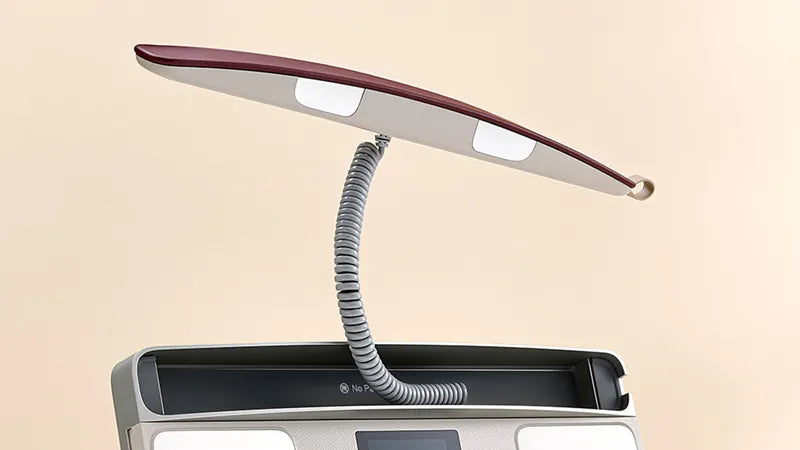
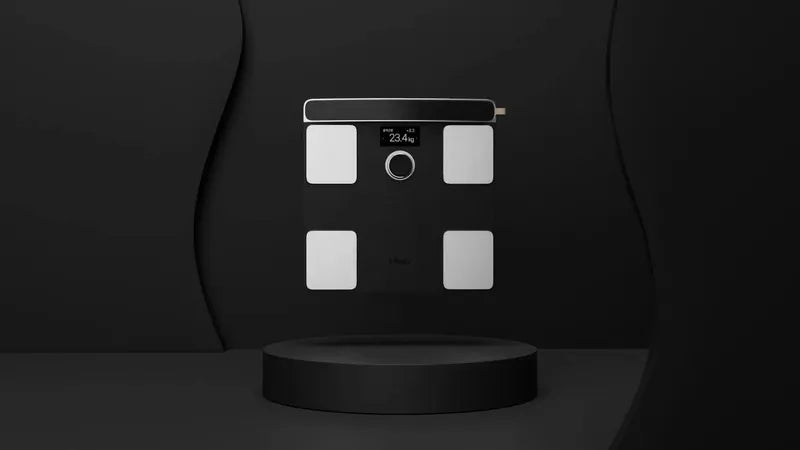
For one person, Dial H20 is the natural fit. It shows weight, muscle, body fat and visceral fat level on its own screen, gives 8 readings in the InBody app over Bluetooth, and takes about 10 seconds. You set your height on the dial before each test. It is also the Dial with published research: a 2023 study rated the H20N “very good” against a four-compartment model, and a 2026 study in adults with obesity found excellent agreement with DXA for body fat percentage.

 Dial H20For just you. Weight, muscle, body fat and visceral fat level on the screen, 8 readings in the app.See Dial H20 →
If two or more people at home want to track, Dial H30 recognises up to 20 people and adds body type, a chart of body fat percentage against BMI. To build muscle in a measured way, see our guide to measuring muscle mass at home.
Questions people ask
Is being skinny fat unhealthy?
Research has linked normal weight with high body fat to more cardiometabolic risk factors. It is not a verdict on any one person. If you are concerned, talk to your doctor, especially if diabetes or heart disease runs in your family.
How do I know if I am skinny fat?
A normal BMI with a high body fat percentage and low muscle is the usual picture, often with a softer belly. A body composition scale that reports body fat and skeletal muscle separately will show it; a weighing machine will not.
Should I lose weight if I am skinny fat?
Often not. The aim is to change the mix, building muscle and losing fat at about the same weight. Cutting food hard without strength training tends to cost muscle too.
How long does it take to fix skinny fat?
Expect months, not weeks. With regular strength training and enough protein, the fat and muscle lines usually start to separate within a few months of consistent tracking.
Is BMI useless?
No. It is a quick screening tool used worldwide. It just cannot tell fat from muscle, so it misses people whose normal weight hides high body fat.
Sources
- Romero-Corral A et al. Normal weight obesity: a risk factor for cardiometabolic dysregulation and cardiovascular mortality. European Heart Journal 2010;31(6):737–746.
- Misra A, Khurana L. Obesity and the metabolic syndrome in developing countries. Journal of Clinical Endocrinology & Metabolism 2008;93(11 Suppl 1):S9–S30.
- Misra A, Khurana L. The metabolic syndrome in South Asians: epidemiology, determinants, and prevention. Metabolic Syndrome and Related Disorders 2009;7(6):497–514.
- Raji A, Seely EW, Arky RA, Simonson DC. Body fat distribution and insulin resistance in healthy Asian Indians and Caucasians. Journal of Clinical Endocrinology & Metabolism 2001;86(11):5366–5371.
- WHO Expert Consultation. Appropriate body-mass index for Asian populations and its implications for policy and intervention strategies. The Lancet 2004;363:157–163.
- World Health Organization. WHO guidelines on physical activity and sedentary behaviour. Geneva: WHO; 2020.
- ICMR-NIN, Nutrient Requirements for Indians: Recommended Dietary Allowances and Estimated Average Requirements, 2020.
- Siedler MR et al. Assessing the reliability and cross-sectional and longitudinal validity of fifteen bioelectrical impedance analysis devices. British Journal of Nutrition 2023;130:827–840.
- Ellison et al. Assessing body composition for resource-limited settings: agreement of a scalable BIA device compared to DXA and clinical BIA in adults with obesity. Journal of Primary Care & Community Health 2026;17.
 Dial H40
 Dial H30
 Dial H20