How to measure muscle mass at home, and what the number means
Skeletal muscle mass is not the muscle mass most scales show. What it is, how to measure it at home and what real change looks like week to week.
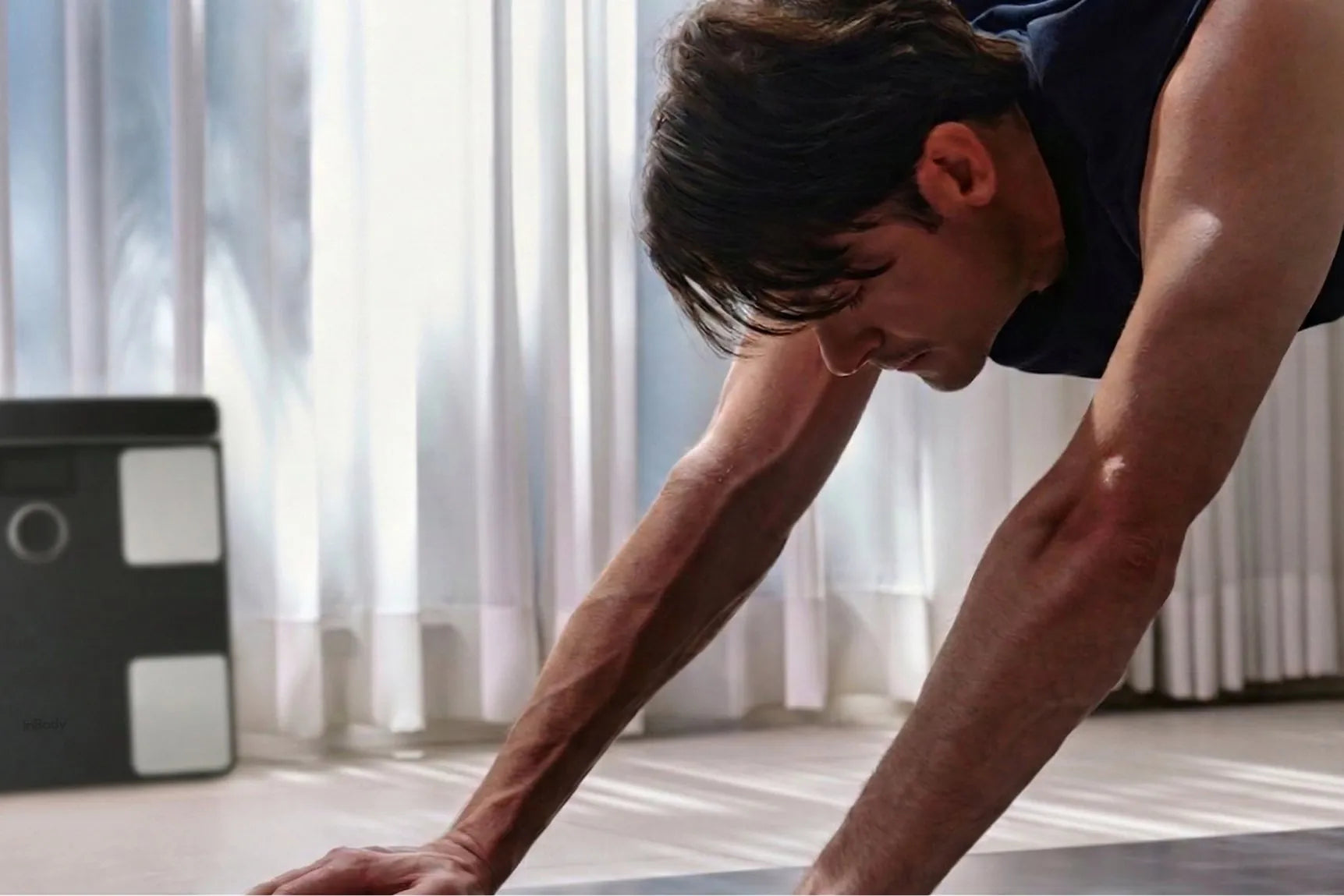
To measure muscle mass at home, you need two things: a body composition scale that reports skeletal muscle mass, and a routine that keeps every test the same. The scale gives you the number. The routine is what makes the number worth watching.
There is a catch. Most smart scales show something called “muscle mass”, which sounds the same as skeletal muscle mass but is usually a much bigger, broader figure. This guide explains the difference, why muscle matters well beyond the gym, how fast it really changes, and how to build it on an Indian, often vegetarian, plate.
The short version
- Skeletal muscle mass is the muscle attached to your bones: the muscle you train and move with. The “muscle mass” on many scales also counts water, organs and other lean tissue.
- Real muscle gain is slow, and single readings bounce around. Test under the same conditions and judge the monthly trend.
- Strength training on two or more days a week, plus enough protein spread across your meals, is what moves the line.
Skeletal muscle mass, muscle mass and lean mass
Start with your weight. Take away your fat and what is left is fat-free mass, sometimes called lean body mass: water, organs, bone mineral and muscle together. Take away bone and you get soft lean mass, which Dial H30 and H40 report. Inside all of that is skeletal muscle mass, the muscle that moves your joints, lifts your shopping and gets you off the floor.
This is why people switching scales sometimes think they have lost ten kilos of muscle overnight. They have not. One device is reporting a broad lean figure, the other is reporting skeletal muscle. Compare a reading only with earlier readings from the same device. Our guide to smart scales and InBody Dial explains why the measurement path changes the numbers.
Why muscle matters more than you think
Strength for ordinary days. Climbing stairs with a bag, lifting a child, getting up from a floor cushion after a family meal. These are strength tasks, and they get harder when muscle drops.
Metabolism and blood sugar. Muscle burns more energy at rest than fat does, though less than people imagine. More importantly, skeletal muscle is where much of the sugar from a meal is taken up, which is one reason researchers place muscle at the centre of insulin resistance.
Ageing. A study of 468 adults aged 18 to 88 found skeletal muscle mass declines with age, with the loss becoming more noticeable from middle age. When low muscle comes with low strength or slow walking, the Asian Working Group for Sarcopenia calls it sarcopenia. If you are watching this in your parents, read our guide to muscle loss after 40.

How to measure muscle mass at home
The simple checks
A tape around your upper arm or thigh shows change, but fat and muscle sit under the same tape. Strength tests help too: the Asian Working Group for Sarcopenia uses handgrip strength and the time it takes to stand up from a chair five times. They tell you how well your muscle works, not how much you have.
A body composition scale
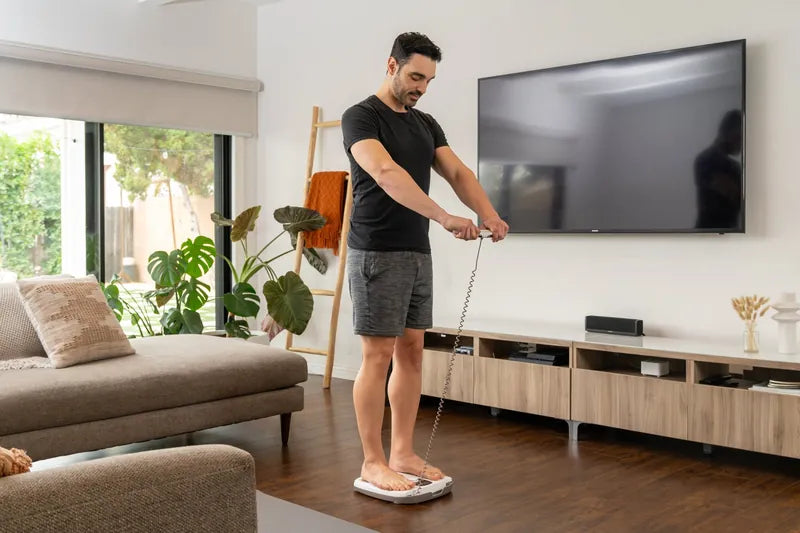
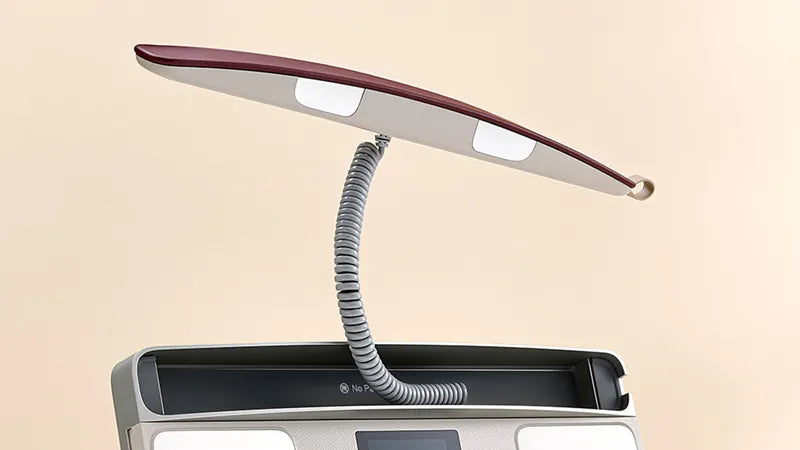
Body composition scales use bioelectrical impedance: a tiny current you cannot feel passes through you, and water-rich muscle conducts it far better than fat. Foot-only scales read your legs and estimate the rest. InBody Dial holds you at the hands and feet with 8 electrodes and measures each arm, each leg and the trunk separately, then reports skeletal muscle mass at every test on all three models.
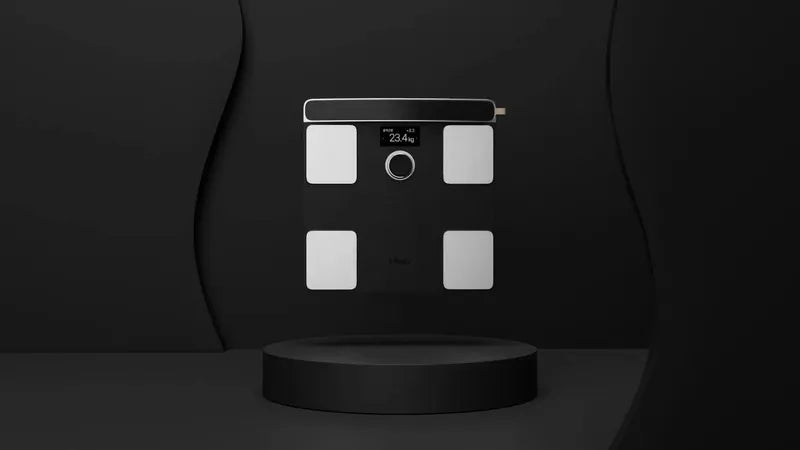
Dial H40 goes further for people who train. It adds a leg muscle level against the standard for your body, and three balance ratings, upper-body, lower-body and upper–lower, each shown as Balanced, Slightly unbalanced or Extremely unbalanced.

What to expect week to week
Muscle is built slowly. A month of good training can add a gain that would look tiny on any single morning, while water, food and the timing of your last workout move each reading up and down. So a lower number on Tuesday is rarely lost muscle, and a higher one on Friday is rarely a breakthrough.
Two habits make the line trustworthy. First, test under the same conditions every time: morning, after the toilet, before food or exercise, bare feet, arms straight with the handle. Second, compare four-week blocks, not single days. For Dial H20, a 2023 study in the British Journal of Nutrition found it tracked change in body composition over 12 to 16 weeks.

Building it: strength training and protein
Train every major muscle, twice a week or more
WHO recommends muscle-strengthening activity at moderate or greater intensity, working all major muscle groups, on two or more days a week. At home that can be squats, lunges, push-ups against a wall or the floor, rows with a resistance band and carrying something heavy up the stairs. Make it slightly harder every week or two: more repetitions, a slower lowering phase, a heavier bag.
Eat enough protein, spread across the day
ICMR-NIN puts the protein requirement for healthy Indian adults at 0.83 grams per kilo of body weight per day. For a 60 kg adult that is about 50 grams. Many vegetarian diets fall short because the protein arrives in one meal, or not at all at breakfast.
- Pulses at two meals. Dal, rajma, chana, moong and sprouts. Pairing them with cereals, as in dal-chawal, khichdi or idli, improves the overall protein quality.
- Dairy every day. Curd, milk, buttermilk and paneer.
- Soy and nuts. Tofu, soya chunks, peanuts and roasted chana as snacks.
- Eggs or fish if you eat them.
If you train hard, are older, or are losing weight on medication, your needs may be higher. A registered dietitian can set a number for you. Our guide to weight-loss medication and muscle covers that case.
 Dial H40For people who train. Skeletal muscle mass, leg muscle level and three balance ratings, 14 readings in all.See Dial H40 →
Track it like a training log
Write down your lifts, test once or twice a week, and look at the muscle and fat lines together each month. If muscle holds or rises while fat falls, the programme is working, even if your weight barely moves. If both fall, eat more protein and keep lifting.
Choose the Dial that fits your home. Dial H20 is for one person over Bluetooth; Dial H30 recognises up to 20 people; Dial H40 adds the training detail. The full comparison lays out the differences.
Questions people ask
What is a good skeletal muscle mass?
It depends on your height, weight and sex, so there is no single good number. The InBody app shows your reading against a standard range for your body. Your own trend matters more than any comparison with someone else.
Why is my skeletal muscle mass so much lower than my old scale’s muscle mass?
They are different readings. Many scales report a broad lean figure that includes water and organs. Skeletal muscle mass is only the muscle attached to your bones, so it is naturally smaller.
Can I gain muscle and lose fat at the same time?
Often, yes, especially when you are new to strength training or returning after a break. Your weight may stay flat while the muscle line rises and the fat line falls. See why the scale can stall while your body changes.
How often should I measure muscle mass?
Once or twice a week under the same conditions is plenty. Compare monthly averages rather than individual readings.
Can I build muscle on a vegetarian diet?
Yes. Dal, pulses, dairy, soy and nuts can cover your needs if protein appears at most meals. Pair it with progressive strength training.
Sources
- Janssen I, Heymsfield SB, Wang ZM, Ross R. Skeletal muscle mass and distribution in 468 men and women aged 18–88 yr. Journal of Applied Physiology 2000;89(1):81–88.
- Chen LK et al. Asian Working Group for Sarcopenia: 2019 consensus update on sarcopenia diagnosis and treatment. Journal of the American Medical Directors Association 2020;21(3):300–307.
- DeFronzo RA, Tripathy D. Skeletal muscle insulin resistance is the primary defect in type 2 diabetes. Diabetes Care 2009;32(Suppl 2):S157–S163.
- Siedler MR et al. Assessing the reliability and cross-sectional and longitudinal validity of fifteen bioelectrical impedance analysis devices. British Journal of Nutrition 2023;130:827–840.
- World Health Organization. WHO guidelines on physical activity and sedentary behaviour. Geneva: WHO; 2020.
- ICMR-NIN, Nutrient Requirements for Indians: Recommended Dietary Allowances and Estimated Average Requirements, 2020.
- ICMR-NIN, Dietary Guidelines for Indians, 2024.
- InBody Dial H20, H30 and H40 specifications, InBody India.
 Dial H40
 Dial H30
 Dial H20