BMI weight machine vs body composition scale: what BMI can’t tell you
A BMI machine is a weighing scale plus your height. What BMI misses, why the cut-offs are lower for Asian Indians, and what to measure instead.

A BMI weight machine sounds like it measures something new. It does not. It weighs you, takes your height, and does one sum. The number it shows is useful as a rough screen, but it cannot tell muscle from fat, or a fit body from one carrying fat around the middle.
If you are choosing a weighing machine with BMI for home, it helps to know exactly what that number can and cannot see, why Indian guidelines use lower cut-offs than the ones printed on most charts, and what a body composition scale adds on top. That is what this guide covers.
The short version
- BMI is your weight divided by your height squared. A BMI machine measures only your weight; the rest is arithmetic.
- BMI cannot see muscle, fat or where fat sits. Two people with the same BMI can have very different bodies.
- For Asian Indians, guidance treats a BMI of 23 and above as overweight. A body composition scale shows BMI alongside muscle, fat and visceral fat level.
What a BMI machine actually does
Body mass index is a formula from the 1800s: weight in kilograms divided by height in metres, squared. A BMI machine, whether it is a coin-operated one at a railway station, a pharmacy model or a home weighing machine with BMI, measures your weight and asks for, or measures, your height. Then it divides.
So a “BMI machine” is really a weighing scale with a calculator. That is not a criticism. BMI is cheap, quick and good for spotting patterns across large groups of people. It is just not built to describe one body in detail.
What BMI can’t see
Weight is everything in you added together: muscle, fat, water, bone and organs. BMI inherits that blind spot.
- Muscle versus fat. A kilo of muscle and a kilo of fat count the same. Someone who strength-trains can be “overweight” by BMI and lean underneath.
- Where the fat sits. Fat stored around the organs in the belly, called visceral fat, is the kind researchers link most closely to metabolic risk. BMI cannot tell belly fat from fat anywhere else.
- Change at a steady weight. With age and inactivity, many people slowly lose muscle and gain fat while their weight barely moves. BMI stays flat while the body changes.
Research backs this up. A large 2008 study in the International Journal of Obesity compared BMI with measured body fat in US adults and found that a BMI of 30 or more picked up fewer than half of the people whose body fat percentage was in the obese range.
Why the cut-offs are lower for Asian Indians
The standard chart calls a BMI under 25 “normal”. That line was drawn mostly from data on European populations. Research on South Asians tells a different story: at the same BMI, Asian Indians tend to carry more body fat and more fat around the abdomen, a pattern researchers call the Asian Indian phenotype.
In 2004, a World Health Organization expert consultation published in The Lancet suggested lower public health action points for many Asian populations: a BMI of 23 for increased risk and 27.5 for high risk. Indian consensus guidelines published in 2009 went further for Asian Indian adults, treating 23 to 24.9 as overweight and 25 and above as obesity.
The pattern shows up at population level too. The ICMR-INDIAB study, a national survey published in 2023, found abdominal obesity in about 4 in 10 Indian adults, more than the share with general obesity by BMI. Many people with a “normal” number are carrying fat where it matters most.
Same BMI, different bodies
Here is what that looks like in practice. Two people stand on a BMI machine. Both weigh 68 kg, both are 1.68 m tall, both get a BMI of 24.1. Underneath, they are not alike at all.
The second person may feel perfectly healthy and see nothing alarming on the machine. This is the pattern often called “skinny fat”, or normal weight with high body fat, and it is common in India. More on it in skinny fat: normal weight, high body fat.


What to measure instead
You do not have to throw BMI away. Keep it, and add the readings that explain it. A body composition scale measures how a tiny, safe current travels through your body to estimate skeletal muscle, body fat and visceral fat level, and it still shows BMI.
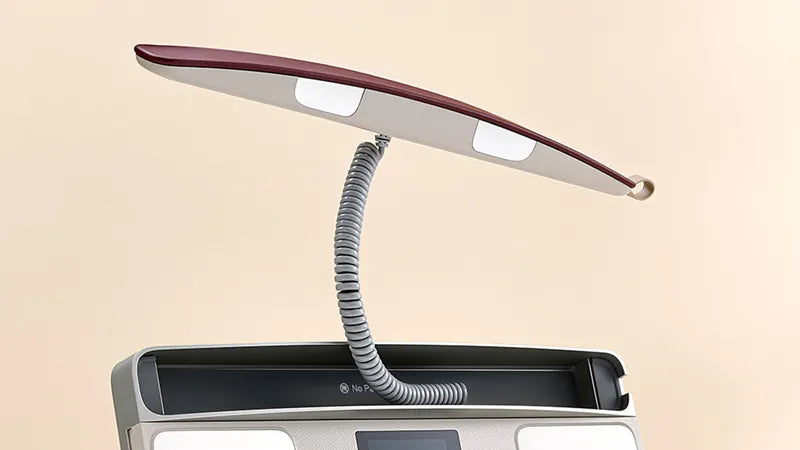
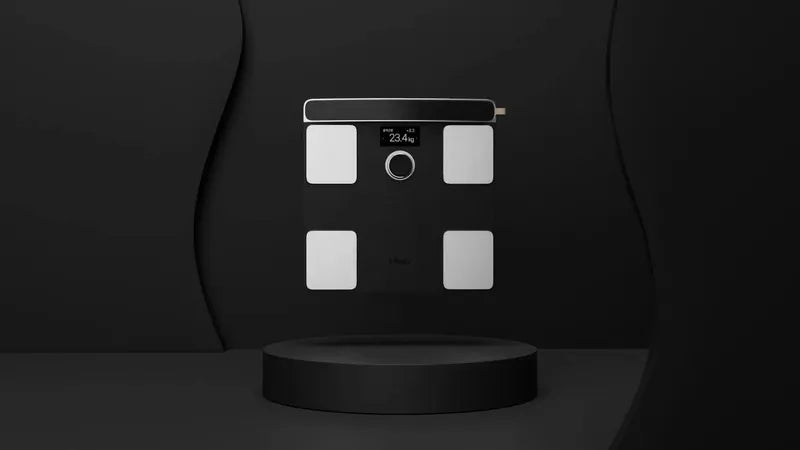
Every InBody Dial reports BMI alongside skeletal muscle mass, body fat mass, percent body fat, basal metabolic rate, InBody Score and visceral fat level. Dial H30 and Dial H40 add a body type chart in the app that plots your BMI against your body fat percentage, so a normal BMI with high body fat cannot hide, plus an estimated waist-hip ratio.

If your BMI is in the “normal” range but your waistline has been creeping up, visceral fat level is the reading to watch. See how to check visceral fat at home, and talk to your doctor about what your numbers mean for you.
Choosing a weighing machine for home
| Weighing machine | BMI machine | Foot-only smart scale | InBody Dial | |
|---|---|---|---|---|
| Weight | Yes | Yes | Yes | Yes |
| BMI | No | Yes | Yes | Yes |
| Body fat | No | No | Estimated from the legs | Arms, trunk and legs measured |
| Skeletal muscle | No | No | Often a broader “muscle mass” | Yes |
| Visceral fat level | No | No | Sometimes, estimated | Yes |
If weight is all you want, a plain weighing machine is enough, and BMI is a sum you can do on your phone. If you want to know what your weight is made of, look for a scale with hand and foot electrodes. For one person, Dial H20 is the simplest way in.
 Dial H20For just you. BMI plus skeletal muscle, body fat and visceral fat level. 8 readings.See Dial H20 →
Questions people ask
What is a BMI weight machine?
It is a weighing scale that also calculates body mass index from your weight and height. It measures only weight; the height is entered or measured separately, and the BMI is a calculation.
What is a healthy BMI for Indians?
Indian consensus guidelines for adults treat a BMI of 23 to 24.9 as overweight and 25 or more as obesity, lower than the international cut-offs. BMI is only a screen, so talk to your doctor about what yours means for you.
Can I have a normal BMI and still have too much body fat?
Yes. BMI cannot tell muscle from fat, so someone with little muscle can have a normal BMI and a high body fat percentage. A body composition scale shows both numbers side by side.
Does InBody Dial show BMI?
Yes. All three Dials show BMI in the InBody app, along with skeletal muscle mass, body fat and visceral fat level. Dial H30 and H40 also plot BMI against body fat percentage on a body type chart.
Is a BMI machine accurate?
The weight can be accurate and the arithmetic is exact. The limitation is BMI itself: it describes size, not composition, so it can misjudge people with a lot of muscle or with fat concentrated around the belly.
Sources
- WHO Expert Consultation. Appropriate body-mass index for Asian populations and its implications for policy and intervention strategies. The Lancet 2004;363(9403):157–163.
- Misra A, Chowbey P, Makkar BM, et al. Consensus statement for diagnosis of obesity, abdominal obesity and the metabolic syndrome for Asian Indians and recommendations for physical activity, medical and surgical management. Journal of the Association of Physicians of India 2009;57:163–170.
- Misra A, Khurana L. The metabolic syndrome in South Asians: epidemiology, determinants, and prevention. Metabolic Syndrome and Related Disorders 2009;7(6):497–514.
- Anjana RM et al. Metabolic non-communicable disease health report of India: the ICMR-INDIAB national cross-sectional study (ICMR-INDIAB-17). The Lancet Diabetes & Endocrinology 2023;11(7):474–489.
- Romero-Corral A et al. Accuracy of body mass index in diagnosing obesity in the adult general population. International Journal of Obesity 2008;32(6):959–966.
 Dial H40
 Dial H30
 Dial H20