Vegetarian protein for muscle: how to tell if your diet is working
Dal, paneer, curd and soy can build muscle. How much protein you need, where to find it in an Indian vegetarian day, and how to check it is working.
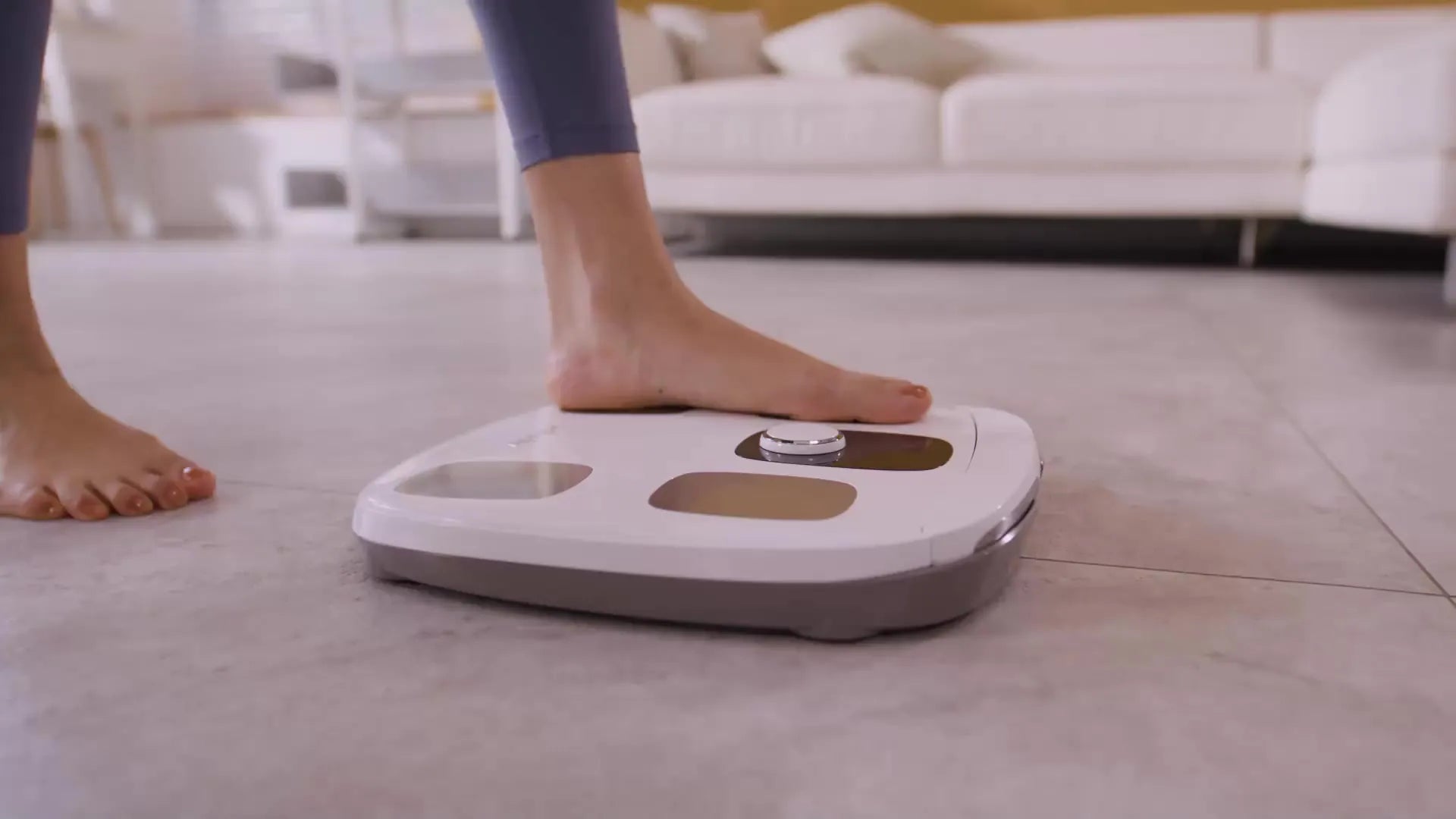
A vegetarian diet can build and keep muscle. The question is whether yours is doing it. You can tell in two ways: by counting roughly how much protein you eat and when, and by watching your skeletal muscle mass and strength over a few months. Food choices are the input. Muscle is the feedback.
This guide covers how much protein Indian guidance suggests, where to find it in a vegetarian day, why breakfast is usually the weak spot, and a simple four-week check to see whether your plate is working.
The short version
- ICMR-NIN puts the adult requirement at 0.83 grams of protein per kilo of body weight a day. People who lift often aim higher.
- Dal, paneer, curd, milk, soy and eggs if you eat them can cover it, if protein shows up at every meal, not just dinner.
- Your skeletal muscle mass and your lifts, tracked monthly, show whether the diet and training are working together.
How much protein you need
ICMR-NIN, the national nutrition institute, sets the protein requirement for healthy Indian adults at 0.83 grams per kilo of body weight a day. For a 60 kg adult, that is about 50 grams. It is the amount needed to maintain the body, not a target for building muscle.
If you strength train, sports nutrition groups suggest more. The International Society of Sports Nutrition recommends 1.4 to 2.0 grams per kilo a day for people who exercise, and a 2018 analysis of resistance-training studies found that muscle gains levelled off at around 1.6 grams per kilo. For that same 60 kg adult, a training target of roughly 85 to 100 grams a day is reasonable.
The 2024 Dietary Guidelines for Indians from ICMR-NIN advise against relying on protein supplements to build body mass, and favour getting protein from food. If you have kidney disease or another medical condition, agree your protein target with your doctor before raising it.
Where vegetarian protein comes from
An Indian vegetarian kitchen already has most of what you need. The trick is to put some of it in every meal.
- Pulses. Dal, rajma, chana, moong, sprouts and besan. Eating them with cereals, as in dal-chawal, khichdi, idli or dosa, improves overall protein quality, because cereals and pulses fill each other's gaps.
- Dairy. Curd, hung curd, paneer, milk and buttermilk. Packaged paneer labels usually show around 18 to 20 grams of protein per 100 grams.
- Soy. Tofu, soy chunks and soy milk. Dry soy chunk labels often list around 50 grams per 100 grams, before cooking.
- Nuts and seeds. Peanuts, chana, pumpkin seeds and sesame add protein alongside fat.
- Eggs, if you eat them. A large egg has about 6 grams.
Labels vary by brand, so check the packet rather than trusting a chart. The aim is not perfect counting. It is knowing roughly where your protein comes from and spotting the meals where there is almost none.
The breakfast gap
Many Indian breakfasts are built on cereal: poha, upma, paratha, bread, or just tea and biscuits. They are filling but light on protein. Adding curd, a glass of milk, a besan or moong dal chilla, sprouts, paneer bhurji or eggs to breakfast is often the single biggest fix, because it spreads protein more evenly across the day.
Is plant protein good enough for muscle?
For most people who train, the amount of protein matters more than whether it comes from plants or animals. A 2021 study in Sports Medicine put habitual vegans and meat-eaters through the same 12-week resistance training programme, with protein matched at about 1.6 grams per kilo a day, using soy protein in the vegan group and whey in the other to reach the target. Both groups gained similar muscle and strength.
That study was in young, untrained men, so it does not answer every question, and older adults may need more protein for the same effect. But it supports a practical point: a vegetarian who eats enough protein and trains well has no reason to expect worse results.

How to tell if your diet is working
You cannot feel muscle growing week to week, and the mirror is a poor judge. Three signals together give a fair answer.
- Your lifts. If the weights or reps you can manage keep climbing, your muscles are adapting.
- Skeletal muscle mass. Measured monthly on a body composition scale, it should hold or rise while you train.
- Body fat mass. If you are eating more to hit a protein target, check that the extra is not just adding fat.
| What you see | What it often means | What to try |
|---|---|---|
| Lifts up, muscle up, fat steady | Diet and training are working | Keep going |
| Lifts up, muscle flat | Too early, or protein too low | Give it another month; add protein at breakfast |
| Muscle down, fat down | Eating too little overall | Add food, mostly protein |
| Muscle flat, fat up | Extra food, not enough training stimulus | Train harder before eating more |
A body composition scale makes the muscle and fat parts of this visible. A plain weighing machine cannot, which is why so many people give up on a diet that was actually working. For more on the muscle reading, see how to measure muscle mass at home, and for why fat can fall while muscle rises, read our guide to body recomposition.
A four-week protein check
- Take a baseline. Measure on two or three mornings in week 1: after the toilet, before food or exercise, bare feet. Note the average skeletal muscle mass and body fat mass.
- Write down three ordinary days. Roughly estimate the protein in each meal. Look for the meal with almost none.
- Fix that meal first. One change, such as curd and a besan chilla at breakfast, every day for four weeks.
- Keep training steady. Two or three strength sessions a week, with a log of your lifts.
- Retest the same way. Same time, same routine. Then judge the trend over two or three of these loops, not one.

Picking a scale for the job
All three InBody Dials show skeletal muscle mass and body fat mass at every test, measuring each arm, each leg and the trunk separately with 8 electrodes. For one person, Dial H20 is the simple choice. If the whole family wants to track, Dial H30 recognises up to 20 people and syncs over home Wi-Fi. If you train seriously, Dial H40 adds leg muscle level and three balance ratings.
 Dial H20For just you. Skeletal muscle mass, body fat mass and six more readings, synced over Bluetooth.See Dial H20 →
Questions people ask
Can you build muscle on a vegetarian diet in India?
Yes. Pulses, dairy, soy, nuts and eggs if you eat them can provide enough protein, as long as it appears at most meals. Pair it with progressive strength training.
How much protein do I need per day to build muscle?
ICMR-NIN sets the basic adult requirement at 0.83 grams per kilo of body weight. For people who strength train, sports nutrition groups suggest 1.4 to 2.0 grams per kilo. Check with your doctor if you have kidney disease.
Do I need protein powder as a vegetarian?
Most people can meet their needs from food. The 2024 Dietary Guidelines for Indians advise against relying on protein supplements to build body mass. If you find it hard to eat enough, talk to a dietitian.
Is dal enough protein?
A bowl of dal helps, but on its own it rarely covers a training day. Combine pulses with dairy or soy, and add protein to breakfast and snacks.
How do I know if I am eating enough protein?
Track your lifts and your monthly skeletal muscle mass. If both are flat or falling while you train consistently, protein or total food is a likely gap.
Sources
- ICMR-NIN, Nutrient Requirements for Indians: Recommended Dietary Allowances and Estimated Average Requirements, 2020.
- ICMR-NIN, Dietary Guidelines for Indians, 2024.
- Jäger R et al. International Society of Sports Nutrition position stand: protein and exercise. Journal of the International Society of Sports Nutrition 2017;14:20.
- Morton RW et al. A systematic review, meta-analysis and meta-regression of the effect of protein supplementation on resistance training-induced gains in muscle mass and strength in healthy adults. British Journal of Sports Medicine 2018;52(6):376–384.
- Hevia-Larraín V et al. High-protein plant-based diet versus a protein-matched omnivorous diet to support resistance training adaptations: a comparison between habitual vegans and omnivores. Sports Medicine 2021;51(6):1317–1330.
- World Health Organization. WHO guidelines on physical activity and sedentary behaviour. Geneva: WHO; 2020.
- InBody Dial H20, H30 and H40 specifications, InBody India.
 Dial H40
 Dial H30
 Dial H20