Body composition for runners: beyond race weight
Race weight is one number. What runners should track instead: leg muscle, body fat, balance between legs, and how readings shift across a training block.
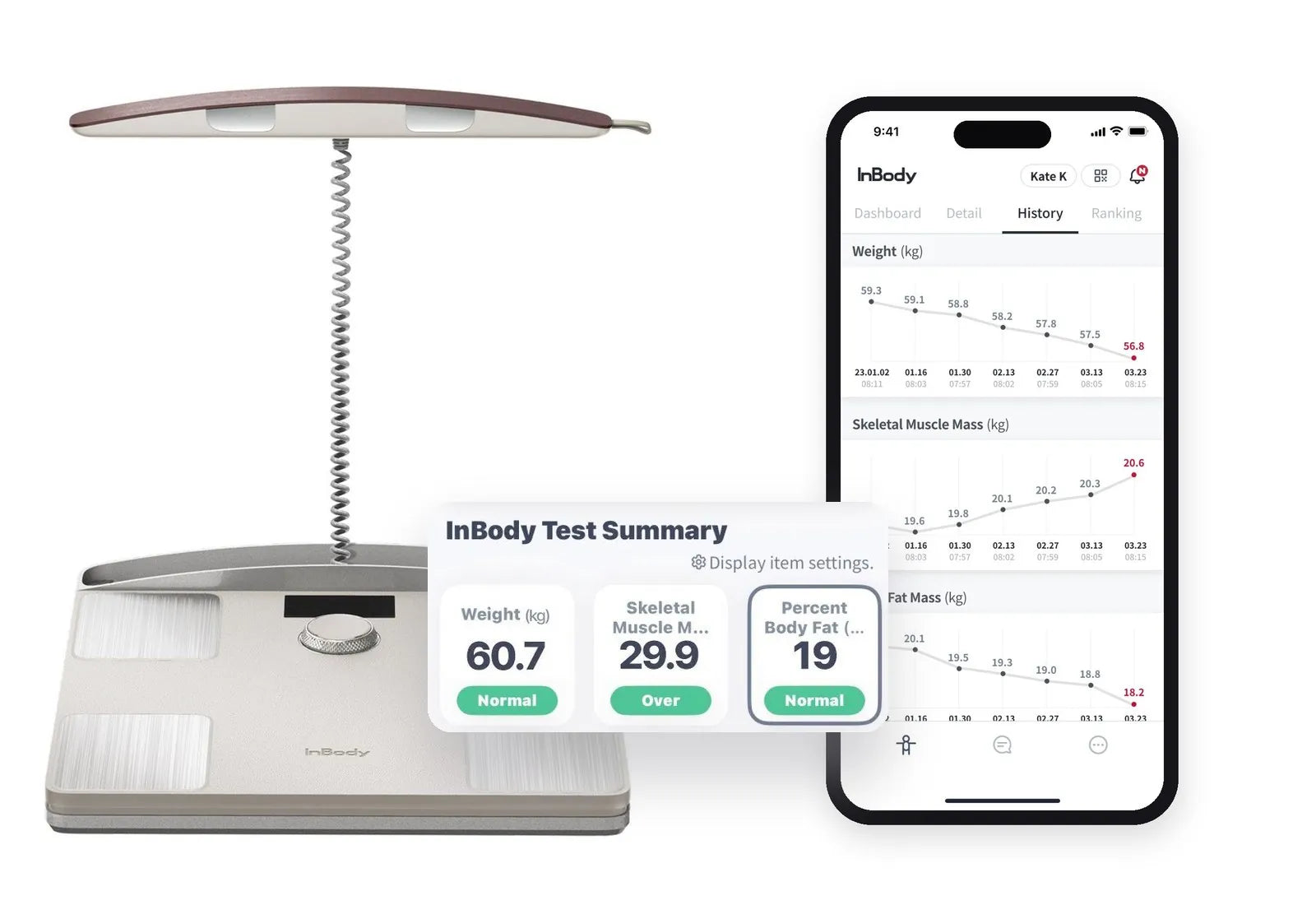
Race weight is a single number, and it leaves out what matters most to a runner: how much of you is muscle that absorbs impact and pushes off, how much is fat you carry up every hill, and whether you are eating enough to train. Two runners at the same weight can have very different bodies, and very different races.
This guide is for runners who want to look past the weighing machine. It covers which body composition readings are worth tracking, why chasing a lower number can backfire, and how your readings are likely to move across a training block.
The short version
- Track skeletal muscle mass and body fat mass, not just weight. Leg muscle level and left–right leg balance on Dial H40 add the detail runners care about.
- Strength training twice a week can improve running economy and helps prevent injuries.
- Cutting weight by under-eating can harm health and performance. If weight and muscle keep falling in heavy training, talk to a sports doctor.
Why race weight is the wrong target
It is true that carrying less fat makes running cheaper, especially uphill. But a weight target treats every kilo the same. Losing two kilos of leg muscle and losing two kilos of fat give the same number on the scale and very different results on the road.
The risk of under-fuelling
Pushing weight down by eating too little for the training you do can lead to what the International Olympic Committee calls Relative Energy Deficiency in Sport, or RED-S. Its consensus statement describes how low energy availability can affect hormones, bone health, immunity, recovery and performance, in both women and men.
A scale cannot tell you whether you have RED-S; only a doctor can. But body composition trends can raise a flag worth discussing. If your weight and skeletal muscle mass keep falling during heavy training, and you also notice constant tiredness, frequent injuries or, for women, missed periods, talk to a sports doctor.
What runners should track instead

- Skeletal muscle mass. The muscle you train. In a well-fuelled block, it should hold steady or rise slightly.
- Body fat mass. Often drifts down as mileage builds. A slow decline is fine; a sharp drop with falling muscle is not.
- Leg muscle level. On Dial H40, a level for the muscle in your legs, tracked over time.
- Lower-body balance. Dial H40 rates left leg against right leg as Balanced, Slightly unbalanced or Extremely unbalanced. It is a rating, not kilos per leg.
- Upper–lower balance. Runners often have strong legs and little upper-body muscle. Dial H30 and H40 both show this rating.


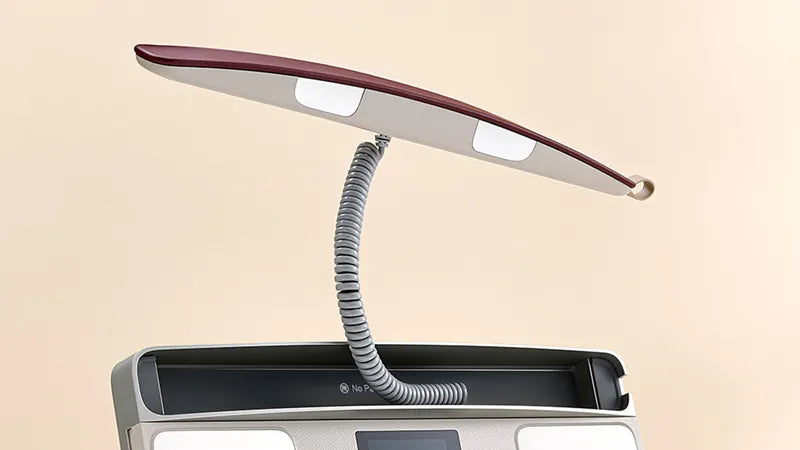
Measuring the legs properly needs electrodes at the hands as well as the feet, so the current can measure each leg, each arm and the trunk separately. Our guide to left–right muscle imbalance covers what the balance ratings mean and what to do about them.
Strength training for runners
Running builds endurance, but it does not build much muscle on its own. A 2018 systematic review in Sports Medicine found that adding strength training can improve running economy, the energy you use at a given pace, in middle- and long-distance runners. A 2014 meta-analysis in the British Journal of Sports Medicine found that strength training was among the most effective exercise approaches for reducing sports injuries.
- Twice a week. WHO recommends muscle-strengthening activity on two or more days a week. Place sessions on easy-run days, not before a long run or intervals.
- Train one leg at a time. Split squats, step-ups and single-leg Romanian deadlifts expose and fix differences between your legs.
- Do not skip calves and hips. Calf raises, glute bridges and side planks support the parts that take a pounding.
- Go heavier than you think. Low weights for high reps add more endurance work. Moderate to heavy loads for fewer reps build strength.
- Keep it through the season. Reduce volume as races approach, but keep one short session a week.
How readings shift across a training block
Body composition does not sit still through a season, and it should not be judged as if it did. Expect different patterns in different phases.
- Base. Mileage rises. Fat often drifts down; muscle should hold. A good time to establish your baseline readings.
- Build. Harder sessions and more fatigue. Watch for muscle sliding; it can mean you are not eating enough for the work.
- Peak and taper. Volume drops. Weight can rise as your muscles store more carbohydrate, which is held with water. Researchers writing in the American Journal of Clinical Nutrition described how glycogen and water move weight quickly in either direction.
- Recovery. After the race, some fat regain is normal. Focus on rebuilding strength before the next block.

When to test, as a runner
Running moves water around your body more than most training. A long run in Indian heat, especially before the monsoon breaks, can leave you lighter and drier for a day; rehydrating brings it back. Both distort body composition readings.
- Test in the morning, after the toilet, before food or running, with bare feet and dry skin.
- Choose a rest day or an easy-run day, never the morning after a long run or race.
- Hold the handle with arms straight and away from your body, and stand still for the whole test.
- Compare readings within the same phase, and judge trends over four weeks or more.
For more on routines that keep numbers comparable, see how to get consistent readings. InBody advises that people with an implanted electronic medical device such as a pacemaker should not use it, and that pregnant women check with their doctor first.
Which Dial suits a runner
Dial H40 is built for people who train: 14 readings, three frequencies, leg muscle level and all three balance ratings, measured in about 20 seconds. If you share the scale with family and the upper–lower rating is enough, Dial H30 recognises up to 20 people over Wi-Fi. For one person and the core numbers, Dial H20 syncs over Bluetooth.
 Dial H40For people who train. Leg muscle level and three balance ratings, including left leg against right.See Dial H40 →
Questions people ask
What is a good body fat percentage for a runner?
There is no single right number, and it varies with sex, age and event. Rather than chasing a figure, track whether body fat mass falls gently while skeletal muscle mass holds. If you have a specific target, discuss it with a sports doctor or dietitian.
Should runners lift weights?
Yes. Research shows strength training can improve running economy and helps reduce injuries. Two sessions a week, with single-leg work, calves and hips, is a good base.
Why do I gain weight before a marathon?
During the taper and carbohydrate loading, your muscles store more glycogen, and glycogen is stored with water. The extra weight is fuel, not fat.
Can a body composition scale show muscle imbalance in my legs?
Dial H40 gives a lower-body balance rating comparing your left and right legs: Balanced, Slightly unbalanced or Extremely unbalanced. It is a rating, not kilos per leg.
Is losing weight always good for running?
Not if it comes from muscle or from under-eating. Weight and muscle falling together during heavy training is worth discussing with a sports doctor.
Sources
- Mountjoy M et al. The IOC consensus statement: beyond the Female Athlete Triad—Relative Energy Deficiency in Sport (RED-S). British Journal of Sports Medicine 2014;48(7):491–497.
- Blagrove RC, Howatson G, Hayes PR. Effects of strength training on the physiological determinants of middle- and long-distance running performance: a systematic review. Sports Medicine 2018;48(5):1117–1149.
- Lauersen JB, Bertelsen DM, Andersen LB. The effectiveness of exercise interventions to prevent sports injuries: a systematic review and meta-analysis of randomised controlled trials. British Journal of Sports Medicine 2014;48(11):871–877.
- Kreitzman SN, Coxon AY, Szaz KF. Glycogen storage: illusions of easy weight loss, excessive weight regain, and distortions in estimates of body composition. American Journal of Clinical Nutrition 1992;56(1 Suppl):292S–293S.
- World Health Organization. WHO guidelines on physical activity and sedentary behaviour. Geneva: WHO; 2020.
- InBody Dial H20, H30 and H40 specifications, InBody India.
 Dial H40
 Dial H30
 Dial H20