Muscle imbalance between left and right: what your arms and legs reveal
One arm stronger, one leg doing more of the work? Where muscle imbalance comes from, how a segmental scale rates it, and the training that evens it out.
Most people have a stronger side. You carry the shopping in your right hand, start the stairs with your left foot, lean on one leg while you wait in a queue. Over years, small habits like these can leave one arm or one leg carrying a little more muscle than the other, and the top half of your body doing more or less than the bottom.
A small difference is normal. A bigger one can change how you move, how you lift and how you recover from an injury. Here is where left–right and upper–lower imbalances come from, how a scale that measures each arm and each leg separately rates them, and the simple training that evens things out.
The short version
- Some difference between your two sides is normal. It matters when it grows, when it follows an injury, or when you can feel it.
- Dial H40 gives three balance ratings: upper body (arm against arm), lower body (leg against leg) and upper–lower. Dial H30 gives the upper–lower rating. Each one reads Balanced, Slightly unbalanced or Extremely unbalanced.
- Single-arm and single-leg exercises, led by the weaker side, are the usual fix. After an injury, let a physiotherapist set the pace.
Why one side ends up stronger
Your body adapts to what you ask of it. Ask one side to do more, week after week, and it keeps a little more muscle. Ask a part of you to do less, and it quietly lets some go.
- Your dominant hand. Writing, lifting the pressure cooker, carrying a child on one hip, the bag that always goes on the same shoulder. None of it feels like training, but it adds up.
- One-sided sport. Cricket, badminton, tennis and table tennis load the playing arm far more than the other. A bowler lands on the same front leg, over after over.
- Desk days. Eight hours in a chair leaves the hips and legs underused while the hands and shoulders stay busy. That is less a left–right story and more an upper–lower one.
- An old injury. After a sprained ankle, a knee operation or a fracture, people protect the hurt side for weeks. Muscle on that side can shrink while the other side takes over, and the habit often outlasts the pain.
None of this is unusual. The useful questions are how big the gap is, whether it is growing, and whether it shows up in daily life: one knee that always complains on the stairs, a shoulder that tires first, a limp you stopped noticing years ago.
What a regular scale can and cannot see
A plain weighing scale weighs all of you at once. Most smart scales go a step further and pass a tiny current between your feet, which means they read your legs together and estimate everything above them. Neither can tell your left arm from your right.
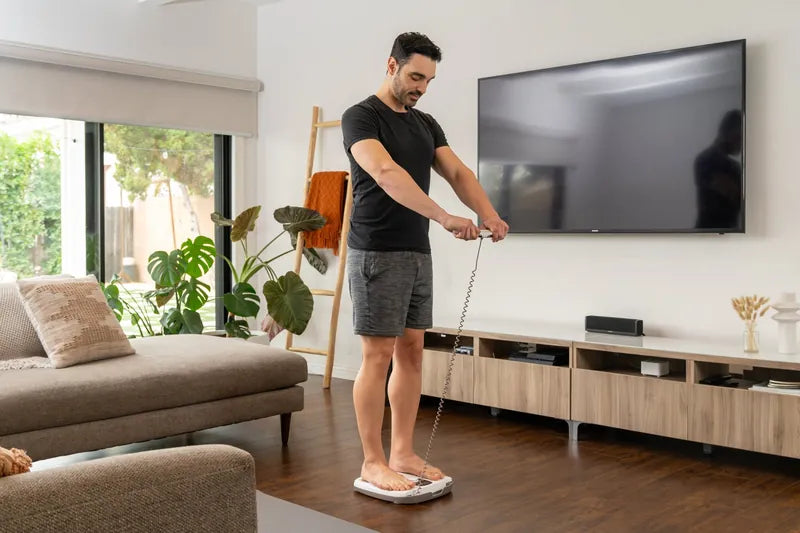
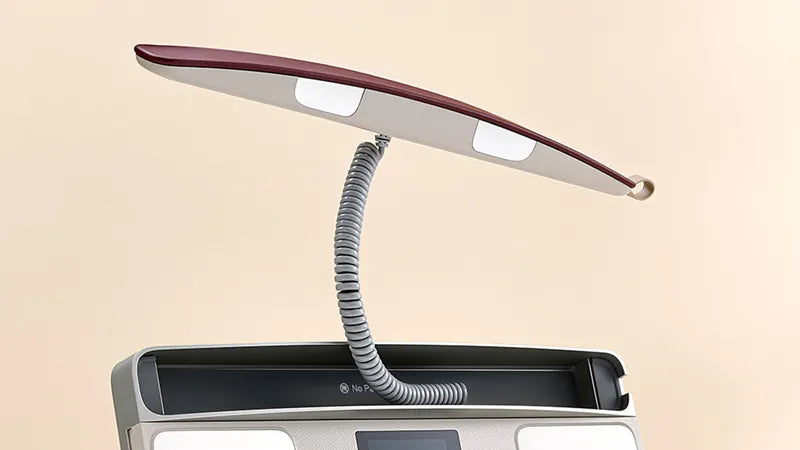
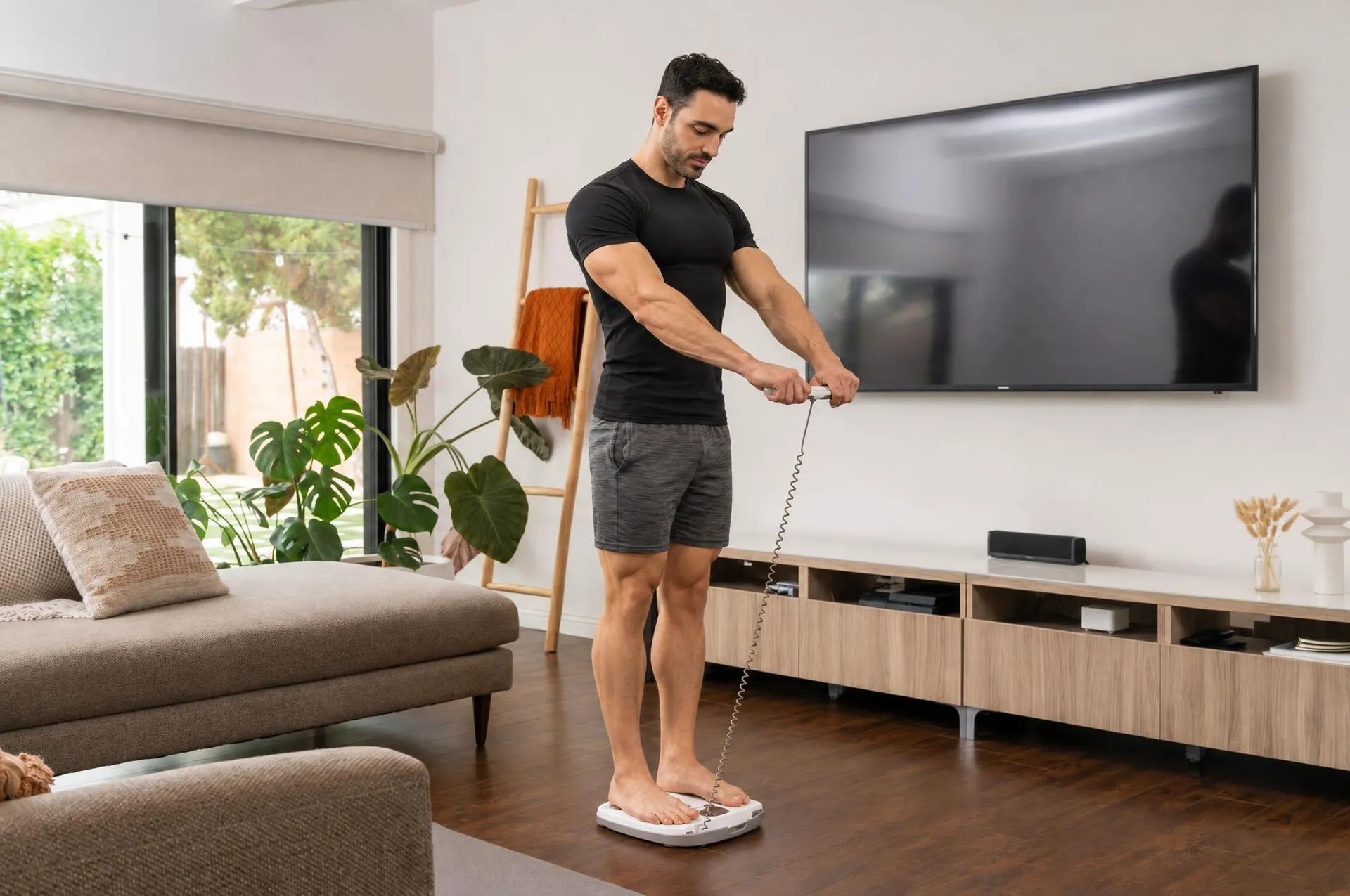
InBody Dial measures you in segments. You stand on four steel foot electrodes and hold a handle with electrodes under your palms and thumbs: eight contact points in all. That lets it measure each arm, each leg and the trunk separately, which is what makes a comparison between sides possible. The full explanation is in smart scale vs InBody Dial.
How the Dial rates balance
The Dial does not hand you a list of kilos per limb to puzzle over. It turns each comparison into a rating, so you can see at a glance whether a gap deserves attention. Every rating uses the same three words: Balanced, Slightly unbalanced or Extremely unbalanced.
| Model | Balance ratings |
|---|---|
| Dial H40 | Upper body (arm vs arm), lower body (leg vs leg), upper–lower |
| Dial H30 | Upper–lower |
| Dial H20 | None |

Here is how to read each word, whichever rating it sits on:
- Balanced. Carry on. Keep training both sides and both halves of your body.
- Slightly unbalanced. Common, and often down to daily habits or a favourite sport. Worth a few weeks of targeted work, then look again.
- Extremely unbalanced. A bigger gap. First make sure the test was done properly (see the next section). If it repeats, and especially if there is pain or a past injury, talk to a doctor or physiotherapist.

Getting a balance reading you can trust
Because the rating compares one segment with another, how you stand and how you hold the handle matter even more than usual. A lopsided grip can make a balanced body look unbalanced.
- Same time, same state. Morning is easiest: after the toilet, before breakfast and before exercise.
- Weight even on both feet. Bare, dry feet, heels and forefoot on the plates. Do not lean onto your favourite leg.
- Both hands, same grip. Palms and thumbs on the electrodes, arms straight and slightly away from your sides.
- Stay still. About 20 seconds on Dial H30 and H40. No shifting, no talking.
- Not straight after a workout. A hard leg day, a sauna or a shower moves water around for a while. Test before, not after.


Then trust the pattern, not one test. A rating that changes once and goes back the next morning is noise. One that holds for two or three weeks is real. There is more on keeping conditions steady in how to get consistent readings.
Evening out an imbalance
The fix is rarely complicated. Train each side on its own, so the stronger one cannot quietly take over the work.
For the arms
Single-arm rows with a dumbbell or a filled water bottle, one-arm overhead presses, and one-arm carries: walk across the room holding a heavy bag on one side, then switch. Push-ups are excellent, but both arms share the load, so add some one-sided moves alongside them.
For the legs
Split squats, step-ups onto a sturdy stair, single-leg Romanian deadlifts with one hand on a wall, and slow single-leg sit-to-stands from a chair. Each one makes a leg carry you on its own.

A few rules that help
- Start with the weaker side, and let it set the number of reps. The stronger side matches it, no more.
- Go slower than you think. Control matters more than load.
- For an upper–lower gap from desk work, the answer is usually more leg work: squats, stairs, hill walks. If it is the other way round, as it often is for walkers and runners, add pushing and pulling for the upper body.
- Train strength at least twice a week. That is the World Health Organization’s guidance for adults, and it covers both sides of you.
- Give it weeks. Muscle changes slowly, so check the rating every couple of weeks, not every morning.
If you are new to lifting, strength training for beginners covers what to track in the first months.
After an injury, bring in a physio
The biggest left–right gaps usually follow an injury or an operation. After a knee or ankle injury, the muscle around the joint can shrink fast, and the other leg learns to do more. Even once walking feels normal, the injured side often stays weaker for longer than people expect.
Here a home scale is a companion, not a coach. A physiotherapist decides when and how hard to load the injured side, and checks strength and movement in ways no scale can. What the Dial adds is a calm, repeatable record between appointments. If the lower-body rating moves from Extremely unbalanced towards Balanced over weeks of rehab, take that trend along with how the leg feels.
Pain, swelling, numbness, or one side getting weaker without an obvious reason are reasons to see a doctor, not to train harder. InBody also advises that anyone with an implanted electronic medical device such as a pacemaker should not use a Dial, and that pregnant women check with their doctor first.
Which Dial shows balance
All three Dials measure through eight electrodes, segment by segment. What changes is how much of that they show you.
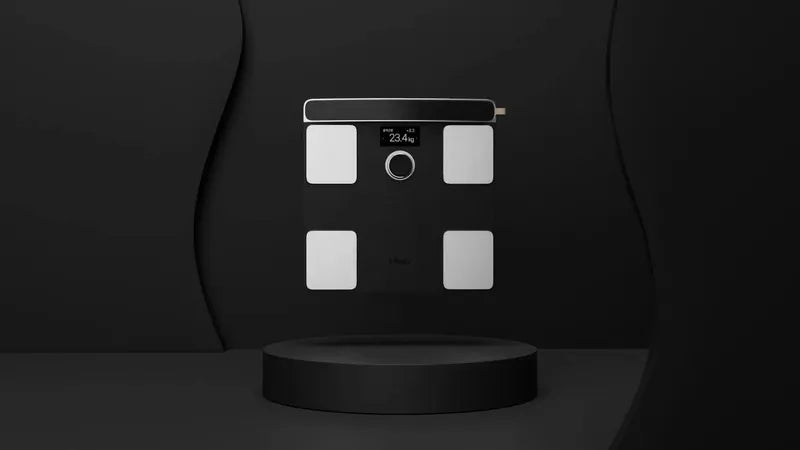
Dial H40 is the one for people who train. It gives all three balance ratings and a leg muscle level, so you can see arm against arm, leg against leg and top against bottom. Dial H30 gives the upper–lower rating and recognises up to 20 people, which suits a household where one person lifts and others simply want to keep an eye on things. Dial H20 keeps it simple with 8 readings and no balance rating. There is a full comparison in Dial H20 vs H30 vs H40.
 Dial H40For people who train. Three balance ratings, leg muscle level and 14 readings.See Dial H40 →
Questions people ask
Is it normal for one arm to be stronger than the other?
Yes. Most people have a dominant side, and daily habits, sport and work all load one side more. A small difference is expected. It is worth attention when the gap grows, follows an injury, or you can feel it in how you move.
Can a body composition scale measure my left and right arm separately?
Only if it measures through your hands as well as your feet. InBody Dial uses eight electrodes and measures each arm, each leg and the trunk as separate segments. Dial H40 then rates arm against arm and leg against leg; Dial H30 rates the upper body against the lower body.
What does Slightly unbalanced mean on InBody Dial?
It means the comparison found a modest gap, not a large one. It is common and often down to habits or sport. Add some single-arm or single-leg work, keep testing the same way, and look at the rating again after a few weeks.
Why is my upper–lower balance off when I walk every day?
Walking builds and keeps leg muscle, but does very little for the arms, chest and back. The upper body can lag behind as a result. A couple of sessions a week of pushing and pulling, such as wall push-ups and band rows, usually helps.
Does Dial H20 show muscle balance?
No. Dial H20 measures through eight electrodes but shows 8 readings without a balance rating. Dial H30 adds the upper–lower rating, and Dial H40 adds upper-body and lower-body ratings as well.
How long does it take to fix a muscle imbalance?
It depends on the cause and the size of the gap. Muscle changes over weeks to months, so check every couple of weeks and judge the trend. After an injury or surgery, your physiotherapist will set the timeline.
Sources
- World Health Organization. WHO guidelines on physical activity and sedentary behaviour, 2020.
- InBody Dial H20, H30 and H40 specifications, InBody India.
 Dial H40
 Dial H30
 Dial H20