Starting strength training after 30: what to track in the first 12 weeks
New to lifting after 30 with a desk job? What changes first, what to log every session, and which body readings to check once a month.

If you are starting strength training after 30, track three things: what you lift every session, a few simple habits every week, and your body composition once a month. In the first four weeks, your strength will rise faster than your muscle. The body readings catch up later, and they only make sense as a trend.
That order matters, because most beginners quit when the mirror and the scale do not seem to change. This guide sets realistic expectations for a desk-job body, and shows exactly which numbers to watch in the first 12 weeks.
The short version
- Early strength gains come largely from your nervous system learning the movements. Muscle growth shows up a few weeks later.
- Log every session: exercise, weight, reps and sets. If those numbers climb, the programme is working.
- Check skeletal muscle mass and body fat mass once a month, under the same conditions, and judge them at week 12.
What changes first, and what changes later
When you lift for the first time, the quickest change happens in your nervous system. Your brain learns to recruit more muscle fibres and coordinate them, so you get stronger before the muscle itself has grown much. A classic 1979 study by Moritani and deVries described this pattern: neural factors explained most of the early strength gain, with muscle growth contributing more as training went on.
Body fat is the third line, and it depends mostly on what you eat. Lifting three times a week will not undo a large daily surplus. If fat loss is a goal, a small, steady change in portions does more than any single workout.
Being over 30 does not stop any of this. Muscle responds to training at every age; a well-known 1990 study in JAMA showed strength and muscle gains in people in their nineties. Progress may be slower than in your twenties, and recovery may take a little longer, but the direction is the same.
Track your training first
Your training log is the most useful record you will keep. It tells you whether your muscles are being asked to do more over time, which is what makes them grow. The American College of Sports Medicine calls this progressive overload.
A notebook or a notes app is enough. For every session, write down:
- The exercise. Squat, push-up, row, hip hinge, overhead press, plank.
- The load. Dumbbell weight, band colour, or bodyweight.
- Reps and sets. For example, 3 sets of 10.
- How hard it felt. Aim to finish each set with one or two good reps still in the tank.
When you can complete all your sets with good form, add a little: one or two reps, a slightly heavier dumbbell, or a harder variation. Small, regular steps beat occasional big jumps, especially for backs and shoulders that have spent years at a desk.

A realistic first-week plan
WHO recommends muscle-strengthening activity on two or more days a week. For a desk-job beginner, two or three full-body sessions of 30 to 45 minutes, on non-consecutive days, is a sustainable start. Cover the big patterns: a squat or sit-to-stand, a push, a pull such as a band row, a hip hinge, and a carry or plank. Add short walks on the other days, and get up from your chair every hour or so.
Which body readings to watch, and how often
A body composition scale is useful here because it separates muscle from fat, which a plain weighing machine cannot. But the readings move slowly, and daily changes in water can hide them. Check each reading at the right rhythm.
| Reading | How often | A good sign by week 12 |
|---|---|---|
| Your lifts | Every session | Weights or reps clearly higher than week 1 |
| Weight | Weekly average | Steady, or drifting down if fat loss is a goal |
| Skeletal muscle mass | Monthly | Holding or rising |
| Body fat mass | Monthly | Holding or falling |
| Visceral fat level | Monthly | Holding or falling |
| Basal metabolic rate | Monthly | Rising slightly as muscle rises |
Basal metabolic rate depends heavily on how much lean tissue you carry, so it tends to follow your muscle. Our guide to BMR and muscle explains why. For what the muscle reading actually measures, see how to measure muscle mass at home.
Realistic expectations for a desk-job body
Advertising sets the bar badly. Most beginners do not see dramatic change in 12 weeks; they see steady change. Here is what is reasonable to expect if you train consistently and eat enough protein:
- Your lifts go up clearly. Often the most encouraging number in the first two months.
- Daily life gets easier. Stairs, carrying shopping bags, getting up from the floor.
- Muscle moves in small steps. Gains of a few hundred grams a month are easy to miss day to day and easy to see over 12 weeks.
- Your weight may barely change. If fat falls while muscle rises, the total can stay put. Our guide to a stalled scale explains why.
Protein matters as much as the training. ICMR-NIN sets the requirement for healthy Indian adults at 0.83 grams per kilo of body weight a day, and people who train often aim higher. Put a protein food in every meal: dal, curd, paneer, soy, milk, eggs, fish or chicken.

How to get readings you can compare
A monthly reading is only useful if it was taken the same way as the last one. Water shifts after a workout, a big meal or a hot day can move body composition readings more than a month of training does.
- Test on a rest-day morning. After the toilet, before breakfast and before exercise. Never straight after a session.
- Bare feet, dry skin. Wipe very dry feet with a damp cloth so the electrodes make good contact.
- Hold the handle properly. Arms straight and slightly away from your body, and stand still until the result appears.
- Average a few mornings. For each monthly check, test on two or three mornings that week and use the average.
- Judge at week 12. Compare with your week-1 baseline, not with last Tuesday.
Our guide to getting consistent readings covers the details. InBody advises that people with an implanted electronic medical device such as a pacemaker should not use a body composition scale, and that pregnant women check with their doctor first.

Choosing a scale to track it
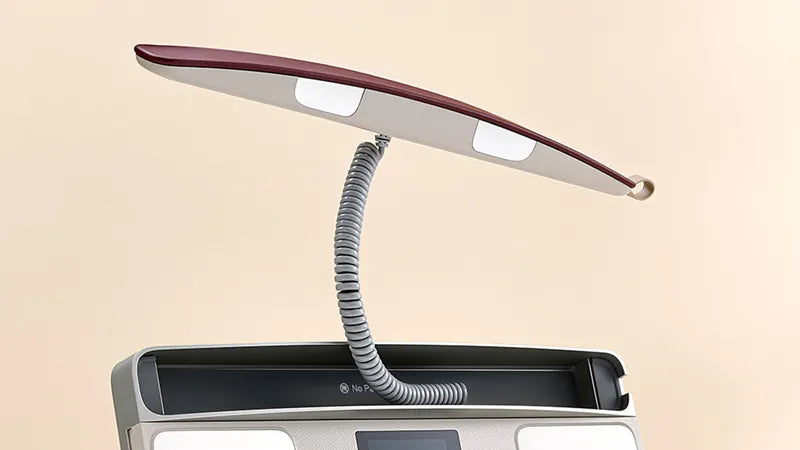
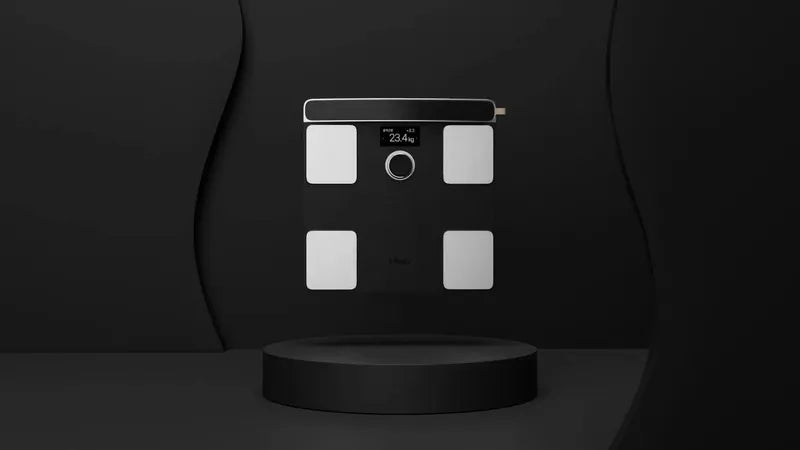
All three Dials measure each arm, each leg and the trunk with 8 electrodes at your hands and feet, and show skeletal muscle mass and body fat mass at every test. If it is just you, Dial H20 syncs over Bluetooth in about 10 seconds. If others at home will use it too, Dial H30 recognises up to 20 people and syncs over Wi-Fi. If training becomes a serious habit, Dial H40 adds leg muscle level and three balance ratings.
 Dial H30For the whole house. 12 readings including skeletal muscle mass, body fat mass and body type, synced over Wi-Fi.See Dial H30 →
Questions people ask
Is it too late to start strength training after 30 or 40?
No. Muscle responds to training at every age. Progress may be slower than in your twenties, but strength, muscle and everyday ease of movement all improve with consistent training.
How soon will I see results from strength training?
Most beginners notice their lifts going up within two to four weeks. Changes in muscle mass take longer, and are usually clearest when you compare readings eight to twelve weeks apart.
How many days a week should a beginner lift?
Two or three full-body sessions on non-consecutive days is a good start. WHO recommends muscle-strengthening activity on two or more days a week for adults.
Why has my weight not changed after a month of lifting?
You may be losing a little fat and gaining a little muscle at the same time, and water shifts can hide both. Look at body fat mass and skeletal muscle mass monthly rather than daily weight.
Should I measure myself after a workout?
No. Exercise moves water around your body and changes the readings for a while. Measure on a rest-day morning, before food and exercise.
Sources
- Moritani T, deVries HA. Neural factors versus hypertrophy in the time course of muscle strength gain. American Journal of Physical Medicine 1979;58(3):115–130.
- Fiatarone MA et al. High-intensity strength training in nonagenarians: effects on skeletal muscle. JAMA 1990;263(22):3029–3034.
- American College of Sports Medicine. American College of Sports Medicine position stand. Progression models in resistance training for healthy adults. Medicine & Science in Sports & Exercise 2009;41(3):687–708.
- World Health Organization. WHO guidelines on physical activity and sedentary behaviour. Geneva: WHO; 2020.
- ICMR-NIN, Nutrient Requirements for Indians: Recommended Dietary Allowances and Estimated Average Requirements, 2020.
- InBody Dial H20, H30 and H40 specifications, InBody India.
 Dial H40
 Dial H30
 Dial H20