How to get consistent readings on a body composition scale
Why body fat readings change from day to day, the best time to check, and a simple routine that makes every test comparable with the one before it.
The best time to check your body fat is the same time every time. For most people that means first thing in the morning, after the toilet and before breakfast, drinks, exercise or a bath. Body fat readings change from day to day mostly because your body water changes, and a fixed routine keeps that noise out of the way.
A body composition scale is most useful as a series. One test tells you roughly where you are. Twenty tests taken the same way tell you where you are going. This guide sets out the routine, then the things that quietly break it in Indian homes: the floor, the family, festivals, travel, heat and the menstrual cycle.
The short version
- Same time, same state: morning, after the toilet, before food, drink, exercise or a shower.
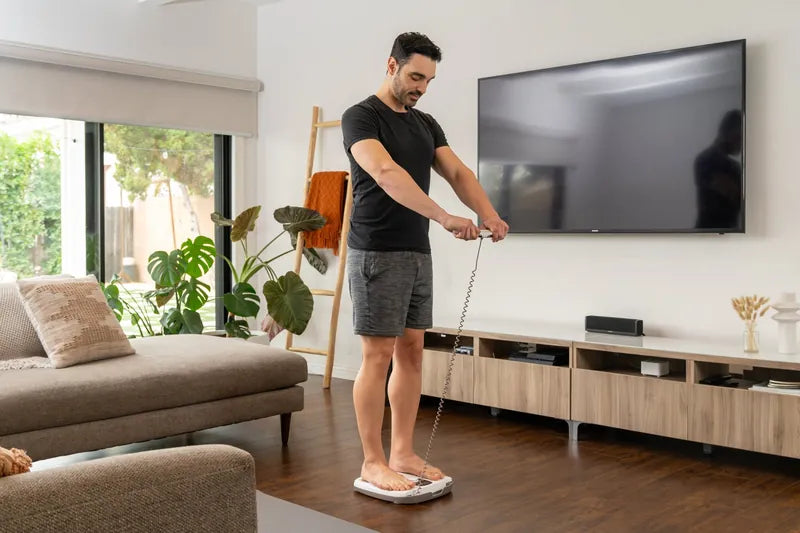
- Same place, same posture: a hard, level floor, bare dry feet, arms straight with the handle, standing still.
- Compare like with like. Note festival weeks, travel and your cycle, and judge four-week trends rather than single days.
Why the number moves when you don’t
Your fat does not change overnight. Your water does. A body composition scale reads how a tiny current travels through the water in your body, then works out muscle and fat from that. Shift the water, and the estimate shifts with it for a while.
Meals are a good example. In a study of 18 adults measured 18 times across a day, impedance dropped after each meal and stayed lower for 2 to 4 hours, which lowered the calculated body fat. Exercise, a hot shower, a salty dinner or a long, thirsty commute can all do something similar. None of that is the scale misbehaving. It is measuring a body that has changed for a few hours.
So the goal is not to find the perfect moment for a “true” reading. It is to take every reading under the same conditions, so that whatever error there is stays the same and a real change stands out.
The morning routine, step by step
This takes about two minutes, most of it walking to the scale.
- Same time every day. Morning is easiest: after you wake and use the toilet, before anything else.
- Before food, drink, exercise or a bath. If mornings never work, test at least two hours after a meal, in the same slot each day, such as before dinner.
- Bare feet, dry skin. No socks. Step on straight from the bedroom, not from the shower.
- Feet on all four plates. Heels on the rear electrodes, the front of each foot on the front ones, thighs not touching.
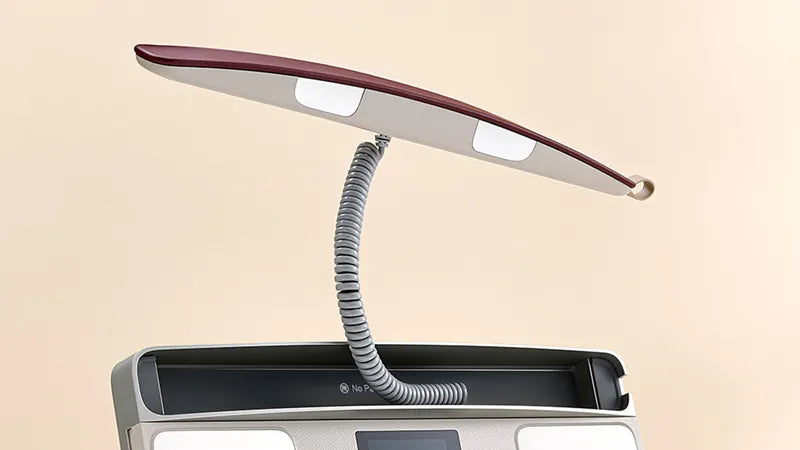
- Hold the handle properly. Palms and thumbs on the electrodes, arms straight and slightly away from your body.
- Stand still and quiet. About 10 seconds on Dial H20, about 20 on Dial H30 and H40. Do not talk or shift your weight until the result appears.

Posture matters more than people expect. If your arms rest against your sides, or your thighs press together, the current can take a shortcut through the contact point instead of the path the scale expects. Small slips like that are the most common reason one reading looks odd next to the rest.
Where you keep the scale matters
Find it a permanent home and leave it there. Moving it from room to room means moving it between floors that may not be equally level.
- A hard, level floor. Tiles, stone or wood. A rug, carpet or mattress lets the scale tilt and sink, which affects the weight that every other reading is built on.
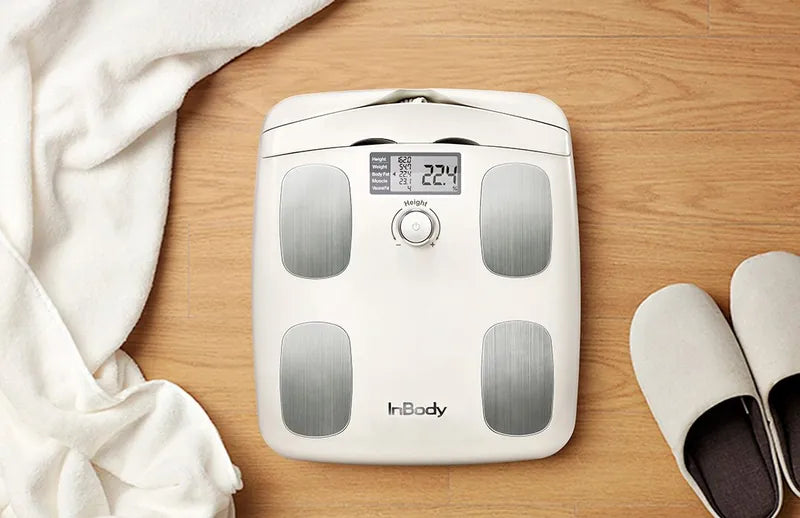
- A dry room. Dial H30 and H40 are rated IP21, which covers drips, not steam or splashes. Dial H20 should simply be kept dry. None of them belongs in the bathroom.
- Near where you wake up. A bedroom corner or the living room. The easier it is to reach before breakfast, the more often you will use it.

Make sure every reading is yours
In a shared home, the quickest way to ruin a trend is to land someone else’s reading in it. Dial H30 and H40 recognise up to 20 people with InBody ID, so check that your name comes up before you trust a result. Visitors can use guest mode, which keeps their numbers out of everyone’s history.
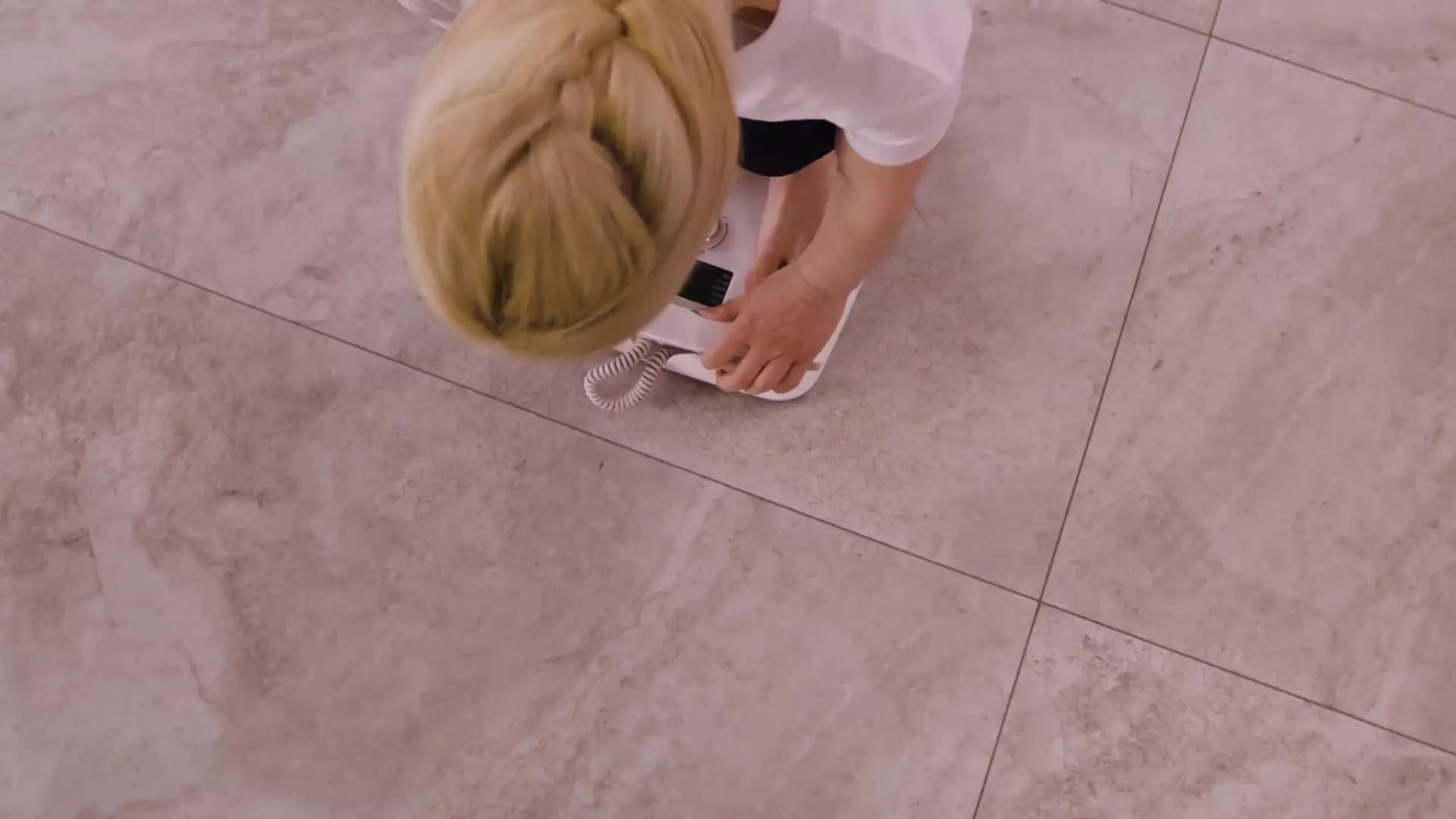
Dial H20 measures one person at a time, and you set your height on the dial before each test. Height is part of the calculation, so if a family member used it last, check the height before you start. Teenagers who are still growing should update theirs every few months.

Syncing affects your history, not your readings, but it is worth knowing. Dial H30 and H40 sync over home Wi-Fi and store up to 15 results per person on the scale if the connection drops. Dial H20 syncs over Bluetooth, so keep your phone nearby. Our app and family profile guide covers the setup.
 Dial H30For the whole house. Recognises up to 20 people, so every reading lands in the right history.See Dial H30 →
Festivals, travel, heat and your cycle
Real life will interrupt the routine. You do not need to stop testing. You need to know which readings to take with a pinch of salt.
- Festivals and weddings. Late dinners, sweets and salty snacks hold extra water and food in your body. Test as usual, but do not read anything into the next few mornings. More in weight gain after Diwali.
- Travel. Long train or road journeys, hours of sitting and irregular meals and water can all show up on the scale. Give yourself a couple of normal days at home before you compare.
- Heat. On very hot days you may sweat out more water than you replace. Drink normally the day before, and treat a sudden drop with suspicion.
- Illness. Fever, vomiting or diarrhoea change body water quickly. Skip those days or ignore the results.
- Training days. Test before a workout, never straight after one.
The menstrual cycle deserves its own note. Many women carry more water in the days before a period, and weight and body fat readings can climb, then settle again. The simplest fix is to compare readings from the same phase of each cycle.
Reading the results without overreacting
A single test is a snapshot. Treat it like one. If a reading looks strange, check the routine before you question your body: socks, posture, a late dinner, a different time of day. If nothing was off, note it and move on. The next few readings will tell you whether it was real.
A reading is only as comparable as the morning it was taken on.
Look at weight as a weekly average and at body fat and skeletal muscle as monthly trends. Real changes in fat and muscle are slow, so four weeks is a sensible minimum before you decide something has changed. For how often to step on, see how often you should weigh yourself. For how close any home scale gets to a lab, see are body fat scales accurate.
Finally, keep one device per series. Your gym analyser, a clinic test and your home scale use different electrodes and equations, and are rarely used at the same time of day. Each makes a good trend on its own. Mixing them makes a poor one.
Questions people ask
What is the best time to check body fat percentage?
First thing in the morning, after the toilet and before food, drink, exercise or a bath. If that never works for you, choose another slot at least two hours after a meal and stick to it.
Why are my morning and evening readings different?
Food, drink, activity and heat move water around your body through the day, and the reading follows the water. Neither is wrong. Pick one time and compare only readings taken then.
Should I drink water before stepping on the scale?
Test before your morning glass of water or tea. Then drink normally through the day, so you are not unusually dry the next morning.
Can I use a body composition scale on a carpet?
It is better not to. A soft surface lets the scale tilt and sink, which affects the weight that every other reading depends on. Keep it on a hard, level floor in a dry room.
Should I test during my period?
You can, but expect water to push readings around in the days before and during it. Compare each reading with the same phase of your previous cycle rather than with last week.
Can I test right after a bath?
Better not. A hot bath or shower warms the skin and moves fluid around, and wet feet change the contact. Test first, then bathe.
Sources
- Kyle UG, Bosaeus I, De Lorenzo AD, et al. Bioelectrical impedance analysis—part II: utilization in clinical practice. Clinical Nutrition 2004;23(6):1430–1453.
- Slinde F, Rossander-Hulthén L. Bioelectrical impedance: effect of 3 identical meals on diurnal impedance variation and calculation of body composition. American Journal of Clinical Nutrition 2001;74(4):474–478.
- Kyle UG, Bosaeus I, De Lorenzo AD, et al. Bioelectrical impedance analysis—part I: review of principles and methods. Clinical Nutrition 2004;23(5):1226–1243.
- InBody Dial H20, H30 and H40 specifications and measurement guidance, InBody India.
 Dial H40
 Dial H30
 Dial H20