Gained weight over Diwali? How much is fat and how much is water
Up two kilos after Diwali? Most of it is water, salt and food, not fat. The energy maths of real fat gain, and a calm reset that needs no crash diet.

The lights are packed away, the mithai boxes are nearly empty, and the scale says you are two kilos heavier than you were a week ago. Before you plan a punishing month, look at the maths. Very little of that jump is fat.
Most of the weight that appears overnight after a festival is water, salt and food still working its way through you. Real fat gain needs a large energy surplus, kept up for days, and it moves slowly. This guide shows you how to tell the two apart, and how to settle back without a crash diet. It works for Diwali, and for every festival season and wedding month after it.
The short version
- A jump of 1 to 2 kg in a few days is mostly water held with carbohydrate and salt, plus food in your gut. It usually settles within a week.
- A kilo of body fat stores roughly 7,700 kcal. To gain even half a kilo of fat, you have to eat well beyond your needs for many days.
- Go back to normal meals, not to fasting. Then judge the change on your weekly average and your body fat mass, not on one morning.
Why the scale jumps after a festival
Your weight is the sum of everything in you: fat, muscle, bone, water, and whatever you ate yesterday. Fat changes slowly. Water and food can change by a kilo or more in a day. A festival week pushes on both of the fast ones at once.
Sweets refill your glycogen, and glycogen holds water
Your body stores carbohydrate as glycogen in your muscles and liver. Every gram of glycogen is stored with roughly three to four grams of water, according to research in the American Journal of Clinical Nutrition. Laddoos, jalebis, puris and second helpings of rice top these stores right up, and the water comes with them.
Salt makes you hold on to water
Namkeen, chakli, pickles, chaat and restaurant meals are salty. Your body keeps more water to balance the extra sodium, and that water shows up on the scale the next morning. WHO advises adults to keep salt under 5 grams a day; a festival day often runs far above that.
Food in transit, late nights and travel
A heavy dinner at 11 pm is still partly inside you at 7 am. Long drives and train journeys home add hours of sitting, less water and more packaged food. Late nights matter too: short sleep tends to raise appetite the next day, which we explain in sleep and body fat.
The energy maths of real fat gain
A kilo of body fat holds a lot of energy. The figure researchers usually use is about 7,700 kcal per kilo, and work by Kevin Hall at the US National Institutes of Health explains why the real number varies from person to person. Either way, the scale of it is the point.
Suppose a festival week adds 1,000 kcal a day above what you normally eat, for five days. That is 5,000 kcal extra, which works out to well under a kilo of fat even if every bit of it were stored. Your body also burns a little more when you eat more, so the real figure is lower still. A two-kilo jump in that same week is mostly something other than fat.
That last number deserves a second look. In a study published in the New England Journal of Medicine, researchers weighed 195 adults before, during and after the US holiday season. The average gain was far smaller than people assumed. But it was not lost again in the spring or summer that followed. The festival itself is not the problem. The small amount that quietly stays is.

How to tell water from fat
An ordinary weighing machine cannot separate the two. It gives you one total, and a festival week makes that total swing. Three habits help.
- Wait a week before you judge. Water and food usually settle within three to seven days of normal eating. Whatever is left after that is closer to the real change.
- Use the weekly average. Single mornings mislead. The average of seven days smooths out the salty dinner and the late night.
- Look at body fat mass, not just weight. A body composition scale splits your weight into fat, muscle and water. If weight is up two kilos and body fat mass has barely moved, you are looking at water and food.
One honest caveat: a body composition scale also reads your body water, so a big swing in hydration can nudge its readings too. That is another reason to compare like with like. Measure at the same time each morning, after the toilet and before food or exercise, and give it a few days before you compare against your pre-festival result.
A gentle reset, not a crash diet
The instinct after a big week is to starve it off: skip dinner, juice for three days, run until your knees complain. It feels decisive. It mostly drains water and glycogen, and that water comes back the moment you eat normally. Very low intake can also cost you muscle, which is the tissue you most want to keep.
- Eat normal meals from the next day. Your usual breakfast, lunch and dinner. No skipping to make up for yesterday.
- Put protein on every plate. Dal, curd, paneer, chana, rajma, soy, eggs or fish. Protein keeps you full and helps protect muscle.
- Ease off the salt and drink water. Fewer pickles and packaged snacks for a few days lets your body release the extra water on its own.
- Walk after meals. Ten to fifteen minutes after lunch and dinner is easy to fit in, even with guests at home.
- Clear the leftover sweets. Share them, send them to the office, or freeze a few. Out of sight is the simplest plan there is.
- Get back to your sleep and your workouts. Two strength sessions a week is the WHO minimum for adults, and it keeps the muscle side of the picture on track.
If your weight and body fat are both still up a month later, that is a real change, and our guide to why the scale stalls helps you decide what to adjust. If you are thinking of fasting to compensate, read intermittent fasting: fat or muscle? first.

The same rules for every festival season
Diwali is the big one for many homes, but the pattern repeats all year. Eid feasts, Onam sadya, Durga Puja pandal food, Christmas cake, Lohri, Pongal, and the wedding season in between. Rich food, salt, late nights and travel, often back to back.
Two small habits make each one easier. Weigh in a day or two before the festival starts, so you have a clean baseline to return to. And give yourself a week afterwards before you compare. That way, a holiday never becomes a panic, and the small amount that tries to stay gets noticed while it is still small.
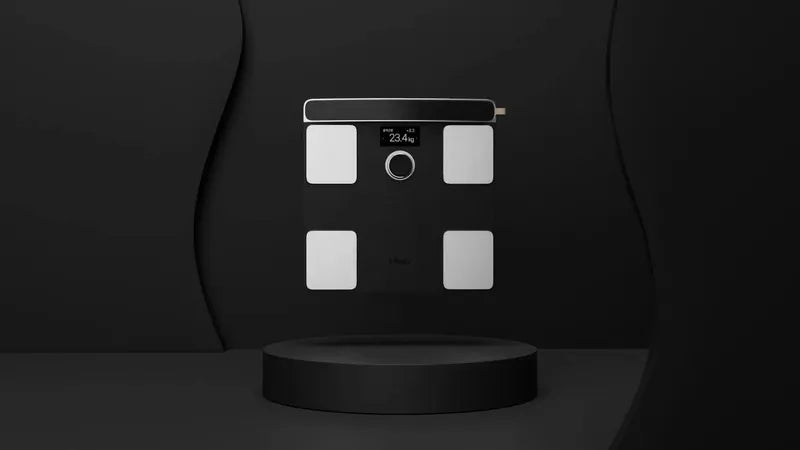
A body composition scale makes this simpler because it shows body fat mass next to weight every time. For one person, Dial H20 syncs to the InBody app over Bluetooth. For a full house of festival guests and family, Dial H30 recognises up to 20 people on its own. If you train seriously, Dial H40 adds leg muscle level and balance ratings.
 Dial H30For the whole house. Weight and body fat mass for up to 20 people, recognised automatically, synced over Wi-Fi.See Dial H30 →

Questions people ask
How long does festival water weight take to go?
For most people, a few days to a week of normal eating, normal salt and normal sleep. If your weekly average is still up after two weeks, some of it is likely real gain.
Can you gain 2 kg of fat in one week?
It is very unlikely. A kilo of fat stores roughly 7,700 kcal, so two kilos would need a surplus of over 15,000 kcal on top of your normal needs in seven days. A two-kilo jump in a week is mostly water and food.
Should I fast after Diwali to lose the weight?
There is no need. Fasting mainly drains water and glycogen, which come back when you eat again. Regular meals with protein, less salt, daily walks and strength training work better. If you have diabetes or take regular medication, talk to your doctor before any fast.
Why does my body fat reading change after a heavy meal?
Body composition scales read your body water, and a big meal or a salty day shifts it. Measure at the same time each morning, before food, and compare results from similar days.
Which sweets cause the most weight gain?
Over a few days, the ones you eat most of. Fried and syrup-soaked sweets are dense in energy, and salty snacks add water weight. Portions matter more than any single sweet.
Sources
- Hall KD. What is the required energy deficit per unit weight loss? International Journal of Obesity 2008;32(3):573–576.
- Kreitzman SN, Coxon AY, Szaz KF. Glycogen storage: illusions of easy weight loss, excessive weight regain, and distortions in estimates of body composition. American Journal of Clinical Nutrition 1992;56(1 Suppl):292S–293S.
- Yanovski JA et al. A prospective study of holiday weight gain. New England Journal of Medicine 2000;342(12):861–867.
- World Health Organization. Guideline: sodium intake for adults and children. Geneva: WHO; 2012.
- World Health Organization. WHO guidelines on physical activity and sedentary behaviour. Geneva: WHO; 2020.
- InBody Dial H20, H30 and H40 specifications, InBody India.
 Dial H40
 Dial H30
 Dial H20