Intermittent fasting: are you losing fat or muscle?
Intermittent fasting can help you eat less, but the scale cannot show what you lose. What the trials found about muscle, and how to protect it.
Skip breakfast, eat between noon and eight, lose weight. Intermittent fasting is simple to explain and easy to start, which is most of its appeal. The scale usually moves. The harder question is what it is moving.
The short answer from the research: intermittent fasting works mainly because it helps you eat less, and on its own it does not beat ordinary calorie cutting. Without enough protein and some strength training, part of what you lose can be lean mass, including muscle. With them, studies in people who lift found fat came off while muscle held. This guide covers what the trials found and how to make sure the kilos you lose are mostly fat.
The short version
- In trials, time-restricted eating and alternate-day fasting did not lose more weight than simply eating a bit less every day.
- In the TREAT trial, the fasting group lost more lean mass from their arms and legs than the control group. Trials that added lifting and protein did not see that.
- Weight alone cannot tell fat loss from muscle loss. Track body fat mass and skeletal muscle mass monthly.
What intermittent fasting actually is
Intermittent fasting is an umbrella term for eating patterns built around time rather than food. The most popular kinds are:
- Time-restricted eating, such as 16:8. You eat within an 8-hour window, for example 12:00 to 20:00, and fast for the other 16 hours.
- 5:2. Five days of normal eating and two non-consecutive days of very low intake.
- Alternate-day fasting. Fasting or very low intake every other day.
Fasting is not new in Indian homes. Navratri, Ekadashi, Ramadan and Karva Chauth all have their own rhythm and meaning, and this guide is not about them. It is about fasting as a weight-loss method, and what it does to the parts of your body the scale cannot separate.
What the trials found
Weight: about the same as eating less
One of the best-known trials of 16:8 eating is TREAT, published in JAMA Internal Medicine in 2020. Lowe and colleagues randomised 116 adults with overweight or obesity to either eat three structured meals a day or eat freely between 12:00 and 20:00, for 12 weeks. The fasting group lost a little under a kilo on average, and the difference from the meal-timing group was not significant.
Alternate-day fasting looks similar. In a year-long trial in the same journal, Trepanowski and colleagues found that people on alternate-day fasting did not lose more weight than people who cut their daily calories, and more of them dropped out. The window is a tool for eating less. It is not a separate fat-burning switch.
Muscle: the part most people never check
TREAT also measured body composition in 50 participants who came in for in-person testing. The fasting group lost more lean mass from their arms and legs than the control group, a difference the authors flagged as significant. In other words, part of an already small weight loss came from lean tissue rather than fat.
Now compare two trials that added training. Moro and colleagues put 34 resistance-trained men on 16:8 eating for eight weeks, with the same calories and protein as a normal-diet group and a standard lifting programme. The fasting group lost fat mass while fat-free mass, arm and thigh muscle and maximal strength held steady. Tinsley and colleagues ran a similar eight-week trial in 40 resistance-trained women eating within about seven and a half hours. With supervised training and about 1.6 grams of protein per kilo a day, all groups gained similar fat-free mass and muscle.
The window decides when you eat. Protein and lifting decide what you lose.
How to fast without losing muscle
If intermittent fasting suits your schedule, keep it. Just build the muscle-protecting habits into it.
- Hit your protein inside the window. ICMR-NIN puts the basic adult requirement at about 0.83 grams per kilo of body weight a day; many people who train eat more. A shorter window makes this harder, so plan it.
- Break the fast with protein. Curd, paneer, dal, chana, sprouts, soy, eggs or chicken in the first meal, not just tea and biscuits.
- Spread it across two or three meals. One huge dinner rarely gets you there. Our guide to vegetarian protein for muscle has practical Indian options.
- Lift at least twice a week. WHO recommends muscle-strengthening activity on two or more days a week. It is the signal that tells your body to keep muscle while you eat less. New to it? Start with strength training for beginners.
- Keep the deficit modest. A shorter window plus very low calories is the fastest way to lose muscle along with fat.
- Sleep enough. Short nights shift weight loss away from fat, as explained in sleep and body fat.


Track what you are actually losing
An ordinary weighing machine gives you one number, and on a fasting plan that number can look great while muscle slips. A body composition scale splits weight into body fat mass and skeletal muscle mass, the two lines that tell you whether the plan is working.
| What you see | What it often means | What to do |
|---|---|---|
| Weight down, fat down, muscle steady | Mostly fat loss | Keep going |
| Weight down, muscle down too | Losing lean mass with fat | More protein, keep lifting, smaller deficit |
| Weight flat, fat down, muscle up | Recomposition | Keep going; ignore the weight |
| Weight down fast in week one | Mostly water and glycogen | Judge after four weeks |
Measure on the same terms each time. Morning is ideal anyway on 16:8, because you are still fasted: after the toilet, before food or exercise, bare feet and dry skin, arms straight with the handle. Avoid testing straight after breaking the fast or after a workout. Then read the monthly trend, not single days.

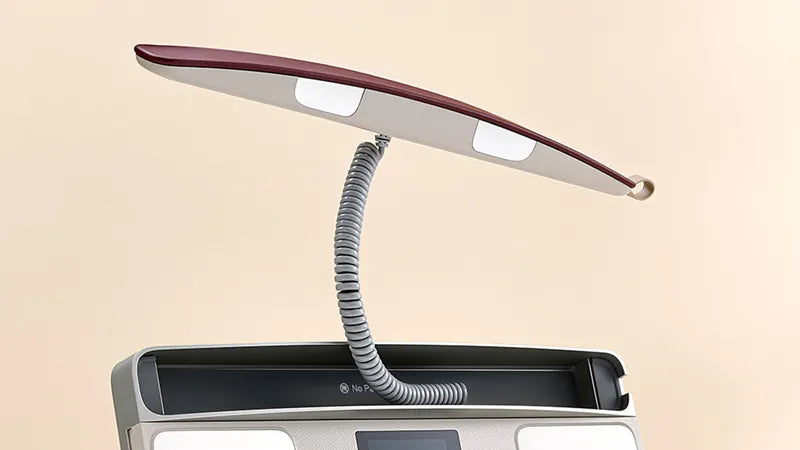
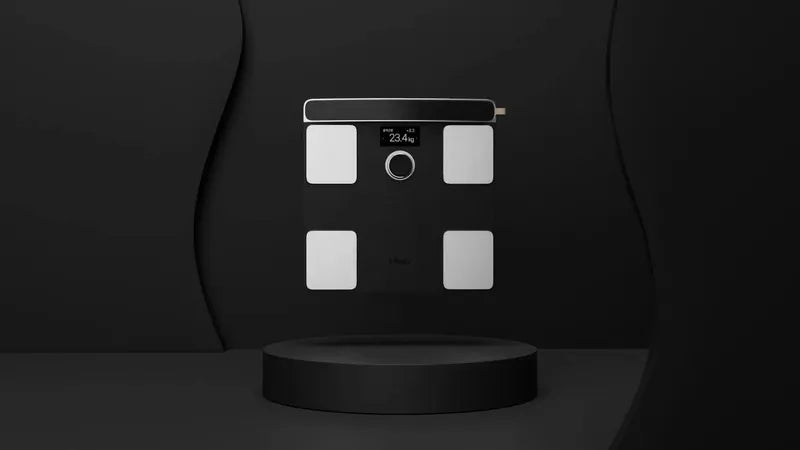
For one person, Dial H20 shows body fat mass and skeletal muscle mass and syncs over Bluetooth. Dial H30 recognises up to 20 people and syncs over Wi-Fi. If you lift seriously, Dial H40 adds leg muscle level and balance ratings, which show whether your training is keeping your legs and both sides of your body on track.
 Dial H40For people who train. 14 readings, including skeletal muscle mass, leg muscle level and balance ratings.See Dial H40 →
Who should check with a doctor first
Intermittent fasting is not for everyone. Talk to your doctor before you start if you have diabetes, especially if you take insulin or other medicines that lower blood sugar, since long gaps between meals can change how those medicines should be taken. The same goes if you are pregnant or breastfeeding, have a history of eating disorders, are under 18, or take regular medication for any condition. If you are already losing weight on prescribed medication, read our guide to weight-loss medication and muscle and plan changes with your doctor.
Questions people ask
Does intermittent fasting cause muscle loss?
It can, especially without enough protein or strength training. In the TREAT trial, the 16:8 group lost more lean mass from the arms and legs than the control group. Trials that combined fasting with lifting and adequate protein found muscle was maintained.
Is 16:8 better than just eating less?
For weight loss, trials have not found it better. Its value is practical: some people find a clear eating window easier to stick to than counting calories. Pick the approach you can keep.
How much protein should I eat while intermittent fasting?
ICMR-NIN puts the basic adult requirement at about 0.83 grams per kilo of body weight a day, and people who train often eat more. Spread it across two or three meals inside your window, starting with the first.
Can I work out while fasting?
Many people train comfortably before their first meal; others feel weak. Either can work. What matters most is that you lift regularly and eat enough protein across the day. If you feel dizzy or unwell, stop and eat.
Is intermittent fasting safe if I have diabetes?
Talk to your doctor first. Long gaps between meals can affect blood sugar, especially with insulin or other glucose-lowering medicines, and doses may need to change.
Sources
- Lowe DA et al. Effects of Time-Restricted Eating on Weight Loss and Other Metabolic Parameters in Women and Men With Overweight and Obesity: The TREAT Randomized Clinical Trial. JAMA Internal Medicine 2020;180(11):1491–1499.
- Trepanowski JF et al. Effect of Alternate-Day Fasting on Weight Loss, Weight Maintenance, and Cardioprotection Among Metabolically Healthy Obese Adults: A Randomized Clinical Trial. JAMA Internal Medicine 2017;177(7):930–938.
- Moro T et al. Effects of eight weeks of time-restricted feeding (16/8) on basal metabolism, maximal strength, body composition, inflammation, and cardiovascular risk factors in resistance-trained males. Journal of Translational Medicine 2016;14:290.
- Tinsley GM et al. Time-restricted feeding plus resistance training in active females: a randomized trial. American Journal of Clinical Nutrition 2019;110(3):628–640.
- ICMR-National Institute of Nutrition. Nutrient Requirements for Indians: Recommended Dietary Allowances and Estimated Average Requirements. Hyderabad: ICMR-NIN; 2020.
- World Health Organization. WHO guidelines on physical activity and sedentary behaviour. Geneva: WHO; 2020.
- InBody Dial H20, H30 and H40 specifications, InBody India.
 Dial H40
 Dial H30
 Dial H20