Bulking and cutting: are you gaining muscle or fat?
A bulk adds weight and a cut takes it off. How fast to go, and how to read muscle and fat each month so you know what the scale is really saying.

When you bulk, the scale goes up. The only question that matters is how much of that is muscle and how much is fat. A weighing machine cannot tell you. A body composition scale can, if you read skeletal muscle mass and body fat mass together, once a month, under the same conditions.
The same goes for cutting in reverse: you want the fat to come off while the muscle stays. This guide covers sensible rates for both phases, how to read the monthly numbers, and what to change when they go the wrong way.
The short version
- Bulk slowly. A narrative review of bodybuilding nutrition suggests gaining around 0.25 to 0.5 percent of body weight a week for most lifters.
- Cut steadily. Losing about 0.5 to 1 percent of body weight a week, with high protein, helps keep muscle.
- Judge every phase on the change in skeletal muscle mass and body fat mass, not on the total.
What bulking and cutting are for
A bulk is a period of eating a little more than you burn, so your body has spare energy to build muscle while you train hard. A cut is the opposite: a period of eating a little less, to lose the fat that came along with the muscle, while training hard enough to keep what you built.
The idea is sound. The trouble is that both phases are judged by the wrong number. A good bulk and a bad bulk can show the same weight gain. A good cut and a muscle-wasting one can show the same weight loss. The difference is in what the kilos are made of.
If you are new to lifting or carrying a fair amount of fat, you may not need separate phases at all. Many people in that position can lose fat and gain muscle at the same time; our guide to body recomposition explains when that works.
How fast to bulk, and how fast to cut
Bulking
Muscle is built slowly, even in good conditions. Eat far more than you need and the extra mostly becomes fat. A 2019 narrative review in the journal Sports suggested a modest calorie surplus with a target gain of around 0.25 to 0.5 percent of body weight a week for novice and intermediate bodybuilders, and slower for advanced lifters. For a 70 kg lifter, that is roughly 175 to 350 grams a week.
Protein matters too. The same review suggested 1.6 to 2.2 grams per kilo of body weight a day during a bulk, which sits within the range the International Society of Sports Nutrition recommends for people who train. Spread it over three or four meals.
Cutting
Lose weight too quickly and more of it tends to come from muscle. A 2014 review of contest preparation in the Journal of the International Society of Sports Nutrition recommended losing about 0.5 to 1 percent of body weight a week to help retain muscle, with a high protein intake and continued heavy training. For a 75 kg lifter, that is roughly 375 to 750 grams a week.
Keep lifting heavy during a cut. The training is the signal that tells your body the muscle is still needed. Cutting the weights along with the calories is one of the most common reasons people lose muscle in this phase.

Reading the scale during a bulk
Compare each monthly check with the start of the phase. You are looking at two numbers side by side: how much skeletal muscle mass changed, and how much body fat mass changed.
| What you see | What it often means | What to try |
|---|---|---|
| Muscle up, fat up a little | A productive bulk | Keep going |
| Muscle flat, fat up clearly | Surplus too large, or training not progressing | Trim the surplus; check your lifts are climbing |
| Weight flat, muscle flat | Not eating enough to bulk | Add a small, steady amount of food |
| Weight jumps in a week | Mostly water and food | Wait for the monthly trend |
One honest caveat: body composition scales read water, and lean tissue is mostly water. A big change in carbohydrate intake, salt, hydration or a hard leg session the day before can nudge the muscle reading up or down. That is why you test in the same state each time and trust trends over single readings.
Reading the scale during a cut
In a cut, success looks like body fat mass falling steadily while skeletal muscle mass holds roughly flat. A small dip in the muscle reading in the first week or two is common, as stored carbohydrate and the water that comes with it drop away. A steady slide month after month is a different story: it usually means the deficit is too steep, protein is too low, or training has eased off.
If you want to understand why the scale shows both lean body mass and skeletal muscle mass, read our guide to lean body mass vs skeletal muscle mass.

What Dial H40 adds for people who train
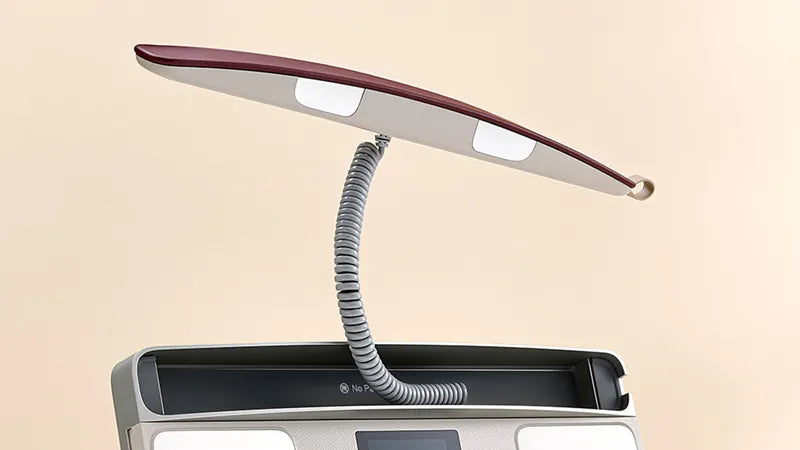
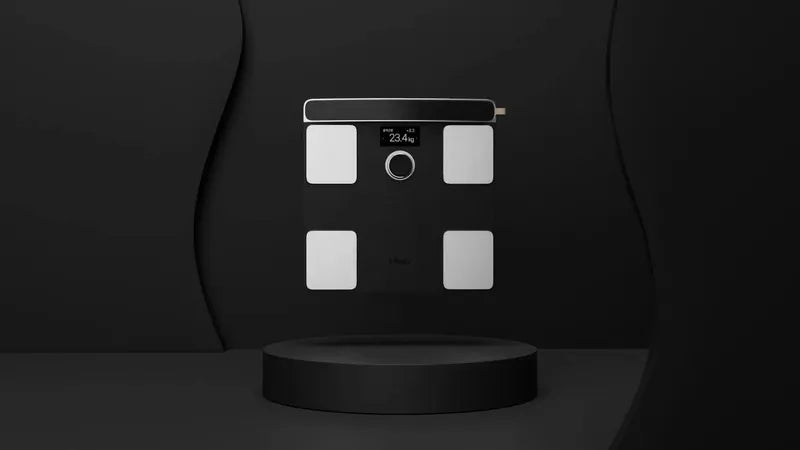
All three InBody Dials measure each arm, each leg and the trunk separately, using 8 electrodes at your hands and feet. Dial H40 is the one built for training. It gives 14 readings, measures at three frequencies in about 20 seconds, and adds two things the others do not have.
- Leg muscle level. A level for the muscle in your legs, useful when squats and deadlifts are a big part of your programme.
- Three balance ratings. Upper-body, lower-body and upper–lower, each shown as Balanced, Slightly unbalanced or Extremely unbalanced. It is a rating, not kilos per limb.
If you train at home with family, Dial H30 recognises up to 20 people and includes the upper–lower balance rating. If it is just you and you mainly want the core numbers, Dial H20 shows skeletal muscle mass, body fat mass and visceral fat level over Bluetooth.


 Dial H40For people who train. 14 readings, leg muscle level and three balance ratings, in Beige or Black.See Dial H40 →
Clean readings when you train hard
- Test on rest-day mornings. After the toilet, before food and training. Hard sessions move water around for hours.
- Keep food and salt steady the day before. A big refeed or a salty restaurant meal can shift the next morning’s readings.
- Average two or three mornings. Use the weekly average as your monthly check-in number.
- Change one thing at a time. Adjust calories or training, then give it four weeks before judging.
Our guide to consistent readings has more on routine. For Dial H20, a 2023 study in the British Journal of Nutrition found it tracked body composition change over 12 to 16 weeks.
Questions people ask
How do I know if I am gaining muscle or fat when bulking?
Compare skeletal muscle mass and body fat mass with the start of your bulk, once a month, under the same conditions. If fat rises much faster than muscle, the surplus is probably too large.
How much weight should I gain per week on a bulk?
A 2019 review suggested around 0.25 to 0.5 percent of body weight a week for novice and intermediate lifters, and slower for advanced lifters. For a 70 kg person that is about 175 to 350 grams.
How fast should I lose weight on a cut?
About 0.5 to 1 percent of body weight a week is a common recommendation for keeping muscle, with high protein and continued heavy training.
Should I bulk or cut first?
If you carry a fair amount of body fat, cutting or recomposition usually comes first. If you are lean and want more muscle, a slow bulk makes sense. Your body fat mass reading is a good starting point for the decision.
Why did my muscle reading drop at the start of a cut?
Early in a cut, stored carbohydrate and the water held with it drop, and body composition scales read water. A small early dip is common. A steady slide over several months is the signal to adjust.
Sources
- Iraki J, Fitschen P, Espinar S, Helms E. Nutrition recommendations for bodybuilders in the off-season: a narrative review. Sports 2019;7(7):154.
- Helms ER, Aragon AA, Fitschen PJ. Evidence-based recommendations for natural bodybuilding contest preparation: nutrition and supplementation. Journal of the International Society of Sports Nutrition 2014;11:20.
- Jäger R et al. International Society of Sports Nutrition position stand: protein and exercise. Journal of the International Society of Sports Nutrition 2017;14:20.
- Barakat C, Pearson J, Escalante G, Campbell B, De Souza EO. Body recomposition: can trained individuals build muscle and lose fat at the same time? Strength and Conditioning Journal 2020;42(5):7–21.
- Siedler MR et al. Assessing the reliability and cross-sectional and longitudinal validity of fifteen bioelectrical impedance analysis devices. British Journal of Nutrition 2023;130:827–840.
- InBody Dial H20, H30 and H40 specifications, InBody India.
 Dial H40
 Dial H30
 Dial H20