Waist-to-hip ratio: how to measure it at home and what it means
Where you carry fat matters as much as how much. How to measure waist-to-hip ratio with a tape at home, what WHO cut-offs mean, and why it matters in India.
Two people can weigh the same and wear the same shirt size, yet carry their fat in very different places. Waist-to-hip ratio is a simple way to see where yours sits, and all it takes is a tape measure and two minutes.
Measure your waist midway between your lowest rib and the top of your hip bone. Measure your hips around the widest part of your buttocks. Divide the first number by the second. WHO links a ratio of 0.90 or more in men, and 0.85 or more in women, with a substantially increased risk of metabolic problems. For many Indians, who tend to store fat around the middle even at a normal weight, it is one of the most useful numbers to know.
The short version
- Waist-to-hip ratio is your waist divided by your hips. It shows whether you carry fat around your middle.
- WHO cut-offs: 0.90 and above for men, 0.85 and above for women, mark a substantially increased risk.
- Measure the same way every time, track it monthly, and pair it with body fat and visceral fat readings.
What waist-to-hip ratio tells you
BMI tells you how heavy you are for your height. It says nothing about where the weight is. Fat stored around the abdomen, including the visceral fat packed around your organs, is the kind most closely linked with problems like type 2 diabetes and heart disease. Fat on the hips and thighs is generally less of a concern.
Waist-to-hip ratio captures that difference with two tape measurements. In INTERHEART, a study of about 27,000 people across 52 countries published in The Lancet, waist-to-hip ratio was more strongly linked with heart attack risk than BMI.
It matters especially in India. Researchers describe an Asian Indian phenotype: more body fat, and more of it around the middle, at a lower BMI than many other populations. The ICMR-INDIAB national survey of more than 110,000 adults found abdominal obesity in nearly 40 percent of Indian adults, more common than generalised obesity at about 29 percent. Our guides to checking visceral fat at home and skinny fat go deeper on this pattern.

How to measure it at home
The method below follows the protocol in WHO’s expert consultation report on waist circumference and waist-hip ratio. Use a soft, non-stretch tape, stand in front of a mirror, and ask someone to help if you can.
- Measure in the morning. Before breakfast, after the toilet, in light clothing or none around your middle.
- Stand naturally. Feet close together, arms relaxed at your sides, weight spread evenly. Do not pull your stomach in.
- Find your waist. Feel for the bottom of your lowest rib and the top of your hip bone at the side. Your waist line is exactly midway between them, which is often not where your trousers sit.
- Measure your waist. Wrap the tape around at that level, parallel to the floor, snug but not pressing into the skin. Read it at the end of a normal breath out.
- Measure your hips. Around the widest part of your buttocks, tape parallel to the floor.
- Divide and repeat. Waist ÷ hips gives your ratio. Measure each twice; if the two differ by more than a centimetre, measure again and average.
What your ratio means
WHO’s expert consultation set waist-to-hip ratio cut-offs of 0.90 for men and 0.85 for women. At or above those numbers, the risk of metabolic complications is considered substantially increased. The same ratio can mean different things depending on whether you are a man or a woman.
Waist size on its own is useful too. Indian consensus guidelines (Misra et al. 2009) set abdominal obesity cut-offs at a waist of 90 cm for men and 80 cm for women, lower than the figures often used in Western countries. Track both numbers together.
| Men | Women | Source | |
|---|---|---|---|
| Waist-to-hip ratio | 0.90 or more | 0.85 or more | WHO expert consultation, 2008 |
| Waist, Asian Indians | 90 cm or more | 80 cm or more | Indian consensus, Misra et al. 2009 |
These are population risk markers, not a verdict on your health. A ratio above the line is a reason to pay attention, and to talk to your doctor about your blood sugar, blood pressure and cholesterol. A ratio below it is not a free pass if your waist is growing year on year.
Tape measure or scale?
The tape is direct, cheap and easy to repeat. Its weak points are the person holding it: a tape a centimetre higher, or a breath held in, changes the result. Measure at the same landmarks every time and you will get a usable trend.
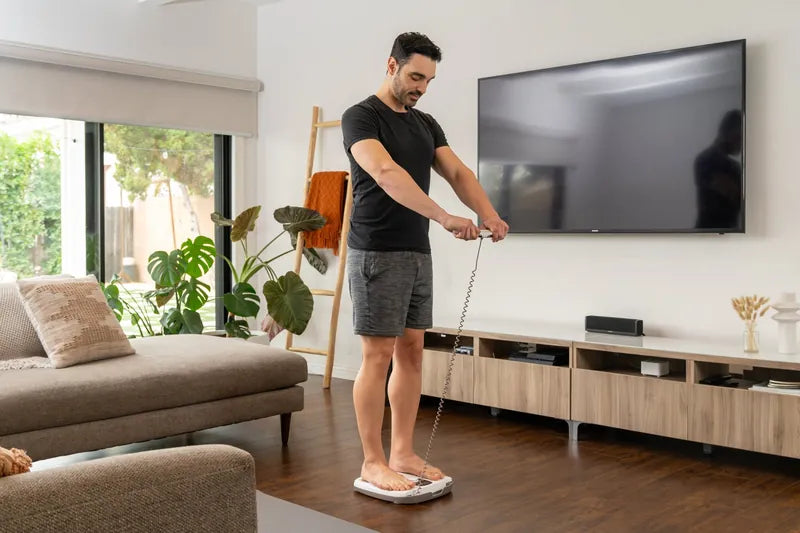
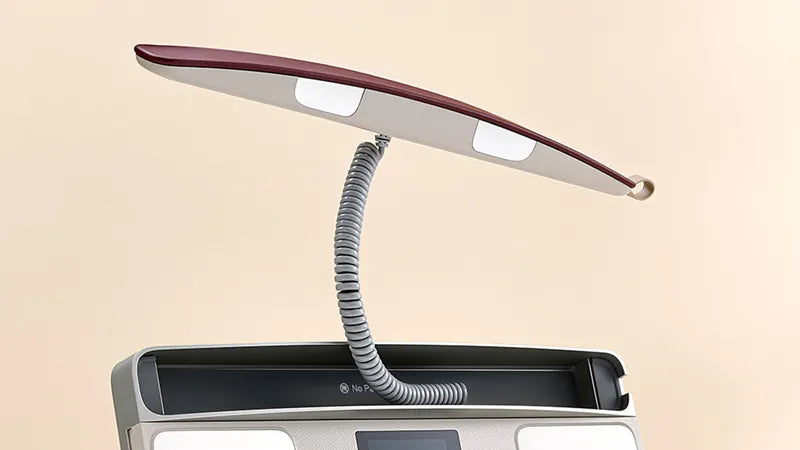
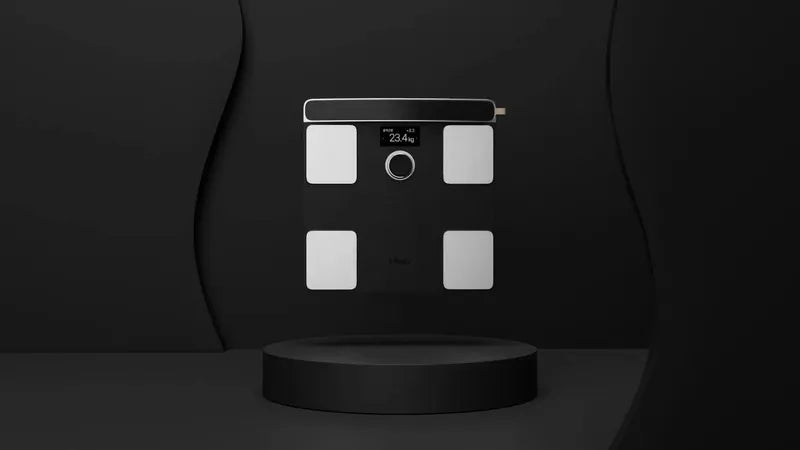
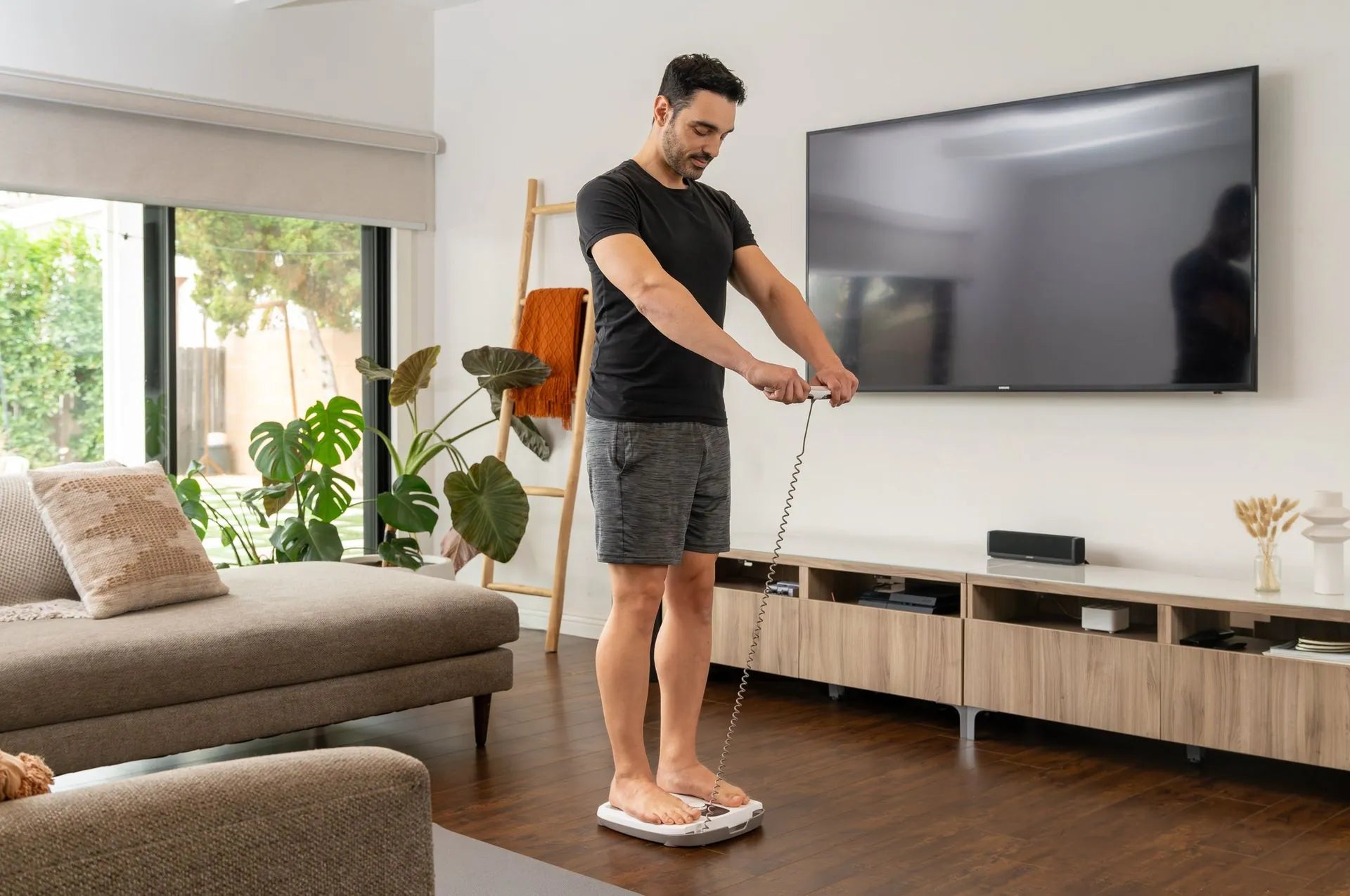
Dial H30 and Dial H40 show an estimated waist-hip ratio with every test. It is worked out from the scale’s segmental body composition measurement through your arms, legs and trunk, not from a tape, so do not expect the two numbers to match exactly. Pick one method for your trend and stick to it. All three Dials also show a visceral fat level, which adds the inside view that no tape can give.

 Dial H30For the whole house. 12 readings, including estimated waist-hip ratio and visceral fat level, for up to 20 people.See Dial H30 →
Bringing your waist down
You cannot choose where fat comes off. Crunches strengthen your abdominal muscles, but they do not burn the fat on top of them faster than anywhere else. What reliably shrinks a waist is losing body fat overall, while keeping muscle.
- Move most days. WHO recommends 150 to 300 minutes of moderate activity a week for adults. Brisk walks after meals count.
- Lift twice a week or more. Muscle-strengthening work helps you lose fat rather than muscle.
- Cut back on sugary drinks, sweets and refined snacks. They add energy quickly without filling you up.
- Sleep 7 hours or more. Short nights make fat loss harder, as we explain in sleep and body fat.

Give any change at least four to eight weeks before you judge it. If you want to see fat and muscle move separately while your waist comes down, a body composition scale shows both. Dial H20 covers one person with 8 readings, including visceral fat level. Dial H40 adds leg muscle level and balance ratings for people who train.
Questions people ask
What is a good waist-to-hip ratio for women?
WHO uses 0.85 as the cut-off for women: at or above it, the risk of metabolic complications is considered substantially increased. Below 0.85 is the lower-risk range, though a growing waist is still worth watching.
What is a good waist-to-hip ratio for men?
For men, the WHO cut-off is 0.90. A ratio below that is in the lower-risk range. Indian guidelines also treat a waist of 90 cm or more in men as abdominal obesity.
Where exactly should I measure my waist?
Midway between the bottom of your lowest rib and the top of your hip bone, at the side of your body. For many people this is a little above the navel. Keep the tape parallel to the floor and read it after a normal breath out.
Is waist-to-hip ratio better than BMI?
They answer different questions. BMI compares weight with height; waist-to-hip ratio shows where you carry fat. In the INTERHEART study, waist-to-hip ratio was more strongly linked with heart attack risk than BMI. Using both, plus body fat, gives a fuller picture.
Why does my scale’s waist-hip ratio differ from my tape measurement?
The scale estimates it from body composition measurements, while the tape measures circumference directly. Different methods give different numbers. Track the trend on one method rather than comparing the two.
Sources
- World Health Organization. Waist circumference and waist-hip ratio: report of a WHO expert consultation, Geneva, 8–11 December 2008. Geneva: WHO; 2011.
- Yusuf S et al. Obesity and the risk of myocardial infarction in 27,000 participants from 52 countries: a case-control study. The Lancet 2005;366(9497):1640–1649.
- Anjana RM et al. Metabolic non-communicable disease health report of India: the ICMR-INDIAB national cross-sectional study (ICMR-INDIAB-17). The Lancet Diabetes & Endocrinology 2023;11(7):474–489.
- Misra A et al. Consensus statement for diagnosis of obesity, abdominal obesity and the metabolic syndrome for Asian Indians and recommendations for physical activity, medical and surgical management. Journal of the Association of Physicians of India 2009;57:163–170.
- World Health Organization. WHO guidelines on physical activity and sedentary behaviour. Geneva: WHO; 2020.
- InBody Dial H20, H30 and H40 specifications, InBody India.
 Dial H40
 Dial H30
 Dial H20