Menopause and your body: what changes in muscle and fat, and what helps
Around menopause, fat often moves to the middle and muscle gets harder to keep, even when weight barely changes. What is happening and what helps.
Many women in their mid-forties notice the same thing. The weight on the scale has hardly moved, yet blouses fit differently at the waist, the stairs feel steeper, and the old ways of staying in shape seem to work less well. It can feel as if the body changed the rules without saying so.
In a sense, it did. Around menopause, falling oestrogen shifts where the body stores fat and makes muscle a little harder to keep. Research suggests these changes speed up during the transition itself and then settle. Here is what is happening, why weight alone can miss it, and what tends to help, from strength training to protein to watching the right numbers.
The short version
- Around menopause, fat often moves from the hips and thighs to the middle, and lean mass tends to drift down. Weight can stay almost the same.
- Strength training two or three times a week and enough protein at every meal are the two habits with the strongest case behind them.
- Follow body fat, skeletal muscle and waist trends rather than weight, and talk to your doctor about symptoms, bone health and any treatment.
What changes, and when
Menopause is the point twelve months after a woman’s last period. The years leading up to it, when periods become irregular and hormones swing, are called perimenopause or the menopause transition. For many women this runs through the mid to late forties, though the timing varies widely.
One of the longest-running studies of this stage, the Study of Women’s Health Across the Nation (SWAN) in the United States, followed women through the transition with repeated body composition measurements. It found that fat gain sped up and lean mass began to fall as women entered the transition, and that both changes slowed again after the final period.
Age plays a part too. Muscle and strength tend to decline slowly from midlife in everyone, and many Indian women start from a lower base of muscle and a higher share of body fat at the same body mass index, a pattern researchers describe as the Asian Indian phenotype. Menopause lands on top of all that.
Why fat moves to the middle
Before menopause, oestrogen tends to steer fat towards the hips and thighs. As it falls, more fat settles around the abdomen, including visceral fat, the deeper fat that sits around the organs. A study that followed women with yearly scans through the transition found visceral fat rising as they moved towards menopause, along with a drop in the energy their bodies used each day.
This is why the waistband often changes before the scale does. Weight is the sum of everything. A kilo of fat moving from the hips to the belly, or a kilo of muscle being replaced by a kilo of fat, leaves the number exactly where it was.


What helps
No single habit stops these changes, and none of this replaces a conversation with your doctor. But the evidence points clearly in a few directions.
Strength training, two or three times a week
Muscle responds to load at every age. The World Health Organization advises adults to do muscle-strengthening activity on at least two days a week. Strength work helps hold on to muscle, which keeps you strong on the stairs and in daily life, and it supports the body’s use of energy. Weight-bearing and strength exercise are also generally advised for bone health, which matters more after menopause.
Start where you are. Sit-to-stands from a chair, wall push-ups, step-ups on the bottom stair, resistance bands, and dumbbells or filled water bottles as you get stronger. A trainer or physiotherapist can help set up a routine, especially if your knees or back complain. Yoga and walking are both good; keep them, and add strength on top.

Protein at every meal
Muscle needs protein to rebuild after training. ICMR-NIN puts the requirement for Indian adults at about 0.83 g per kilogram of body weight a day. Breakfast is often the lightest meal for protein, so it is a good place to start. Spread it across the day: curd, paneer, dal, chana, rajma, soy, milk, eggs or fish. The vegetarian options are covered in vegetarian protein for muscle. If you have kidney disease, agree a target with your doctor first.
Sleep and stress
Hot flushes and night sweats can break up sleep for months, and short, broken sleep tends to make hunger harder to manage and training harder to keep up. Anything that helps sleep, from a cooler room to talking to your doctor about symptoms, helps the rest. There is more in sleep and body fat.
Talk to your doctor
A gynaecologist or physician can talk you through symptoms, bone health and whether any treatment, including hormone therapy, makes sense for you. Bone density is measured with a DXA bone scan, not with a scale. Bring your questions, and your trends.
What to track instead of weight
If weight hides the change, follow the numbers that show it. Measure the same way every time: morning, after the toilet, before breakfast and before exercise, once or twice a week.
- Skeletal muscle mass. Holding steady or rising slowly means your strength work is doing its job.
- Body fat mass and percent body fat. Rising while weight stays flat is the classic midlife pattern.
- Visceral fat level. A rough guide to the deeper fat around the organs. More on reading it in how to check visceral fat at home.
- Waist-hip ratio. On Dial H30 and H40 it is estimated from your measurement, so you can follow the shift to the middle without a tape.

Give changes eight to twelve weeks before you judge them. Body composition moves slowly, and a single reading can wobble with water, food and sleep. If the scale has been flat for a while and you are not sure why, when the scale is not moving may help, and if your mother is going through the same years, muscle loss after 40 is written for parents.
A scale that shows the change
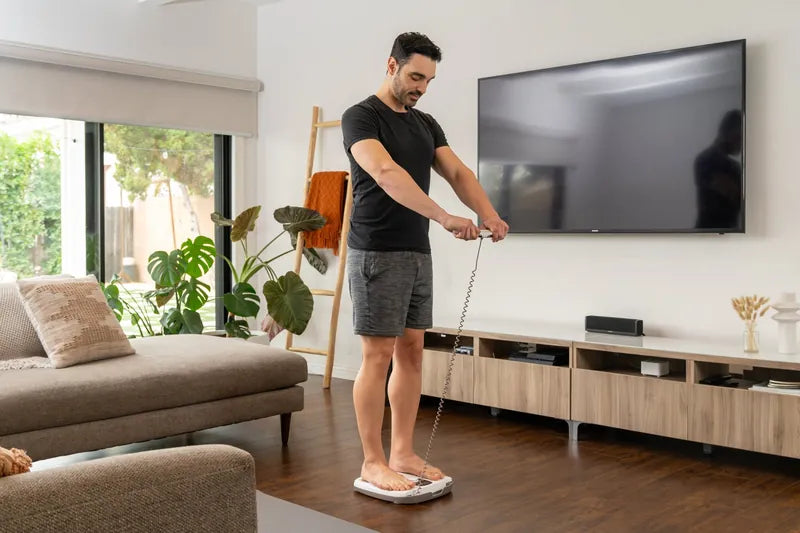
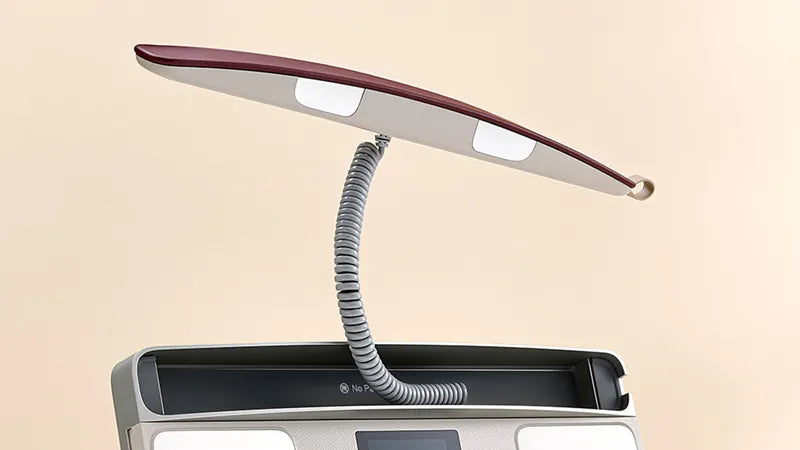
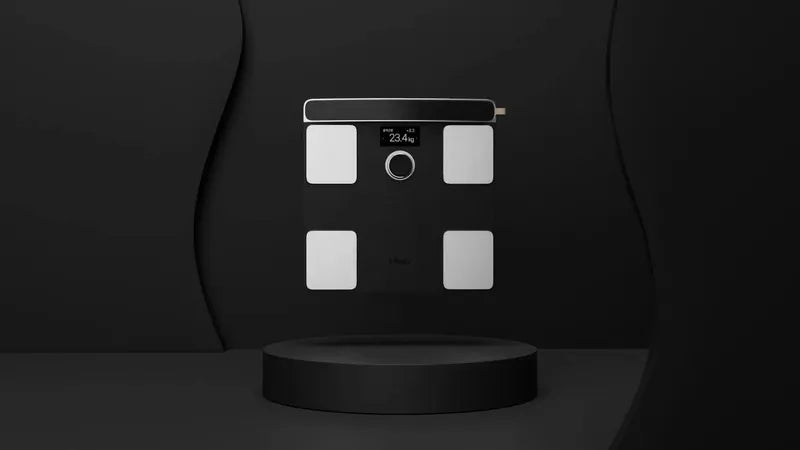
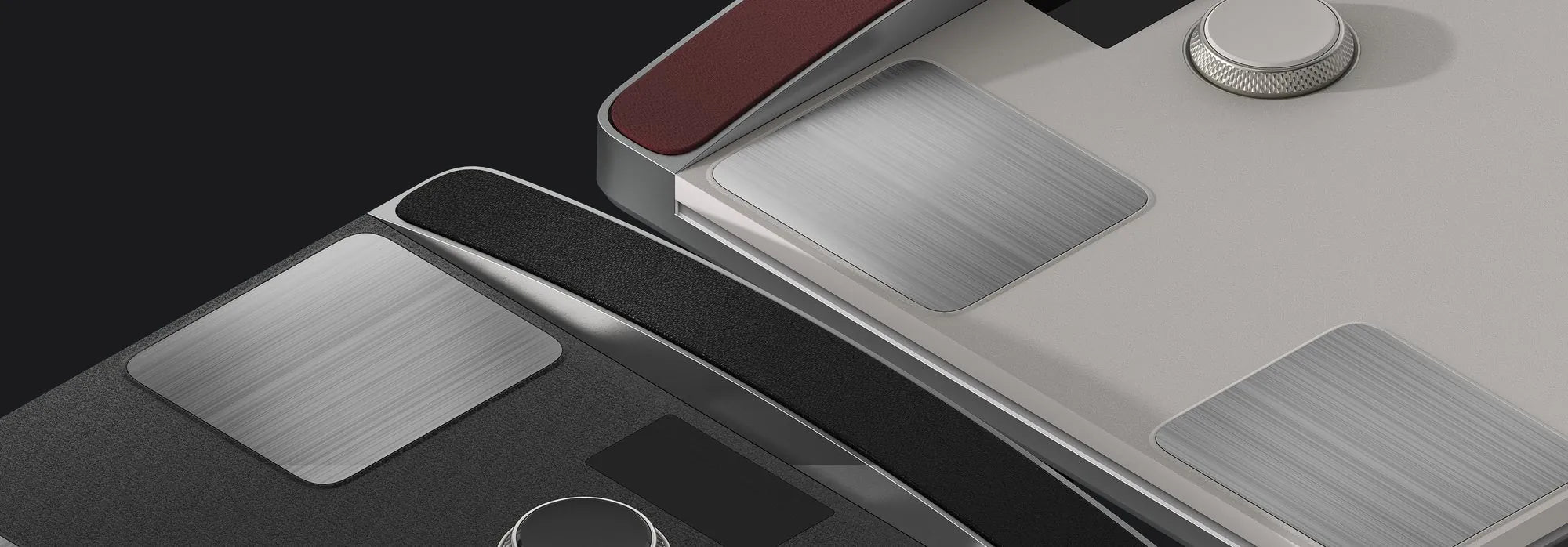
All three Dials split weight into muscle and fat and show visceral fat level, measuring each arm, each leg and the trunk through eight electrodes. Dial H40 adds a leg muscle level, a useful number for stairs and getting up from the floor, along with waist-hip ratio and balance ratings. Dial H30 has waist-hip ratio too and recognises up to 20 people, so a mother and daughter can share one scale and keep separate trends. Dial H20 covers the core 8 readings for one person.
Dial is a fitness and wellness tracking device. It shows what your weight is made of and how that changes; it does not explain why, and it is not a substitute for medical advice. InBody advises that anyone with an implanted electronic medical device such as a pacemaker should not use it.
 Dial H40Muscle, fat, visceral fat, waist-hip ratio and leg muscle level. 14 readings in about 20 seconds.See Dial H40 →
Questions people ask
Why am I gaining belly fat during menopause when my weight is the same?
As oestrogen falls, the body tends to store more fat around the abdomen and less on the hips and thighs, and lean mass often drifts down. The total can stay the same while the distribution changes. Body composition and waist measurements show it; weight alone does not.
Do women lose muscle during menopause?
Research following women through the transition has found that lean mass tends to decline during it, alongside faster fat gain, before both changes slow afterwards. Strength training and enough protein can help hold on to muscle.
What is the best exercise for menopause weight gain?
There is no single best one, but strength training two or three times a week has the strongest case for protecting muscle, alongside regular walking or other activity you enjoy. Start gently and build up, and check with your doctor if you have joint, heart or bone concerns.
How much protein should I eat after 45?
ICMR-NIN puts the adult requirement at about 0.83 g per kilogram of body weight a day. Many women find it helps to include a protein food at every meal. If you have kidney disease or another condition, agree a target with your doctor.
Can a body composition scale measure bone density?
No. A DXA bone scan measures bone density. A body composition scale shows muscle, fat and water, which is useful for tracking training, but questions about bones belong with your doctor.
Sources
- Greendale GA, Sternfeld B, Huang M, et al. Changes in body composition and weight during the menopause transition. JCI Insight 2019;4(5):e124865.
- Lovejoy JC, Champagne CM, de Jonge L, Xie H, Smith SR. Increased visceral fat and decreased energy expenditure during the menopausal transition. International Journal of Obesity 2008;32(6):949–958.
- World Health Organization. WHO guidelines on physical activity and sedentary behaviour, 2020.
- ICMR-National Institute of Nutrition. Nutrient Requirements for Indians, 2020.
- Misra A, Khurana L. The metabolic syndrome in South Asians: epidemiology, determinants, and prevention. Metabolic Syndrome and Related Disorders 2009;7(6):497–514.
- InBody Dial H20, H30 and H40 specifications, InBody India.
 Dial H40
 Dial H30
 Dial H20