Getting fit for your wedding: a 12-week plan you can measure
A calm 12-week wedding fitness plan for brides, grooms and family: lose fat, keep muscle, skip the crash diet, and check progress at weeks 0, 4, 8 and 12.
The date is fixed, the outfits are being stitched, and suddenly everyone in the family has a fitness plan. Wedding season, roughly November to February, is also when crash diets do the rounds: two months of salads, skipped dinners and fasting before the sangeet, followed by a tired, hungry bride or groom on the day.
There is a better way, and it starts about twelve weeks out. The aim is to lose fat while keeping, or even building, muscle, so you look lean and feel strong rather than drained. This plan works for brides, grooms, parents and siblings alike, and it uses four simple checkpoints, at weeks 0, 4, 8 and 12, so you always know whether it is working.
The short version
- Crash diets take water and muscle along with fat. A modest, steady approach over 12 weeks keeps more of the loss as fat.
- Three strength sessions a week, protein at every meal, daily walking and proper sleep do most of the work.
- Measure body fat and skeletal muscle, not just weight, at weeks 0, 4, 8 and 12, and adjust the plan at each checkpoint.
Why crash diets backfire before a wedding
When you cut food hard, weight falls quickly in the first week or two. Much of that early drop is water: the body’s stored carbohydrate holds water, and as it is used up, the water goes too. It looks like progress on a weighing scale. It is not fat.
Keep cutting hard for weeks and the body starts to give up muscle as well, especially if protein is low and you are not lifting anything. That leaves you lighter but softer, with less energy for fittings, functions and long days on your feet. And very low-calorie eating is hard to sustain, so weight often comes back fast once the celebrations start.
A weighing scale cannot tell these two outcomes apart. Both show 4 kg less. That is why this plan measures what the weight is made of.
The four building blocks
Strength training, three times a week
Lifting is what tells your body to keep its muscle while you eat a little less. Three full-body sessions a week is enough: squats or sit-to-stands, lunges, push-ups (from the knees or against a wall to start), rows with dumbbells or a band, and a plank. Add a little weight or a few reps each week. The World Health Organization’s minimum for adults is two days of muscle-strengthening a week; three makes faster progress. If you are new to it, read strength training for beginners first.
Protein at every meal
ICMR-NIN puts the basic requirement for Indian adults at about 0.83 g of protein per kilogram of body weight a day. For people training regularly, the International Society of Sports Nutrition suggests 1.4 to 2.0 g per kilogram, which helps protect muscle while eating less. Build each meal around a protein: curd, paneer, dal, chana, rajma, soy, milk, eggs, chicken or fish. Our guide to vegetarian protein has practical options. If you have kidney disease, agree a target with your doctor.
A small, steady calorie gap
Eat a little less, not a lot less. Smaller portions of rice and roti, fewer fried snacks and sweets between meals, sweet drinks swapped for water or buttermilk. You should feel slightly lighter, not starving. If you are tempted by fasting windows, intermittent fasting and muscle explains what to watch.
Daily walking and real sleep
A brisk walk every day adds up, and it is easy to keep going through busy weeks of shopping and planning. Sleep matters as much as anything here: short sleep tends to make hunger harder to manage and training harder to recover from. More on that in sleep and body fat.


The 12-week plan, checkpoint by checkpoint
Week 0: get your baseline
Measure on a normal morning: after the toilet, before breakfast and before exercise, barefoot. Note weight, skeletal muscle mass, body fat mass and percent body fat. Add a waist measurement with a tape, and a photo in the same light if you like. Put the four checkpoint dates in your calendar, and tell your tailor roughly what you are planning before final fittings.
Weeks 1 to 4: build the habits
Learn the strength moves with light weights, settle into three sessions a week, walk daily, and get protein onto every plate. Do not change everything at once. Weigh in once or twice a week if you like, but judge nothing until week 4. Early weight changes are mostly water.
Weeks 5 to 8: progress
Add weight or reps to your lifts each week. Tighten the snacks and sweets a little if fat has not started to fall. This is the stretch where most of the visible change happens, and where steady beats heroic.
Weeks 9 to 12: hold steady
Keep training, but do not start anything new or extreme in the final weeks. Final fittings usually happen now, so this is the time for stable weight, not a last-minute drop that changes how the outfit sits. Protect sleep, keep salt and water roughly the same day to day, and go into the functions with energy.
What to do at each checkpoint
At weeks 4, 8 and 12, measure exactly as you did at week 0 and compare. Then use the readings to decide, not to judge yourself.
| What you see | What to do |
|---|---|
| Fat down, muscle steady or up | It is working. Change nothing. |
| Weight down, muscle down too | Likely too little food or protein. Eat a bit more, add protein, keep lifting. |
| Nothing moving | Check sessions and snacks first, then trim portions slightly. |
| Weight up, fat steady | Often water or new muscle. Check test conditions, then wait. |
If a checkpoint looks strange, check the conditions before the plan. A test after a late, salty dinner or a hard workout can shift the numbers for a day. When the scale is not moving goes deeper into stalls, and body recomposition explains how fat can fall while muscle rises.


For the whole family, not just the couple
Weddings are family projects, and so is getting ready for one. Parents, siblings and cousins all end up in the photos and on their feet for days of functions. The same plan works at any age; older family members should start gently and check with their doctor before beginning a new exercise routine.
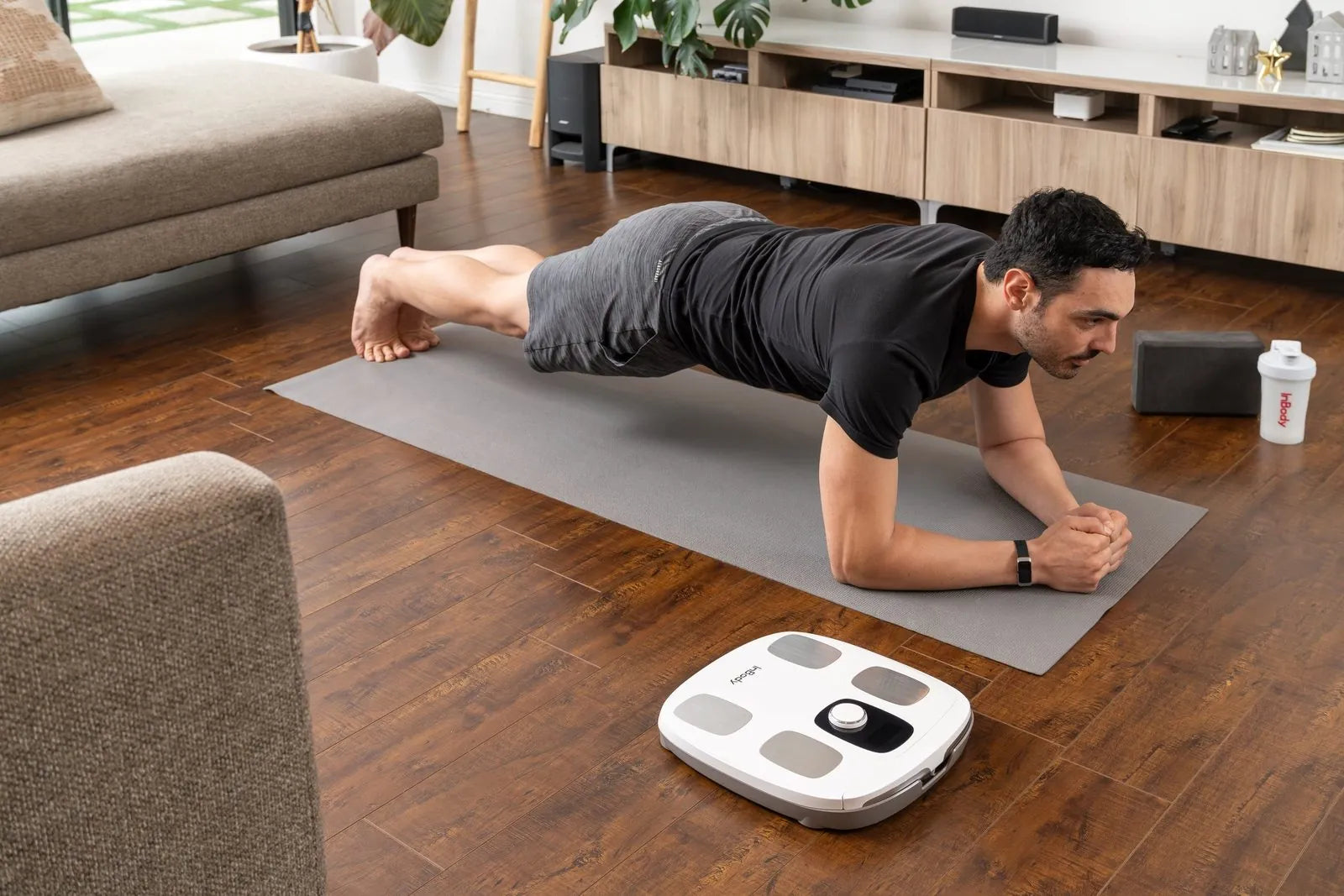
That is where a shared scale helps. Dial H30 recognises up to 20 people, so the bride, her mother and her brother can all step on and each get their own trend in the InBody app over home Wi-Fi. If you want leg muscle level and arm-by-arm balance ratings for serious training, Dial H40 adds them. For one person on their own, Dial H20 covers the core 8 readings over Bluetooth.
InBody advises that anyone with an implanted electronic medical device such as a pacemaker should not use a Dial, and that pregnant women check with their doctor first. And once the wedding is over, keep a little of the routine. The functions end; the habits are worth keeping, especially with festive weight waiting every year.
 Dial H30For the whole house. Recognises up to 20 people, so the whole wedding party can track their own trend.See Dial H30 →
Questions people ask
Is 12 weeks enough to get in shape for a wedding?
Twelve weeks is enough to build strength, lose a meaningful amount of fat and change how clothes fit, especially if you train consistently and eat enough protein. It is not enough to undo years at once, so aim for steady progress rather than a dramatic transformation.
How much weight can I safely lose before my wedding?
It depends on where you start. Rather than a weight target, aim to bring body fat down while keeping muscle, and let the checkpoints guide you. If you have a medical condition or a lot of weight to lose, talk to your doctor or a registered dietitian first.
Should brides avoid weight training before the wedding?
No. Strength training is what keeps muscle while you lose fat, and at the volumes in this plan it is very unlikely to make anyone bulky in 12 weeks. It helps posture and energy too. Keep the final weeks steady rather than adding anything new.
Why is my weight not dropping even though I am training?
You may be gaining muscle while losing fat, which can leave weight flat. Water shifts from training, salt and hormones also move the number. Check body fat and skeletal muscle at your checkpoint before changing the plan.
When should I stop changing my diet before the wedding?
Aim to keep things stable in the last few weeks, around your final fittings. Sudden changes in the final days mostly move water, can leave you tired, and can change how an outfit fits.
Sources
- World Health Organization. WHO guidelines on physical activity and sedentary behaviour, 2020.
- ICMR-National Institute of Nutrition. Nutrient Requirements for Indians, 2020.
- Jäger R, Kerksick CM, Campbell BI, et al. International Society of Sports Nutrition Position Stand: protein and exercise. Journal of the International Society of Sports Nutrition 2017;14:20.
- InBody Dial H20, H30 and H40 specifications, InBody India.
 Dial H40
 Dial H30
 Dial H20